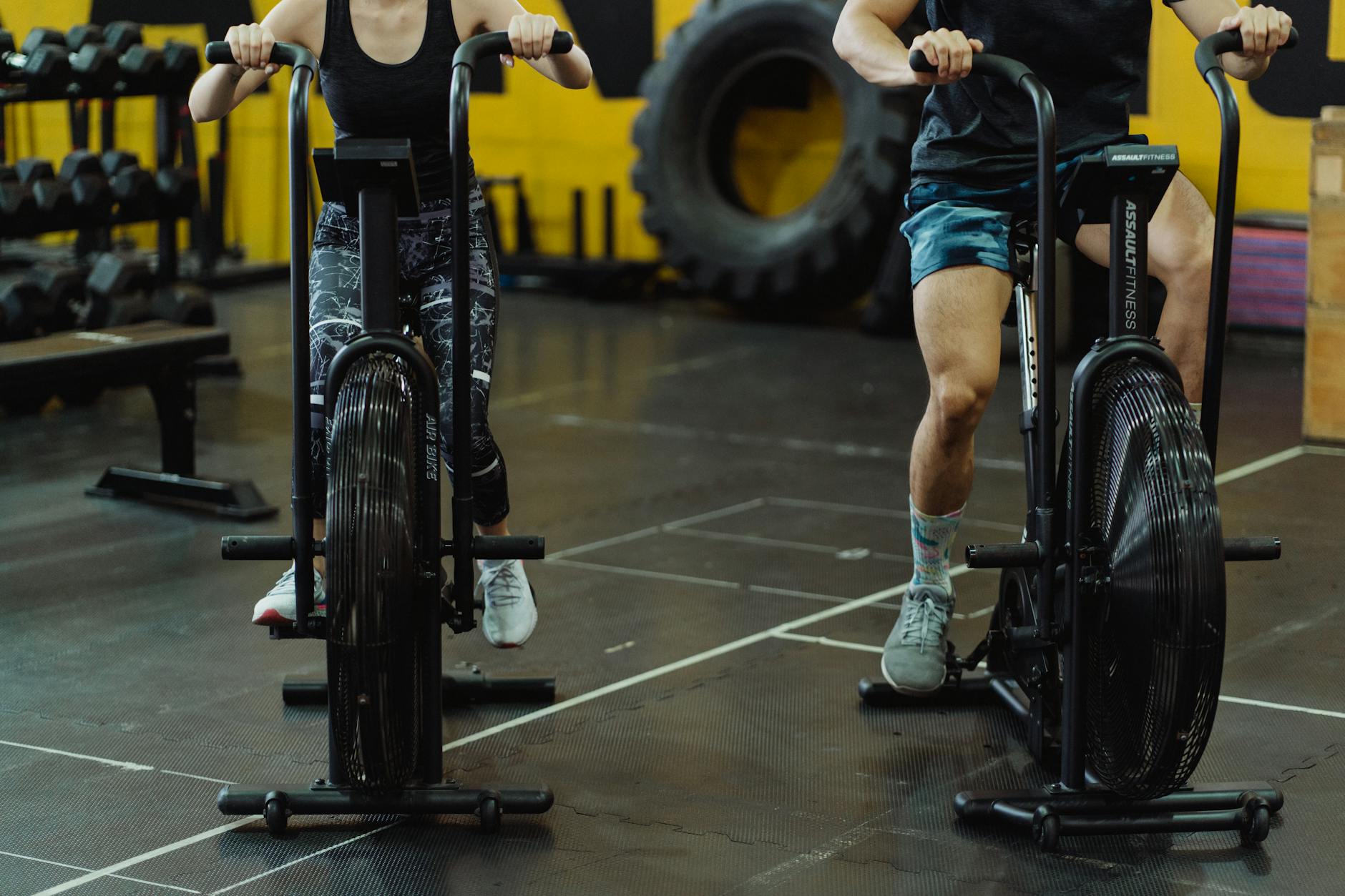
A generic programme assumes you own every machine, can train five days a week, and have never lifted before.
You own a barbell, some dumbbells and a pull-up bar. You get three sessions in a good week. You’ve been training eight months and you want to get bigger without getting fatter.
Those two things are not compatible, which is why most people quit a programme in week three. Here are seven apps that shape the programme around the second situation instead of the first.
How this list is sourced
I have not run seven training programmes to completion, and neither has any blog that says it has.
What I have done is verify what’s checkable. Every developer name, star rating and rating count below was pulled from the US App Store on 11 August 2026. Descriptions of what each app does come from its own store listing and documentation.
No prices, and no star scores of my own. All seven are free to download and charge through subscriptions that vary by region and promotion — an earlier version of this page carried four annual prices, none of which were verified, one of which was out by a factor that would have cost you real money. Open the listing and read the current price. The only ratings on this page are Apple’s.
I’ve also dropped the invented “customisation level” column that used to sit in the comparison table. It was five stars I made up with no methodology behind them. What replaces it is a plain description of how each app decides what to give you, which is the thing you were trying to read out of those stars anyway.
Generated, adaptive, or just a good library?
Three different products get sold as “custom programmes” and they are not the same purchase.
Generated — you answer questions about equipment, days and goals, and the app writes a plan. Good when your constraints are unusual. Weaker on long-term structure, because a plan assembled per-session isn’t the same as a plan built across months.
Adaptive — the app has a real programme structure with phases and deloads, and adjusts loads and volume based on what you logged. This is the closest thing to programming and it demands that you log honestly.
Library — expert-written programmes you pick from, with tracking on top. Not custom at all, and often the correct answer. A proven programme you follow beats a bespoke one you abandon.
Decide which of those three you want before you compare features. Most disappointment with this category is buying one and expecting another.
Quick comparison
Developers, ratings and rating counts verified on the US App Store, 11 August 2026.
| App | Developer | Rating | Ratings | How it decides |
|---|---|---|---|---|
| Fitbod | Fitbod Inc. | 4.8 | 280,289 | Generates per session from equipment and recovery |
| Stronglifts 5x5 | Stronglifts Limited | 4.9 | 76,553 | Fixed beginner programme, linear progression |
| Boostcamp | BPM Health Co. | 4.8 | 9,705 | Library of expert programmes |
| Caliber | Caliber Fitness, Inc. | 4.8 | 5,835 | Structured programmes, optional human coach |
| JuggernautAI | Juggernaut Apps, LLC | 4.8 | 5,646 | Adapts blocks from logged performance |
| Alpha Progression | Alpha Progression GmbH | 4.9 | 2,091 | Builds a split, adapts volume per muscle |
| RP Hypertrophy | RP Strength, LLC | 4.3 | 212 | Mesocycles with volume landmarks |
All seven are free to download. Every one of them charges for the part you actually want.
If your constraint is equipment
Fitbod — 4.8 stars, 280,289 ratings
From Fitbod Inc. By far the most-rated app on this page, and the one most people mean when they say “the app that makes workouts for you”.
You tell it what equipment you have access to, which muscles you want to prioritise and how long you’ve got. It builds that session, factoring in what you trained recently so you’re not hammering the same muscles two days running.
The honest limitation: it’s strong at “what should I do today with this equipment” and weaker at “what should the next twelve weeks look like”. If your equipment changes constantly — home, hotel, whichever gym is nearest — that’s exactly the trade you want. If you train in the same place every week, a structured programme will usually beat it.
If you want the app to actually adapt
JuggernautAI — 4.8 stars, 5,646 ratings
From Juggernaut Apps. Built around periodised training blocks that adjust based on the loads and reps you log, plus how hard each set felt. It expects you to rate effort accurately, and it gets noticeably worse if you don’t.
Choose this if you are past the beginner phase and willing to log properly. It’s overkill for someone in their first six months.
Alpha Progression — 4.9 stars, 2,091 ratings
From Alpha Progression GmbH. Highest star average on this page, on the second-smallest rating count — worth weighing both facts. It builds a split around your available days and equipment, then adjusts weekly volume per muscle group based on your logged progress and recovery feedback.
Choose this if you want per-muscle volume handled for you without adopting a whole coaching philosophy.
RP Hypertrophy — 4.3 stars, 212 ratings
From RP Strength, LLC. Renaissance Periodization’s own app, built around mesocycles: volume that climbs week to week toward a planned peak, then a deload, then a new block.
Be aware of the numbers. 212 ratings and a 4.3 average is the lowest on this page by a wide margin, on the smallest sample. That may say more about a demanding, opinionated system than about quality, but it means you have far less signal to go on than with Fitbod. Read recent reviews before subscribing.
Choose this if you specifically want the RP methodology and are prepared to learn its vocabulary.
If you want human oversight
Caliber — 4.8 stars, 5,835 ratings
From Caliber Fitness. Sits between an app and a personal trainer: structured strength programmes with a form video library, and an optional tier where an actual coach reviews your logs and adjusts things.
Choose this if you have tried self-directing and it didn’t stick. The accountability, not the programming, is what you’re paying for.
If a proven programme beats a generated one
Boostcamp — 4.8 stars, 9,705 ratings
From BPM Health Co. Not a generator. A library of established programmes — PPL, GZCLP, nSuns, 5/3/1 variants and dozens more — filterable by equipment, days per week and goal, with full tracking on top.
Choose this if you’d rather run something with years of people behind it than something assembled for you this morning. This is a better default than most people assume.
Stronglifts 5x5 — 4.9 stars, 76,553 ratings
From Stronglifts Limited. One programme, five compound lifts, add weight every session until you can’t. Second-most-rated app on this page.
Zero customisation, and that’s the feature. If you have under a year of consistent training behind you, running this properly for a few months will outperform anything AI-generated, because the limiting factor at that stage is showing up and adding weight, not exercise selection.
What these apps are not
They’re not trackers. If you already have a programme and just want to log it, you want Hevy (Hevy Studios, 4.9 stars, 85,393 ratings), Strong (Strong Fitness, 4.9 stars, 108,480 ratings) or JEFIT (Jefit Inc., 4.8 stars, 46,811 ratings). All free to download, all far cheaper than a planner, none of them will write you a plan.
They can’t see you. No app knows your knee is tracking inward or that you’re cutting depth. That is the part a coach is for, and no amount of AI in the marketing changes it.
They can’t make you consistent. Every app in this category has a graveyard of week-two dropouts. The programme is not usually the problem.
What good programme customisation actually involves
Equipment awareness. No cable flys if you have no cables. This is table stakes and every app here does it.
Schedule fit. Three days and five days are different programmes, not the same programme with two sessions removed.
Progression that is planned, not random. Weight or reps should climb on a scheme you can name. Variety without progression is just a different workout each week.
Deloads. Volume that only ever goes up ends in an injury or a stall. Scheduled backing-off is the most underrated feature in this whole category and the one budget apps skip.
Volume tracking per muscle. If the app doesn’t know how many sets your chest got this week, it cannot manage your chest.
What to be suspicious of
The same programme for everyone. If your “custom” plan looks exactly like the one your training partner got with different constraints, it’s a template with a questionnaire in front of it.
No progression scheme you can name. Ask what happens in week four. If the app can’t answer, it doesn’t have a plan.
Equipment you said you don’t have. A single barbell exercise in a dumbbells-only plan tells you the customisation is cosmetic.
Random exercise rotation. Changing exercises every session feels productive and makes progressive overload impossible to track.
No volume accounting. An app that doesn’t count sets per muscle can’t optimise anything, whatever the marketing says.
Building your own instead
You do not need any of these. A programme on paper works fine.
1. Pick a split that matches your real availability. Three days: full body. Four: upper/lower. Five or six: push/pull/legs or a body-part split. Choose for the schedule you actually keep, not the one you intend to.
2. Choose exercises and keep them. Two to four per muscle group per week, covering a push, a pull, a hinge and a squat pattern. Keep them long enough to see the numbers move.
3. Set your weekly volume. The most-cited evidence here is Schoenfeld, Ogborn and Krieger’s 2017 meta-analysis in the Journal of Sports Sciences, which pooled 34 treatment groups across 15 studies and found a significant dose-response relationship: more weekly sets per muscle was associated with more muscle growth, with each additional weekly set linked to roughly a 0.37% greater gain.
That is a real finding and it is narrower than the way it gets quoted. It shows a relationship across the range the studies covered. It does not establish a precise optimum, and it says nothing about your recovery. The commonly-used starting range of about 10 or more hard sets per muscle per week comes from reading that curve, not from a study prescribing it. Start at the low end, add volume only while you’re still recovering, and treat any number you read online — including this one — as a starting point rather than a prescription.
4. Progress deliberately. Add weight or reps on a schedule you wrote down in advance.
5. Log everything. Not for the data. Because you cannot progressively overload something you don’t remember.
For context on the wider picture: the WHO recommends adults do muscle-strengthening activity involving all major muscle groups on two or more days a week, alongside their weekly aerobic activity. Everything above is optimisation on top of that floor.
FAQ
Which app has the most users behind it? Fitbod, at 280,289 ratings and 4.8 stars, by a very large margin.
Should I use a generator or a proven programme? If you’ve trained under a year, a proven programme. Boostcamp’s library or Stronglifts 5x5 will beat anything generated, because your limiting factor is consistency and load progression, not exercise selection.
Can an app program as well as a human coach? For writing sets and reps against known constraints, the good ones are genuinely competent. For watching your technique, adjusting mid-session, and noticing you’re beaten up before you are, no. That gap is not closing with better software.
How often should I change programmes? Less than you want to. Eight to twelve weeks minimum. Programme-hopping is the most common way people train hard for two years and look the same.
How do I know it’s working? Your logged lifts go up over months. Not weeks. If the numbers are flat over a full training block, something needs to change — usually volume, sleep or food, in that order.
What if my gym doesn’t have the equipment? Fitbod is built for exactly that. Alpha Progression also builds around your available equipment.
Do I need to pay? Not to find out whether you’ll stick with it. Every app here is free to download, and Boostcamp’s library plus a free tracker gets you a real programme at zero cost. Prove you turn up for eight weeks before you subscribe to anything.
Related reads:
- AI Workout Apps That Build Muscle — the generated end of the category
- Best Gym Tracker Apps (Free) — logging, not planning
- Personal Trainer Apps vs Real Trainers — where apps stop working
- HIIT Timer Apps Compared — for the conditioning side
Disclosure: GymCoach is mine
I build iOS apps, and GymCoach is one of them. It generates training programmes, which puts it in direct competition with everything on this page.
It does not appear in the comparison table, in any of the seven ranked sections, in the “what to be suspicious of” list, or in a single FAQ answer above. That’s deliberate — ranking my own product against the apps it competes with isn’t a test you should trust. If the “generated programme” description fits what you’re after, it’s an option alongside Fitbod. It is new and has very few App Store ratings so far, so there is not much of a crowd verdict to lean on either. Try it and judge for yourself.
Sources
- Schoenfeld BJ, Ogborn D, Krieger JW. Dose-response relationship between weekly resistance training volume and increases in muscle mass: a systematic review and meta-analysis. J Sports Sci. 2017;35(11):1073-1082.
- World Health Organization — Physical activity fact sheet
- App names, developers, ratings and rating counts: US App Store via the iTunes Search API, 11 August 2026.
This article is general information, not medical advice. Talk to a qualified professional about anything affecting your health.
— Dolce

Comments
Comments powered by Giscus. Sign in with GitHub to comment.