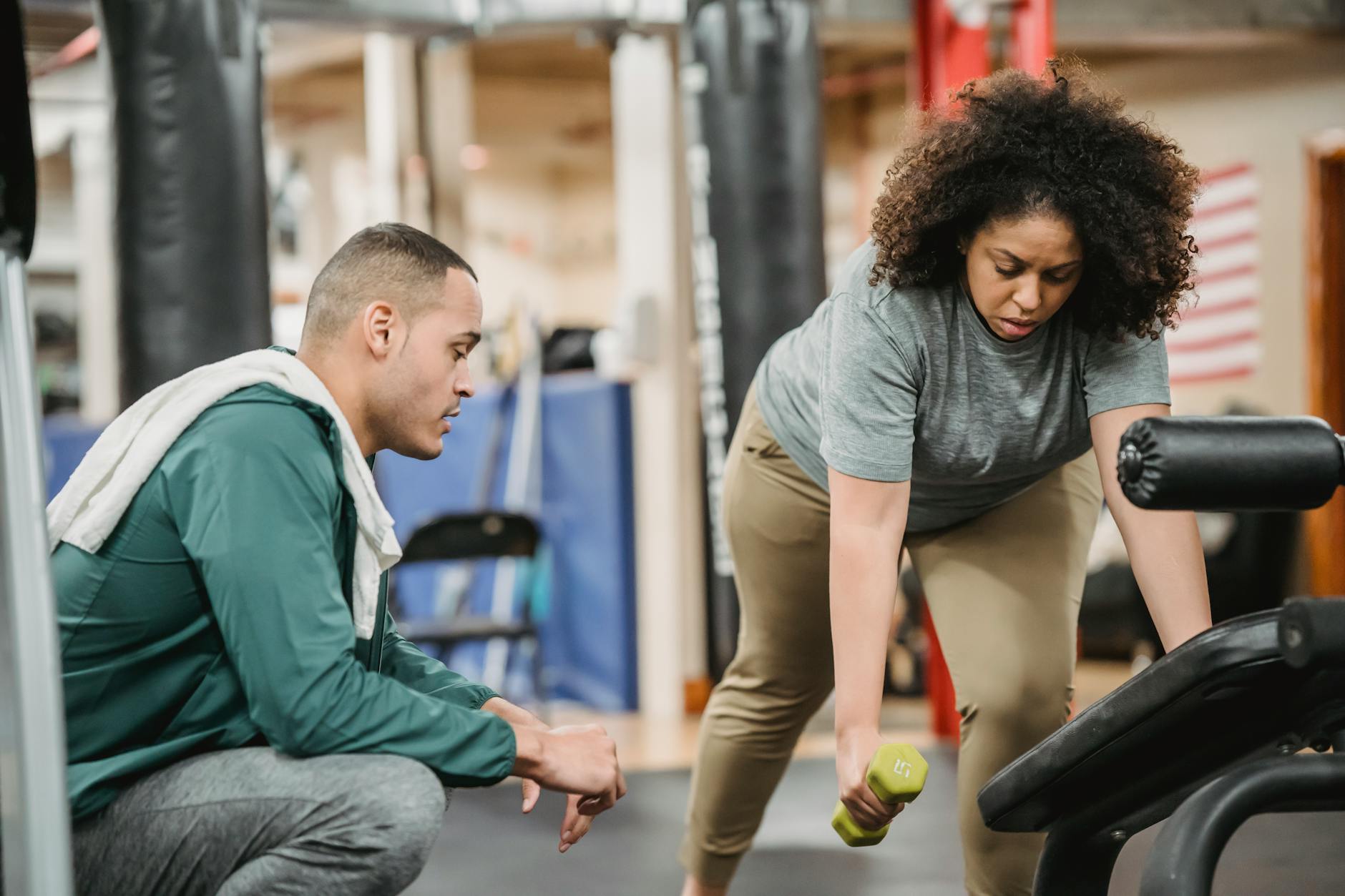
Personal trainer apps promise a trainer’s results for a fraction of the price.
The price part is true. The results part depends entirely on which bit of a trainer’s job you actually needed.
Here’s the honest breakdown.
How this is sourced
I have not hired every trainer in your city and I have not run every app for a year. Nobody writing this kind of article has, and you should be sceptical when they say otherwise.
What’s verifiable is here:
- Trainer pricing comes from NASM and the US Bureau of Labor Statistics, linked in the sources.
- Every app developer name, star rating and rating count was pulled from the US App Store on 11 August 2026.
- App prices are not quoted. Every app below is free to download with a paid tier on top, and those tiers move constantly. An earlier version of this page quoted specific annual figures for two of them and both were wrong. Check the App Store listing.
What a trainer actually costs
NASM puts the average at $61 per hour for one-on-one sessions.
That number is worth holding next to a second one. The US Bureau of Labor Statistics puts the median wage for fitness trainers and instructors at roughly $22 to $23 an hour. The gap isn’t a contradiction. It’s the difference between what the session costs you and what the trainer takes home after the gym’s cut. It’s also why rates vary so much: an independent trainer setting their own price and a big-box gym’s package rate are different businesses.
Run the arithmetic at two sessions a week:
| Commitment | Cost |
|---|---|
| One session at the NASM average | ~$61 |
| Two sessions a week | ~$122 |
| Two sessions a week for a year | ~$6,300 |
Against that, every app in this article is free to download and none of the paid tiers reach three figures a month.
The gap is one to two orders of magnitude. I’m not going to give you a precise multiple, because a previous version of this page said “50-100x cheaper” while its own table implied something different, and any single number here is invented. Which trainer, which city, which app, which tier: the honest answer is “vastly cheaper, and you can do the specific sum yourself once you know the two prices that apply to you.”
The five things you’re actually buying from a trainer
1. Someone watching you move
This is the one that doesn’t have a software substitute yet. A trainer sees your hip shift on the fourth rep and stops the set. Nothing on your phone does that reliably.
Be sceptical of apps advertising AI form correction from your phone camera. The claim outruns the evidence. If a bad squat pattern is your problem, a few hours of in-person coaching solves it faster and more cheaply than a subscription that promises to.
2. An appointment you’d feel bad missing
The mechanism isn’t motivation. It’s that someone is standing in a room waiting for you and you’ve already paid. A push notification is not a social obligation and never will be.
If you already train without being chased, you are paying for something you don’t need.
3. Adaptation in the moment
Shoulder’s angry today. A trainer swaps the press for something that doesn’t hurt, on the spot, with reasoning. Apps adjust between sessions based on what you logged. That’s a real feature, but it’s not the same thing.
4. Judgement about the plan
A good trainer knows when to deload, when your programme is wrong for your life rather than wrong on paper, and when the answer is “you’re not sleeping”. That is professional judgement and it is the actual product.
The gap here is wide, though, and worth saying plainly: certification quality varies enormously and the price you pay is not a reliable signal of it. An expensive bad trainer is worse than a good free programme.
5. Someone who won’t let you sandbag
A trainer sees you had two more reps in you. An app sees the number you typed in.
The five things you’re buying from an app
1. It’s there at 6am on a Sunday
No scheduling, no cancellation policy, no travelling to someone else’s gym at someone else’s time.
2. Nobody’s watching
If the reason you don’t train is that you’re self-conscious, that’s not a small thing and an app removes it entirely.
3. It remembers everything
Every set, every weight, every session, forever, searchable. A trainer with fifteen clients does not remember what you did three Tuesdays ago, and their notes are not as good as a database.
This is genuinely the app’s home turf. Progressive overload is a bookkeeping problem and software is better at bookkeeping than people.
4. It costs almost nothing
Which means you can do it for the years it takes rather than the twelve weeks you can afford.
5. It travels
Different gym, different equipment, different country. The better apps build around what’s actually in the room with you.
Which one you need
Hire a trainer if you’ve never barbell-squatted, you’re working around an injury or condition, you know you won’t turn up unless someone’s expecting you, you’re preparing for something specific, or the money genuinely doesn’t hurt.
Use an app if you already move safely, you turn up without being chased, your schedule is irregular, or the alternative to an app is nothing at all.
The honest middle is the one most people should take: buy four to eight sessions to learn the movements, then run an app. You pay a few hundred dollars once for the part software can’t do, and a fraction of that annually for the part it does better. Book a single check-in session if something starts hurting or you stall for months.
The apps
Developers, ratings and rating counts verified on the US App Store, 11 August 2026. All are free to download with paid tiers.
| App | Developer | Rating | Ratings | What it does |
|---|---|---|---|---|
| Fitbod: Gym & Fitness Planner | Fitbod Inc. | 4.8 | 280,289 | Generates each session from equipment and recovery |
| LADDER Strength Training Plans | Ladder Technologies, Inc. | 4.9 | 178,075 | Coach-written programmes, team format |
| Strong Workout Tracker Gym Log | Strong Fitness PTE Limited | 4.9 | 108,480 | Logging, done well |
| Hevy - Workout Tracker Gym Log | Hevy Studios S.L. | 4.9 | 85,393 | Logging plus routines and a social feed |
| Stronglifts 5x5 Workout Plan | Stronglifts Limited | 4.9 | 76,553 | One proven beginner programme |
| Boostcamp: Workout Programs | BPM Health Co. | 4.8 | 9,705 | Library of established programmes |
| Caliber: Strength Training | Caliber Fitness, Inc. | 4.8 | 5,837 | Real human coaching inside an app |
| Gym Workout Alpha Progression | Alpha Progression GmbH | 4.9 | 2,091 | Automatic progression planning |
| Dr. Muscle AI Personal Trainer | Dr. Muscle | 4.5 | 379 | Auto-regulated programming |
If you want a programme built for you each session
Fitbod has the largest rating count in this list by a distance, at 280,289 ratings and 4.8 stars. It builds each workout from the equipment you have and what your muscles have recently done.
Gym Workout Alpha Progression is the same idea aimed at people who care about the progression maths. Note the small rating count: 2,091 at 4.9 is a much thinner signal than Fitbod’s 280,289 at 4.8.
Dr. Muscle AI Personal Trainer is the auto-regulating option. Read its numbers carefully before you commit: 4.5 stars across 379 ratings, the smallest count here by an order of magnitude, and lower than everything else on this page. An earlier version of this article listed it at “$100/year”, which I could not verify and have removed.
If you want an actual human, remotely
Caliber is the closest thing to a trainer that isn’t in the room with you: real coaches, remote, inside an app. It’s the honest answer for anyone who read the accountability section above and recognised themselves. Online coaching generally runs in the low hundreds per month, which is a different price bracket from the rest of this list and much closer to a trainer’s.
If you want to follow a known programme
Stronglifts 5x5 and Boostcamp both hand you established programmes rather than generating one. For a beginner this is frequently the better call: proven structure, nothing to configure, and no AI deciding your fate.
If you already know what you’re doing and just need the log
Strong and Hevy are the two logging apps everyone ends up choosing between. Both 4.9 stars, both with six-figure rating counts.
A correction: this page previously listed Hevy as “Free”. It’s free to download, but it has a paid Pro tier: monthly, annual and a one-time lifetime option. The reported figures vary widely between sources, so check the in-app price rather than trusting a blog. The free tier is genuinely usable for logging, which is why it gets called free so often.
What apps can’t replace
| Need | Trainer | App |
|---|---|---|
| Being corrected mid-rep | Yes | No |
| Structured programming | Yes | Yes |
| Adapting to an injury on the day | Yes | Between sessions only |
| Remembering every session | Poorly | Perfectly |
| Making you turn up | Strong | Weak |
| Being available at any hour | No | Yes |
| Working around an unfamiliar gym | Yes, if present | Yes |
| Cost over a year | ~$6,300 at two sessions a week | Free to a few hundred |
What the evidence does and doesn’t say
There is no good head-to-head research showing that a fitness app produces the same strength outcomes as a certified trainer, or that it doesn’t. Anyone quoting you a percentage on this is making it up. An earlier version of this page cited physical activity guidelines as its source, which say nothing about trainers, apps or form correction.
What’s actually established is duller and more useful: adults benefit from regular strength training and sustained activity, and the guidelines below set out how much. Neither the guidelines nor any study I can point you at rank the delivery mechanism.
Which leaves you with the practical version. Consistency over years beats optimisation within a year. Pick whichever option you’ll still be using next March.
FAQ
Can an app teach me proper form? Not properly. Video demonstrations help you learn the shape of a movement. They can’t tell you that your knee is caving. Get a handful of in-person sessions, then use the app.
Are the expensive apps better? There’s no evidence for it, and the highest rating counts in this list belong to apps in the middle of the price range. Use free tiers and trials before you subscribe to anything.
How often should I see a trainer if I’m mostly using an app? A check-in when something hurts or when you’ve stalled for a couple of months is a reasonable pattern. Monthly is fine if you can afford it, not necessary if you can’t.
Will I get worse results with an app? If you turn up and follow the programme, they’ll be in the same ballpark. The realistic risk isn’t that the app’s programme is worse. It’s that nobody notices when you stop.
What about online coaching? It’s the real middle ground, and Caliber is the version of it in this list. Expect a price closer to a trainer’s than an app’s, because there’s a person in it.
Is a $61 hourly rate normal? It’s the NASM average for one-on-one. Big-box gym packages, small-group sessions and less experienced trainers all come in lower. Rates in expensive cities and with specialised trainers go considerably higher.
Related reads:
- AI Workout Apps That Build Muscle, app reviews
- Best Gym Tracker Apps (Free), tracking options
- Workout Routine for Beginners, common mistakes
Disclosure: GymCoach is mine
I build iOS apps, and GymCoach is one of them.
It’s kept out of the app table, out of every recommendation section and out of the FAQ answers above, because scoring my own product against apps I compete with isn’t a fair test. It competes directly with the programming apps in this list. It is new and has very few App Store ratings so far, so there is not much of a crowd verdict to lean on either. Try it and judge for yourself.
Sources
- NASM: Personal Trainer Salary, the $61/hour one-on-one average
- US Bureau of Labor Statistics: Fitness Trainers and Instructors, median wages
- Physical Activity Guidelines for Americans, 2nd edition, how much activity, not how to deliver it
This article is general information, not medical advice. Talk to a qualified professional about anything affecting your health.
— Dolce
Comments
Comments powered by Giscus. Sign in with GitHub to comment.