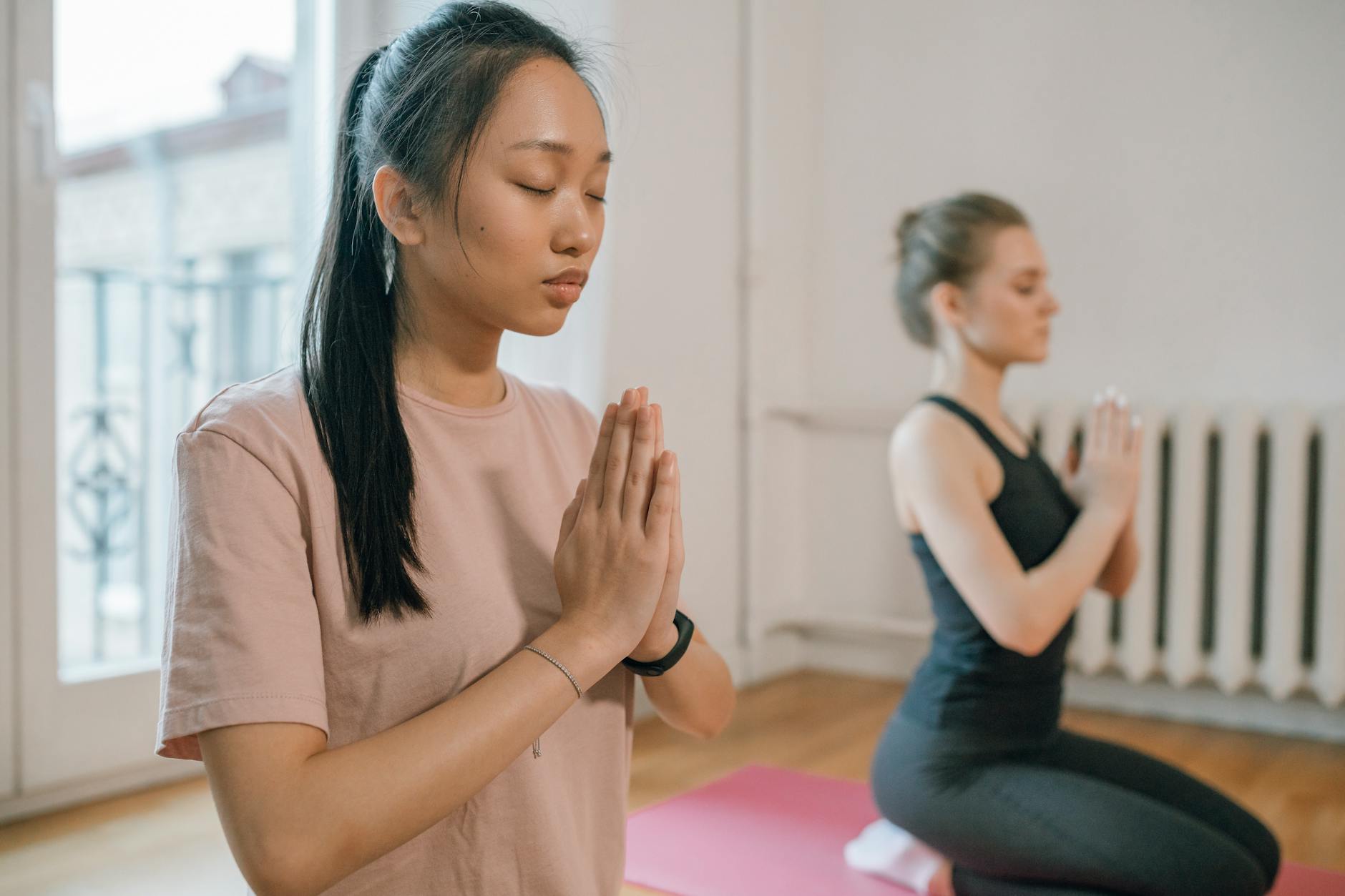
You've tried Calm. You've tried Headspace. You meditated for 11 days straight, felt great, then didn't open the app for three months. Now you're back on Google searching for another option, hoping this one will stick.
Stop. The app isn't the problem. The way you're using mindfulness and meditation apps is the problem. And the way most of them are designed makes it worse.
The Real Problem With Mindfulness and Meditation Apps
Here's what nobody talks about: the business model of most meditation apps is fundamentally at odds with your progress. They need you to keep consuming content. They need you dependent on guided sessions. They need you to never learn how to meditate on your own.
Think about it. If a meditation app actually taught you to meditate independently in 30 days, you'd cancel your subscription. That's bad for business. So instead, they build content libraries with 10,000 sessions, new releases weekly, celebrity narrators, and sleep stories. It's Netflix for relaxation. And it's about as effective as Netflix is at teaching you filmmaking.
The best mindfulness and meditation apps are the ones that make themselves unnecessary. They teach a skill, build a habit, and then get out of the way.
What Mindfulness and Meditation Apps Should Actually Do
Teach Breathing First
Every contemplative tradition on earth starts with the breath. It's the foundation. Yet most apps jump straight to "observe your thoughts" without teaching you how to regulate your nervous system.
Before you meditate, you need to know how to breathe. Box breathing (inhale 4 seconds, hold 4, exhale 4, hold 4) activates your parasympathetic nervous system in under 2 minutes. The 4-7-8 technique (inhale 4, hold 7, exhale 8) is clinically shown to reduce anxiety.
Breathing Exercises focuses entirely on this. No fluff, no stories — just structured breathing patterns with visual timers. Use it for a week before you even touch a meditation session. You'll be shocked at the difference.
Build Progressive Programs, Not Content Libraries
A good curriculum looks like this:
- Week 1-2: Breathing awareness. 3-5 minutes daily.
- Week 3-4: Body scan meditation. 5-7 minutes daily.
- Week 5-6: Thought observation. 7-10 minutes daily.
- Week 7-8: Unguided practice with timer. 10-15 minutes daily.
By week 8, you don't need the app anymore. You have the skill. That's what success looks like.
Most mindfulness and meditation apps won't give you this because it's a terrible retention strategy. Look for the ones that do.
Integrate With Your Actual Life
Meditation on a cushion is practice. Mindfulness during your day is the game. The best apps include micro-practices: 60-second breathing resets before meetings, mindful transitions between tasks, brief body check-ins during lunch.
Pair a 5-minute meditation routine with a Pomodoro timer and you've got a built-in mindfulness break every 25 minutes. That's more effective than one 20-minute session crammed in at 6 AM.
Features That Are Overrated
Let me save you some money.
Sleep stories: Entertaining, but they're not meditation. They're audiobooks. If you need help sleeping, a white noise machine is more effective and costs nothing.
Mood tracking with 47 emotions: Overengineered. "Better than yesterday" or "worse than yesterday" tells you everything you need to know for the first 90 days.
Community features and group meditations: Meditation is an internal practice. You don't need a social feed.
Gamification: Badges for meditating 7 days straight. Really? This turns a contemplative practice into another dopamine loop. Hard pass.
The Approach That Actually Works
Forget finding the perfect app. Here's what to do instead:
Step 1: Download Breathing Exercises. Spend 5 days doing nothing but 3 minutes of guided breathing each morning. Anchor it to your first cup of coffee.
Step 2: Add a simple sitting practice. 5 minutes after the breathing. Eyes closed, focus on your breath, notice when your mind wanders, bring it back. That's the whole practice.
Step 3: After 2 weeks, try one unguided session per week. Set a timer for 7 minutes. No voice. No music. Just you and your breath. This is where the real skill develops.
Step 4: By day 30, you should be able to sit for 10 minutes unguided without wanting to claw your face off. Congratulations — you can meditate. The app is now optional.
When Mindfulness and Meditation Apps Make Sense Long-Term
I'm not saying delete everything. Apps remain useful for:
- Specific techniques you haven't learned yet (loving-kindness, visualization, yoga nidra)
- Breathing exercises for sleep — guided wind-down routines genuinely help
- Timer functions with interval bells for unguided practice
- Tracking consistency over months and years
Just don't confuse using an app with making progress. The person who sits quietly for 5 minutes without any app is further along than the person with a 200-day streak who can't sit in silence for 60 seconds.
FAQ
Do mindfulness and meditation apps actually reduce stress?
Yes, when used consistently. A 2023 meta-analysis in JAMA Internal Medicine found that app-based meditation programs reduced anxiety scores by 25-30% over 8 weeks. The key word is consistently — sporadic use doesn't move the needle. Aim for at least 5 minutes daily for a minimum of 4 weeks.
What's the difference between mindfulness and meditation?
Meditation is the formal practice — sitting, breathing, observing. Mindfulness is the quality you develop through meditation and apply throughout your day. Think of meditation as the gym and mindfulness as the fitness. You train in one to perform in the other.
Are paid meditation apps worth the subscription?
For most beginners, no. Free tools like Breathing Exercises cover the fundamentals. Paid apps become valuable once you've built a consistent practice and want access to advanced techniques or specific programs. Don't pay for an app until you've meditated daily for at least 30 days using free options.
How do I know if a meditation app is working?
Track two things: are you sleeping better, and are you reacting less impulsively to stress? These are the first measurable changes, usually noticeable within 2-3 weeks of daily practice. If nothing shifts after 30 days of consistent use, the app or technique isn't the right fit.
-- Dolce
Comments
Comments powered by Giscus. Sign in with GitHub to comment.