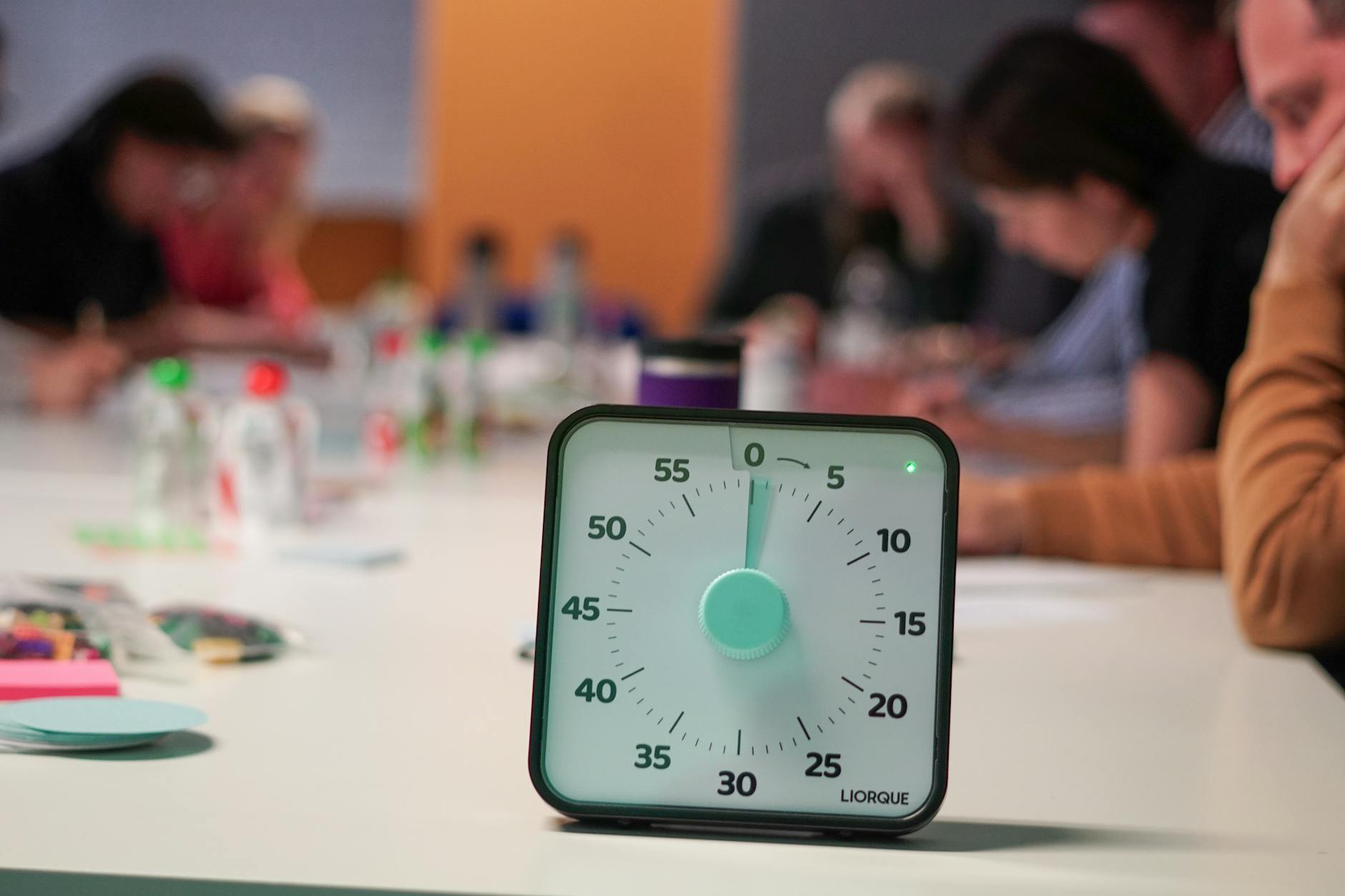
You sit down to work.
Three hours later, you’ve accomplished 20 minutes of actual output and spent the rest bouncing between email, Slack, Twitter, and whatever else your brain could find to avoid the hard thing.
Sound familiar?
25 minutes of work. 5 minutes of rest.
Sounds simple. It’s also one of the most effective productivity systems ever created.
Here’s the complete guide.
What Is the Pomodoro Technique?
Created by Francesco Cirillo in the late 1980s.
He used a tomato-shaped kitchen timer (pomodoro = tomato in Italian).
The basic system:
- Choose a task
- Set timer for 25 minutes
- Work until timer rings
- Take a 5-minute break
- Every 4 pomodoros, take a 15-30 minute break
That’s it. That’s the whole system.
Why 25 Minutes Works
1. Short enough to start
25 minutes isn’t intimidating. You can do anything for 25 minutes.
Your brain can commit to 25 minutes. It cannot commit to “until it’s done.”
This reduces procrastination.
2. Long enough to progress
25 minutes is enough to make meaningful progress on most tasks.
Not enough to finish, but enough to move forward.
3. Creates urgency
The ticking timer creates mild pressure.
When you know you only have 25 minutes, you focus differently.
4. Forced breaks prevent burnout
Most people work until exhaustion, then crash.
Scheduled breaks maintain consistent energy. Marathon sessions don’t.
5. Matches attention spans
Sustained attention to a single task degrades over time — the vigilance decrement. There is no established figure for when it kicks in, and the tidy “20-30 minutes” you see quoted isn’t a research finding. 25 minutes is a workable default, not a biologically optimal number.
Pomodoro rides this wave instead of fighting it.
6. It’s measurable
“I did 8 Pomodoros today” is concrete. “I worked hard” is vague.
8 Pomodoros is a solid day. 16 is fantasy. Start with 4 and build up.
The Science Behind It
Attention and breaks
In a lab task, participants given two brief breaks during a 50-minute vigilance task held their performance steady, while those working straight through declined (Ariga & Lleras, 2011, Cognition). That’s a 50-minute computer task with 84 undergraduates, not a workday, so it supports the principle rather than any specific timer setting.
Timeboxing effect
When time is constrained, you focus on what matters.
Parkinson’s Law: work expands to fill available time. Pomodoro limits that time.
Reducing anxiety
A task seems overwhelming as a whole.
“Work on this for 25 minutes” is manageable.
Your brain’s evolution
Evolution didn’t design you to stare at spreadsheets for 8 hours. It designed you to scan the savanna for threats.
The Pomodoro Technique works with your biology, not against it.
How to Do Pomodoro Right
Step 1: Eliminate distractions BEFORE you start
Before starting the timer, decide what you’ll work on. Then close email. Close Slack. Put your phone in another room. Block distracting websites.
If you have to resist temptation during your Pomodoro, you’ve already lost. Remove the temptation entirely.
Vague: “Work on project” Better: “Write introduction section”
Step 2: Commit to ONE task
Not “work on the project.” One specific task. “Write the introduction” or “Review the first three sections.”
Vague tasks invite procrastination. Specific tasks get done.
Step 3: Work until the timer rings
No checking email. No “quick” phone glances.
If something pops into your head, write it down. Return to it later.
Step 4: Stop when the timer rings
Even if you’re in the middle of something. Stop.
This feels wrong at first. But it builds a crucial habit: you do what the timer says. This makes starting the next Pomodoro easier because you know you’ll get a break.
Step 5: Take your break (mandatory)
The break is part of the system.
5 minutes of actual rest makes the next 25 minutes more productive.
- Stand up
- Walk
- Look away from screen
- Don’t check phone (still working your brain)
Step 6: After 4 pomodoros, longer break
15-30 minutes. Get food. Walk outside. Actually rest.
What Counts as a Break?
Good breaks:
- Walking
- Stretching
- Getting water
- Looking out window
- Breathing exercises
- Brief conversation
Bad breaks:
- Social media (same mental muscles)
- Email (still work)
- News (still processing)
- Planning next task (still work)
The point is mental rest. Scrolling isn’t rest.
Variations That Might Work Better
50/10 Method
50 minutes work, 10 minutes break.
Best for: Deep work, complex tasks, experienced focusers.
52/17 Method
52 minutes work, 17 minutes break.
Based on data from productivity tracking app DeskTime.
Best for: Those who need longer to get into flow.
90-Minute Blocks
Based on ultradian rhythms (natural 90-minute cycles).
Best for: Creative work, writing, complex problems.
Custom
Find what works for you. Pomodoro is a starting point, not a religion.
When Pomodoro Doesn’t Work
Deep flow states
Sometimes you’re in the zone. The timer feels intrusive.
Solution: Skip the break. But take one eventually.
Collaborative work
Meetings and pair work don’t fit 25-minute boxes.
Solution: Use Pomodoro for solo work, different system for collaboration.
Creative work
Some creative tasks need incubation time.
Solution: Longer intervals (50-90 minutes).
External interruptions
If you can’t control your environment, timers don’t help.
Solution: Block time, communicate boundaries, or accept flexible work.
Tracking Your Pomodoros
Tracking provides:
- Actual data on your productive time
- Motivation through streaks
- Evidence of work done
- Patterns in your focus
Most people think they work 8 hours. Reality: 2-4 hours of focused work.
FocusTimer tracks sessions, breaks, and gives you the real picture.
Pomodoro for Different Work Types
Writing
1 pomodoro = write (don’t edit) Break = rest Next pomodoro = write more
Edit in separate pomodoro blocks.
Coding
1 pomodoro = work on one feature/bug Break = step back, let solutions percolate Next pomodoro = continue or move to next task
Studying
1 pomodoro = active reading or problem-solving Break = look away, let it sink in Next pomodoro = same or new topic
Batch into pomodoros. Don’t check between blocks.
1 pomodoro = process inbox Then move to real work.
Common Mistakes
1. Not taking breaks
“I’m in flow, I’ll skip the break.”
You’ll burn out by 2pm. Take the breaks. Occasional skipping is fine. Habitual skipping leads to burnout.
2. Wrong task definition
“Work on project” vs “Draft email to client about pricing”
Specific tasks = better focus.
3. Distractions during pomodoro
One glance at phone = broken focus. One notification becomes ten.
Full focus or no focus.
4. Abandoning after one bad day
You’ll have days where it doesn’t click.
Keep going. The system works over time.
5. Setting unrealistic daily goals
16 Pomodoros is fantasy. Start with 4. Build up to 8 on good days.
6. Using a phone timer
Your phone is a distraction machine. Use a dedicated timer or app.
7. Using it for everything
Some work doesn’t fit pomodoros.
Be flexible.
The Bigger Picture: Retraining Your Attention
The Pomodoro Technique isn’t just about productivity. It’s about retraining your attention span.
Most people have destroyed their ability to focus through years of constant distraction. Your brain expects stimulation every few seconds. It revolts against sustained attention.
Pomodoros are attention training. You’re teaching your brain that it can, in fact, focus for 25 minutes without dying.
After a few weeks, you’ll notice something: focusing gets easier. The resistance fades. You start looking forward to deep work instead of dreading it.
Tools You Need
Minimum:
- Timer (dedicated timer, not your phone)
Better:
- Dedicated pomodoro app with breaks built in
- Distraction blocker
- Tracking for review
FocusTimer handles timing, breaks, and tracking.
Now stop reading and go do a Pomodoro.
FAQ
Is 25 minutes really optimal? For most people, yes. But experiment with 30, 45, or 50 if 25 feels too short.
What if my task takes less than 25 minutes? Batch small tasks. Or do related work until timer ends.
What if I can’t finish in one pomodoro? Continue next pomodoro. Complex tasks take multiple sessions.
Should I use pomodoro every day? Most people use it for focused work, not all-day every day.
Does the technique work for ADHD? Many people with ADHD find it helpful. The short intervals and timers provide structure.
Sources
Related reads:
- Best Pomodoro Timer Apps — app reviews
- Deep Work Timer: Structure Sessions — longer sessions
- Why Your Habits Don’t Stick — build consistency
— Dolce

Comments
Comments powered by Giscus. Sign in with GitHub to comment.