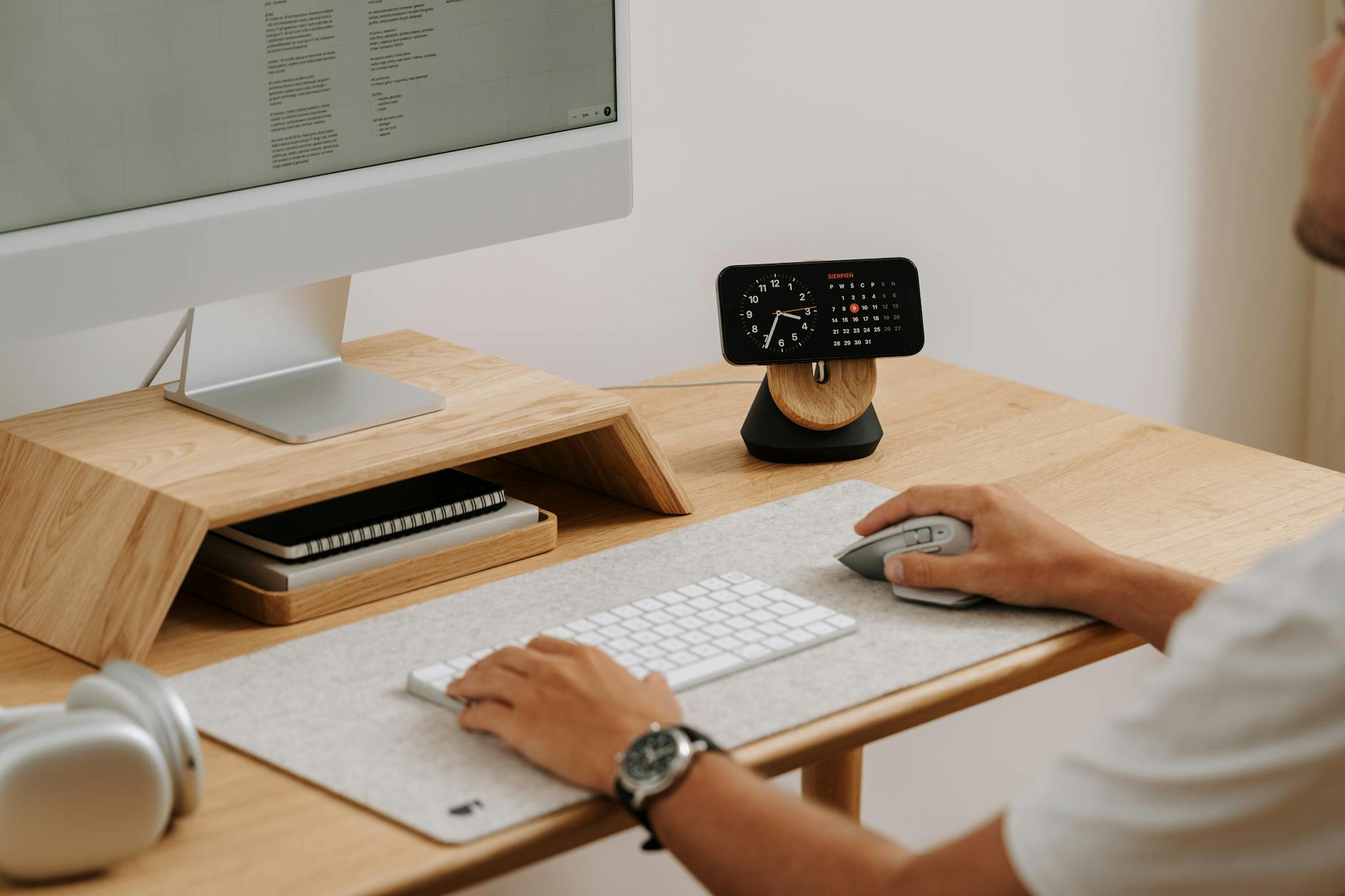
A timer doesn’t make you productive.
But the right timer with the right structure? That’s a system.
Here’s how to structure deep work sessions that actually work.
The Ideal Deep Work Session Length
There’s no universal answer. But there is a range:
Minimum: 25 minutes (classic Pomodoro) Sweet spot: 50-90 minutes Maximum: 120 minutes (then diminishing returns)
Why 25 minutes works
- Low barrier to start
- Easy to repeat
- Good for tasks requiring context switching
- Backed by decades of Pomodoro research
Why 50-90 minutes is ideal for deep work
- Enough time to reach flow state
- Complex problems need longer uninterrupted time
- Matches natural ultradian rhythms (body’s 90-minute cycles)
- Cal Newport’s recommendation for knowledge work
Why beyond 120 minutes hurts
- Cognitive fatigue sets in
- Diminishing returns on focus
- Quality drops even if you don’t notice
- Recovery time increases
My recommendation: Start with 50 minutes. Adjust based on how you feel.
The Break Problem
Most people do breaks wrong.
Wrong approach:
- Work 50 minutes
- “Break” by checking phone/email for 10 minutes
- Wonder why they’re exhausted
Right approach:
- Work 50 minutes
- Actually break — move, stretch, breathe
- Return refreshed
What counts as a break:
- Walking (even just to get water)
- Stretching
- Looking at something far away (20-20-20 rule)
- Breathing exercises
- Doing nothing (yes, literally nothing)
What doesn’t count as a break:
- Social media
- “Quick” messages
- Shallow work tasks
- Reading news
The point of a break is to recover cognitive resources. Scrolling Instagram uses the same mental resources you’re trying to restore.
The Deep Work Timer Structure
Here’s a complete framework:
Structure 1: Pomodoro Classic
Best for: Beginners, task switching, light cognitive load
25 min work → 5 min break
25 min work → 5 min break
25 min work → 5 min break
25 min work → 20 min long break
Total: 1 hour 55 min for 1 hour 40 min of work
Structure 2: Deep Work Standard
Best for: Most knowledge work, writing, analysis
50 min work → 10 min break
50 min work → 10 min break
50 min work → 20 min long break
Total: 3 hours for 2.5 hours of deep work
Structure 3: Flow State Extended
Best for: Creative work, complex problem solving
90 min work → 20 min break
90 min work → 20 min break
Total: 3 hours 40 min for 3 hours of deep work
Structure 4: Cal Newport’s Block
Best for: Advanced practitioners
90 min deep work (no break)
30 min recovery
90 min deep work (no break)
Total: 3.5 hours for 3 hours of deep work
Setting Up Your Timer
What to configure:
- Work duration: 50 minutes (adjust after testing)
- Break duration: 10 minutes (non-negotiable)
- Alert type: Sound + vibration (not just visual)
- Auto-start breaks: Yes (so you don’t skip)
What not to do:
- Custom sounds that are annoying
- Snooze options (dangerous)
- Complex configurations
- Multiple timer types
Keep it simple. One work duration. One break duration. Start. Stop.
The Session Ritual
Structure includes what you do before and after.
Pre-session ritual (2 minutes):
- Define ONE task for this session
- Clear your desk
- Close unnecessary tabs
- Put phone in another room
- Start timer
Post-session ritual (2 minutes):
- Note where you stopped
- Rate the session (1-5 for focus)
- Note any distractions
- Stand up
The ritual creates a mental boundary. Your brain learns: timer starts = focus mode.
Tracking Your Sessions
What gets measured improves.
Track:
- Completed sessions per day
- Focus rating per session
- Common distraction types
- Best time of day
After 2 weeks, you’ll have data:
- “I focus best from 9-11am”
- “Afternoon sessions average 3/5 focus”
- “Phone notifications are my main distraction”
Use this to optimize.
Using FocusTimer for Deep Work
FocusTimer was built for this exact workflow.
Setup:
- Set your preferred session length (50 min default)
- Enable break reminders
- Add the widget to your home screen
- Put on the Apple Watch complication
Daily use:
- Open app → Start
- Focus until it ends
- Take real break
- Check your stats weekly
No fancy features. Just a timer that works.
Common Mistakes
1. Sessions too long
You think you can focus for 3 hours straight. You can’t. Start with 50 minutes.
2. Skipping breaks
“I’m in flow, I’ll skip the break.” Then you crash. Take the break.
3. Phone nearby
“I won’t look at it.” You will. Remove it physically.
4. No task definition
“I’ll just work on the project.” Too vague. Define the specific task.
5. Wrong time of day
Your peak focus hours matter. Don’t schedule deep work when you’re naturally tired.
FAQ
What if I can’t focus for 25 minutes? Start with 15. Work up. No shame in building capacity.
What if I finish the task mid-session? Either start the next related task, or end the session and take your break.
Should I use the same timer for everything? Yes. Consistency builds the habit.
What about music/background noise? Personal preference. Test both. Some focus better with silence, others with white noise.
Can I do back-to-back sessions without breaks? You can. Your output quality will decline. The break is part of the system.
Related reads:
- Best Deep Work Apps — app reviews
- Pomodoro Technique: The Complete Guide — the method
- Concentration Apps for Students — student-specific tips
— Dolce
Comments
Comments powered by Giscus. Sign in with GitHub to comment.