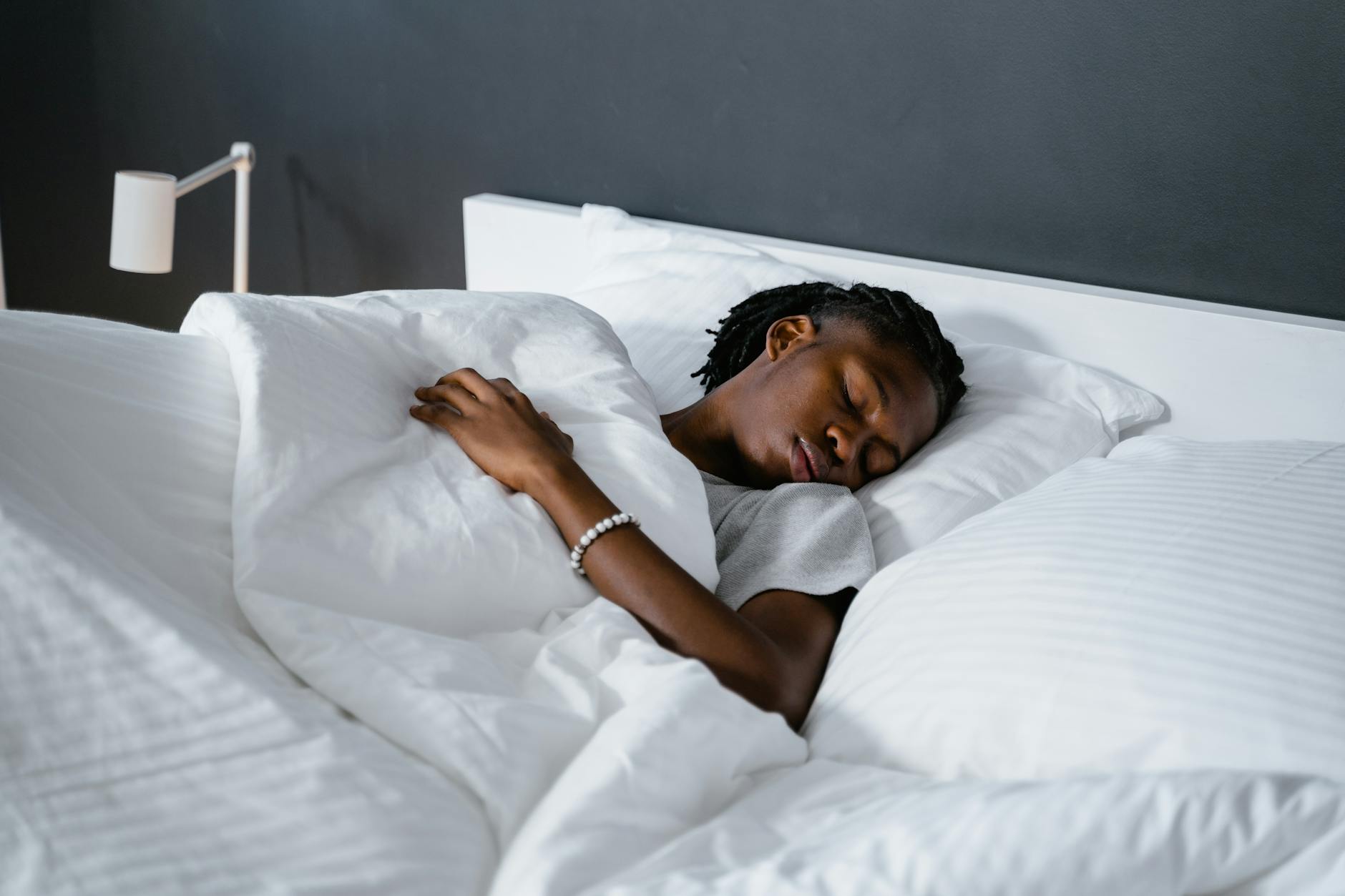
It’s 2am. You need to be up at 6. Your brain won’t shut up.
Counting sheep doesn’t work. Melatonin takes too long. Alcohol makes it worse.
Breathing exercises actually work. Here’s why and how.
Why Breathing Helps You Sleep
Your nervous system has two modes:
Sympathetic: Alert, stressed, awake (fight or flight) Parasympathetic: Calm, relaxed, sleepy (rest and digest)
You can’t force yourself to sleep. But you can force your body into parasympathetic mode through controlled breathing.
When your body is in relaxation mode, sleep follows naturally.
The Best Breathing Technique for Sleep: 4-7-8
Dr. Andrew Weil calls this a “natural tranquilizer.”
How to do it:
- Tongue on the roof of your mouth (behind front teeth)
- Inhale through nose for 4 seconds
- Hold for 7 seconds
- Exhale through mouth (whoosh sound) for 8 seconds
- Repeat 4 cycles
Why it works:
- The long exhale forces CO2 out and activates relaxation
- The breath hold creates mild CO2 build-up which has a sedating effect
- The counting occupies your mind so it can’t race
How fast: Most people feel drowsy within 2-4 cycles. Some fall asleep during the exercise.
Alternative: Body Scan Breathing
If 4-7-8 feels too structured, try this.
How to do it:
- Lie down, close eyes
- Breathe slowly (inhale 4s, exhale 6s)
- With each exhale, mentally “release” a body part:
- Exhale 1: Relax your feet
- Exhale 2: Relax your legs
- Exhale 3: Relax your hips
- Continue up through belly, chest, hands, arms, shoulders, neck, face
- Keep breathing slowly after the scan
Why it works: Combines breathing with progressive muscle relaxation. Your attention follows your body, not your thoughts.
Alternative: Box Breathing (For Racing Thoughts)
If your mind is particularly active, box breathing adds more structure.
How to do it:
- Inhale 4 seconds
- Hold 4 seconds
- Exhale 4 seconds
- Hold 4 seconds
- Repeat until drowsy
Why it works: The holds require mental focus, which crowds out racing thoughts.
Alternative: Extended Exhale
The simplest technique.
How to do it:
- Inhale for any comfortable duration
- Exhale for twice as long
- Repeat
Example: Inhale 4 seconds → Exhale 8 seconds
Why it works: Long exhales directly stimulate the vagus nerve, triggering the relaxation response.
The Pre-Sleep Routine
Breathing exercises work best as part of a wind-down routine.
30 minutes before bed:
- Dim lights
- No screens (or use night mode)
- Light stretching or reading
In bed:
- Lights off
- Comfortable position (back or side)
- 4-7-8 breathing (4 cycles)
- If still awake, continue with slow belly breathing
If you wake up at night: Don’t look at the clock. Start 4-7-8 breathing immediately.
Common Mistakes
Trying too hard
Sleep is about letting go. If you’re straining to breathe correctly, you’re creating tension.
Breathing too fast
Slow down. The counts matter. Use an app to guide you if needed.
Expecting instant results
The first night might not be magical. Give it a week of consistent practice.
Using only when desperate
Practice when you’re NOT desperate to sleep. Then it becomes automatic when you need it.
Mouth breathing
Nasal breathing only (except the 4-7-8 exhale). Mouth breathing activates alertness.
Using White Noise + Breathing
Combine breathing exercises with ambient sound:
- Start white noise / sleep sounds
- Do 4-7-8 breathing (4 cycles)
- Let the sound lull you to sleep
DreamNoise has sleep-optimized sounds that work well with breathing exercises.
Using Guided Sessions
If counting is annoying or you lose track:
- Use an app with guided breathing
- Follow the visual/audio cues
- Just breathe — no counting
Breathe & Relax has a dedicated sleep mode that guides you through 4-7-8 automatically.
When to See a Doctor
Breathing exercises help most people, but they can’t fix everything.
See a doctor if:
- You consistently can’t sleep despite trying
- You wake up gasping (could be sleep apnea)
- Daytime sleepiness affects your life
- You rely on substances to sleep
FAQ
How long until I fall asleep with breathing exercises? Most people feel drowsy within 2-5 minutes. Actual sleep varies.
What if I can’t hold my breath that long? Scale down. 2-3.5-4 seconds works too. The ratio matters more than the exact length.
Should I breathe through my nose or mouth? Nose for inhale, always. Mouth for exhale in 4-7-8. Nose for exhale in other techniques.
Can I do this every night? Yes. It becomes more effective with consistent use.
Why do I feel more awake when I first try? You’re focusing too hard. Relax. Don’t strain. Let the breathing happen.
What about breathing apps that use sound cues? Great option. Removes the mental effort of counting.
Related reads:
- White Noise Apps vs YouTube — sleep sound comparison
- Breathing Exercises for Anxiety — daytime techniques
- Guided Meditation for Beginners — sleep meditations
Sources
- NHLBI — Sleep Deprivation and Deficiency
- NCCIH — Meditation and Mindfulness: What You Need To Know
- NCCIH — Relaxation Techniques: What You Need To Know
This article is general information, not medical advice. Talk to a qualified professional about anything affecting your health.
— Dolce
Comments
Comments powered by Giscus. Sign in with GitHub to comment.