Silence is loud.
In a quiet room, every small sound becomes a distraction. The AC clicking. A car outside. Your own breathing. Your brain latches onto anything.
Music doesn’t work either. Lyrics pull your attention. Even instrumental music has too much variation. Your brain follows the melody instead of the work.
I needed something in between.
You’ve heard of white noise.
But have you heard of brown noise? Pink noise?
They’re all different. And they’re good for different things.
Let me break it down.
The Science of Ambient Sound
Your brain craves stimulation. In silence, it seeks it out — which means distractions.
Ambient sounds give your brain just enough input to stay satisfied without demanding attention. It’s background that stays background.
This is why people work well in coffee shops. The murmur of conversation and clinking cups creates a blanket of sound. Not interesting enough to follow. Interesting enough to mask silence.
The key is consistency. Your brain tunes out predictable sounds. It alerts to novel ones.
What Is Colored Noise?
“Noise” in this context means random sound across frequencies.
The “color” describes which frequencies are emphasized.
Think of it like light: white light contains all colors. But you can filter to get specific colors. Same with sound.
White Noise
Sound: Static. TV with no signal. Hissing rain.
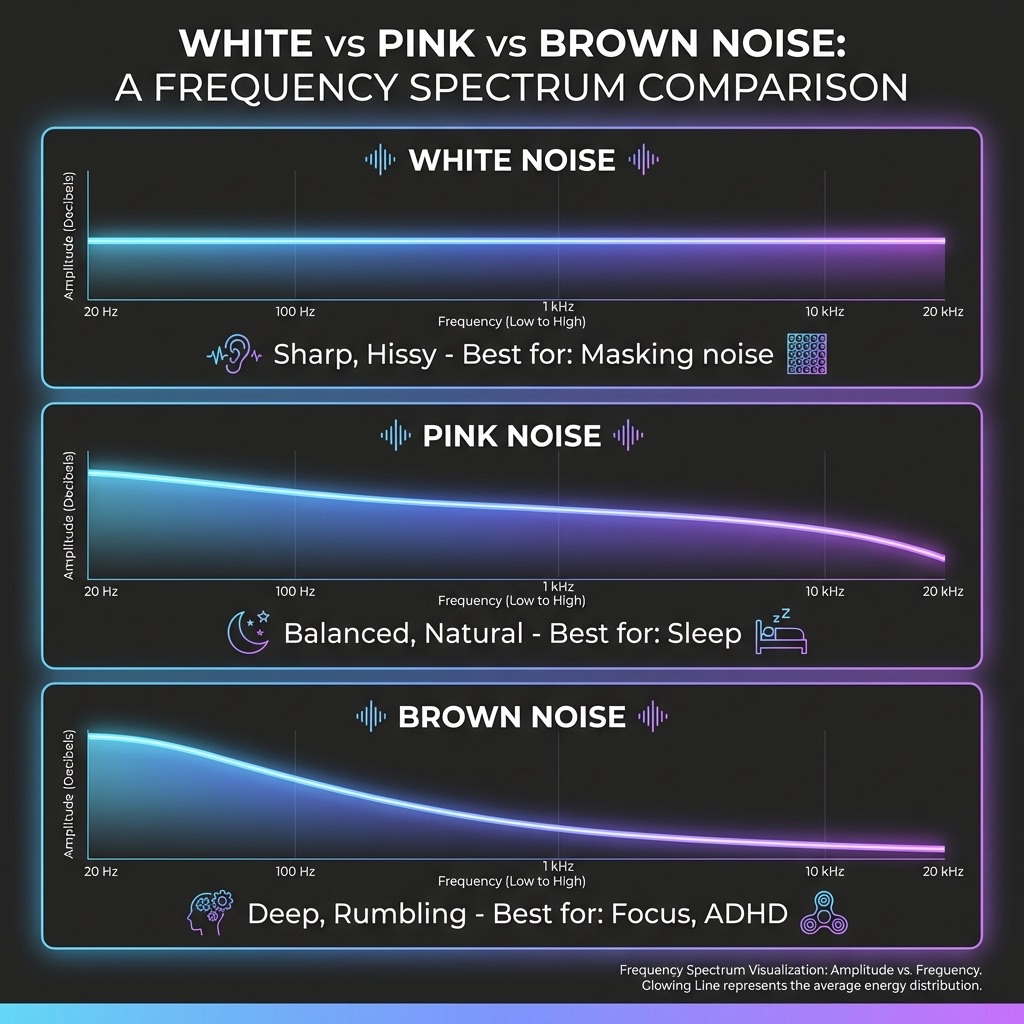
Technical: Equal intensity across all frequencies. A flat frequency spectrum.
Best for: Blocking external noise. Office environments. Masking conversations.
For sleep? Works for many people. Can be harsh for others.
The high frequencies in white noise can feel “sharp” or fatiguing to some ears. If white noise feels too intense, try pink or brown.
Pink Noise
Sound: Softer than white. Steady rainfall. Wind through trees. Heartbeat.
Technical: Lower frequencies are louder. Power decreases as frequency increases.
Best for: Sleep. Studying. Background ambiance.
For sleep? Possibly. In a small study of older adults, acoustic stimulation timed to slow-wave sleep increased deep sleep and improved next-morning memory recall (Papalambros et al., 2017, Front Hum Neurosci). Note what that study actually did: pink noise played in precise bursts synchronised to brainwaves in a lab, not a sound file looping all night from a phone. Whether the consumer version does anything is untested.
Many people prefer pink noise over white noise for sleeping.
Brown Noise (Brownian Noise)
Sound: Deep, rumbling. Thunder. Waterfall. Strong wind.
Technical: Even more bass-heavy than pink. Power decreases faster at higher frequencies.
Best for: Deep focus. Blocking out distractions. ADHD concentration.
For sleep? Excellent for people who like “cozy” or “enveloping” sounds. The heaviness can feel like a sound blanket.
Recently went viral for helping people with ADHD focus. The low frequencies may be less stimulating to active brains.
The Comparison
| Noise | Sound Profile | Best For | Frequency |
|---|---|---|---|
| White | Hissy, sharp | Masking noise | Flat |
| Pink | Balanced, natural | Sleep, study | Medium bass |
| Brown | Deep, rumbling | Focus, ADHD | Heavy bass |
What Works for Different Tasks
Deep work: Low, consistent sounds. Rain. White noise. Brown noise.
Creative work: Slightly more texture. Coffee shop ambiance. Gentle thunderstorms.
Sleep: Slow, rhythmic sounds. Ocean waves. Gentle rain. No sudden changes.
Which Should You Try?
Start with pink noise if:
- You want better sleep
- White noise feels harsh
- You like natural sounds
Start with brown noise if:
- You need deep focus
- You have ADHD or racing thoughts
- You like thunderstorms and waterfalls
- You want to feel “cocooned”
Stick with white noise if:
- You’re in a loud environment
- You need to mask specific sounds (conversations, traffic)
- It already works for you
The Test
Don’t overthink it. Try each for one night.
You’ll know within 10 minutes which one your brain prefers. Trust the feeling.
Why Most Sound Apps Suck
I tried a bunch. Problems:
- Ads interrupting your flow. Nothing kills focus like a 30-second ad for car insurance.
- Sounds that loop badly. You hear the same rain pattern every 45 seconds. Your brain notices.
- Too many features. I don’t need social sharing and achievements in a white noise app.
- Subscription models. $5/month for rain sounds? Come on.
The Tool
I built DreamNoise with all three — plus dozens of natural sounds.
Mix brown noise with rain. Layer pink noise with ocean waves. Create your perfect soundscape.
Rain on a window. Distant thunder. Crackling fire. Coffee shop murmur. Ocean waves.
- Sleep timer with gentle fade
- Works offline (no streaming, no interruptions)
- No ads, no subscription, free to download
Pick your soundscape. Block out the world. Do the work.
Or just finally fall asleep.
Related reads:
- Breathing Exercises for Sleep — combine noise with breathwork for better sleep
Sources
- NHLBI — Sleep Deprivation and Deficiency
- NCCIH — Meditation and Mindfulness: What You Need To Know
- NCCIH — Relaxation Techniques: What You Need To Know
This article is general information, not medical advice. Talk to a qualified professional about anything affecting your health.
— Dolce
Comments
Comments powered by Giscus. Sign in with GitHub to comment.