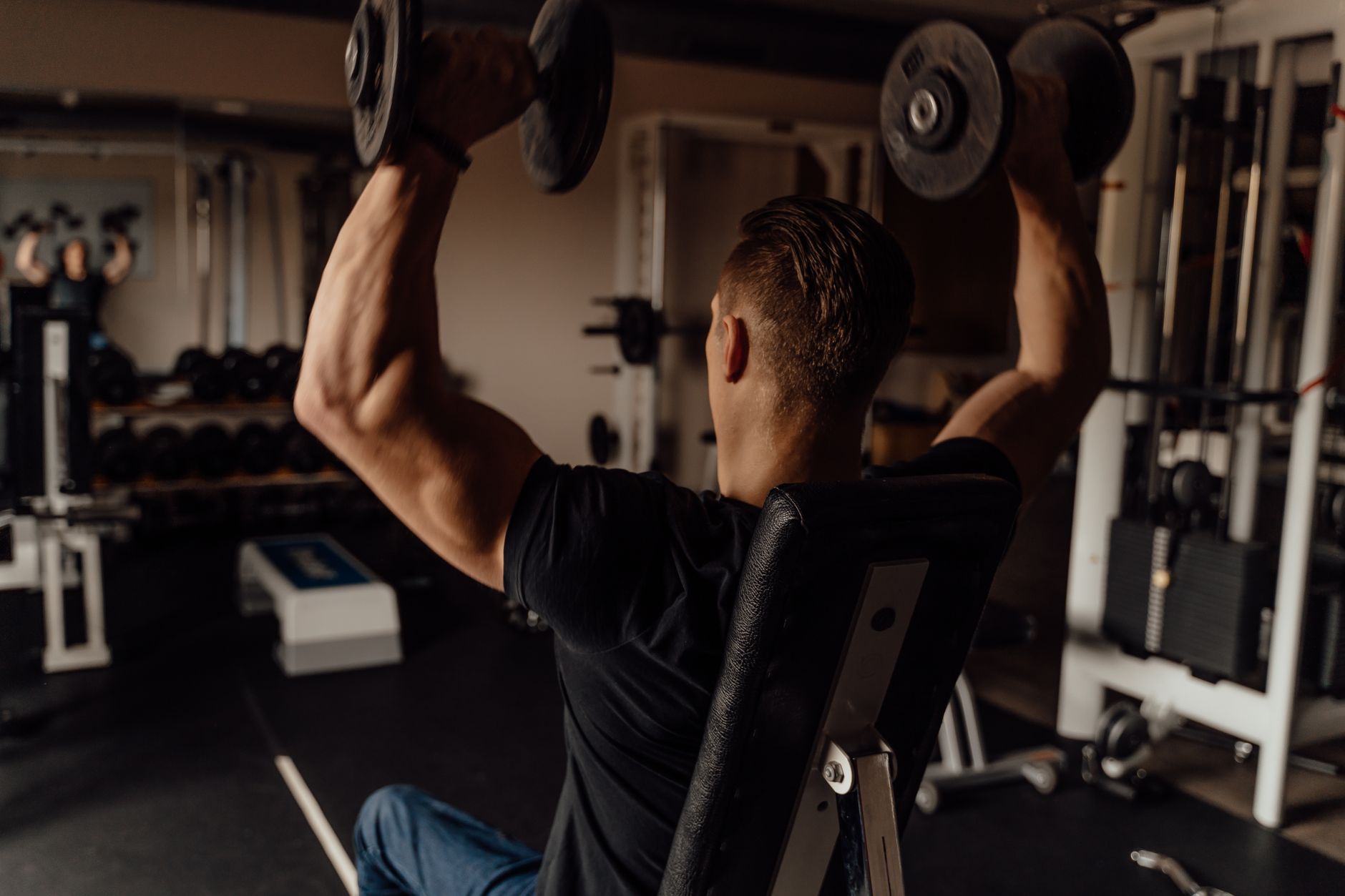
Your chest is lagging because you've been benching on International Chest Monday for three years straight. Your back is lagging because you treat pull day like an afterthought. And you're still splitting them across different days like it's 1998. A properly designed chest back workout fixes both problems in one session — and cuts your gym time nearly in half.
Pairing chest and back isn't new. Arnold did it. Dorian Yates did it. But somewhere along the way, the bro-split took over and everyone forgot that training antagonist muscles together is one of the most efficient methods in strength training.
Time to remember.
Why a Chest Back Workout Makes Sense
Chest and back are antagonist muscle groups. When your pectorals contract during a bench press, your lats and rhomboids stretch. When your back contracts during a row, your chest stretches. This relationship creates three major advantages when you train them together:
1. Reciprocal inhibition improves performance. When you fatigue your chest, your back muscles receive a neurological signal that makes them slightly more responsive. A 2010 study in the Journal of Strength and Conditioning Research found that athletes who performed antagonist supersets produced greater force output than those who rested passively between sets. You literally get stronger on rows by benching first.
2. Time efficiency is unmatched. A traditional chest-only session might take 60 minutes. A back-only session another 60. A chest back workout using supersets takes 45-55 minutes and delivers equal or greater total volume. You're resting one muscle group while working the other.
3. Better posture and balanced development. Most lifters over-train pushing and under-train pulling. This creates rounded shoulders, anterior tilt, and an eventual rotator cuff problem. Programming chest and back together forces you to match your push volume with your pull volume. Balance built into the structure.
The Chest Back Workout Program
This program uses antagonist supersets — you perform a chest exercise, rest 60 seconds, perform a back exercise, rest 60 seconds, and repeat. Each superset pairs a push with a pull of matching movement patterns.
Superset 1: Horizontal Press + Horizontal Pull
A1: Barbell Bench Press — 4 sets of 6-8 reps Plant your feet. Retract your shoulder blades. Arch your upper back slightly. Lower the bar to your lower chest. Press explosively.
A2: Barbell Bent-Over Row — 4 sets of 6-8 reps Hinge at the hips to about 45 degrees. Pull the bar to your lower ribcage. Squeeze your shoulder blades together at the top. Lower with control.
Rest 60-90 seconds between A1 and A2. Rest 90 seconds after A2 before repeating.
Superset 2: Incline Press + Vertical Pull
B1: Incline Dumbbell Press — 3 sets of 8-10 reps Set the bench to 30-45 degrees. Press the dumbbells up and slightly inward. Lower until your upper arms are parallel to the floor. The incline shifts emphasis to the upper chest, which is underdeveloped in most lifters.
B2: Pull-Ups (or Lat Pulldown) — 3 sets of 8-10 reps Full range of motion. Dead hang at the bottom, chin over bar at the top. If you can't hit 8 clean reps, use the lat pulldown machine or band-assisted pull-ups. No half reps.
Rest 60 seconds between exercises, 90 seconds between rounds.
Superset 3: Fly + Face Pull
C1: Cable Flyes (or Dumbbell Flyes) — 3 sets of 12-15 reps Keep a slight bend in your elbows. Bring your hands together at chest height. Squeeze. Control the eccentric. This isolates the pectorals without tricep involvement.
C2: Face Pulls — 3 sets of 15-20 reps Set the cable at face height. Pull the rope toward your ears with external rotation at the end. This trains the rear delts, rhomboids, and external rotators — the muscles that keep your shoulders healthy and your posture upright.
Rest 45-60 seconds between exercises.
Superset 4: Dip + Chest-Supported Row
D1: Weighted Dips — 3 sets of 8-12 reps Lean slightly forward to emphasize chest. Full depth — upper arm below parallel. If bodyweight is challenging, that's fine. Add weight when you can hit 12 clean reps.
D2: Chest-Supported Dumbbell Row — 3 sets of 10-12 reps Lie face-down on an incline bench. Row both dumbbells simultaneously. The chest support eliminates momentum and forces your back to do all the work. This is where honest back development happens.
Rest 60 seconds between exercises.
Progressive Overload: The Part That Matters
Doing this chest back workout once is a good session. Doing it for 12 weeks with progressive overload is a transformation.
Every week, try to add one of these:
- 5 more pounds on the bar
- 1 more rep per set
- 1 more set on your weakest exercise
Log everything. If you hit 4 sets of 8 on bench at 185 this week, your goal next week is 4 sets of 8 at 190 — or 4 sets of 9 at 185. Small jumps compound into massive results over months.
Gym Coach automates this tracking and tells you exactly what to lift each session based on your history. No guesswork, no stalled progress.
What to Do on Your Other Training Days
This chest back workout fits into a 4-day upper/lower split:
- Monday: Chest + Back (this workout)
- Tuesday: Legs + Core
- Wednesday: Rest or active recovery
- Thursday: Shoulders + Arms
- Friday: Legs (posterior chain focus)
- Weekend: Walk, recover, live your life
If you don't have gym access every day, a solid home workout program fills the gaps. Push-ups and inverted rows replicate the push-pull pairing with zero equipment.
Common Chest Back Workout Mistakes
Going too heavy on rows and using momentum. If your torso swings more than 10 degrees during a row, the weight is too heavy. Your ego gets a workout. Your back doesn't.
Neglecting the stretch. Full range of motion on every rep. Partial reps on flyes and pulldowns are leaving muscle growth on the table. EMG research consistently shows that the stretched position of a muscle produces the greatest hypertrophy stimulus.
Skipping face pulls. They're not glamorous. They don't build a big chest or a wide back. But they're the single best exercise for shoulder health, and shoulder injuries end training careers. Three sets of face pulls cost you six minutes. A torn rotator cuff costs you six months.
Ignoring recovery. You can't build muscle in a sleep-deprived, dehydrated, stressed-out state. Prioritize 7-8 hours of sleep — white noise helps if your environment is noisy. Track your water intake. Build recovery habits that are as consistent as your training.
Pair your chest with your back. Pair your pushing with your pulling. Train smart, progress weekly, and watch your upper body fill out in ways a bro-split never delivered.
-- Dolce

Comments
Comments powered by Giscus. Sign in with GitHub to comment.