I wasted my first six months of strength training following a bodybuilder's routine from a fitness magazine. Six exercises per muscle group. Two-hour sessions. Sore for days.
I got weaker.
Then I stripped it down to five compound movements, three days a week. Within eight weeks, I was stronger than I'd ever been. The lesson was brutal in its simplicity: a strength workout routine doesn't need to be complicated. It needs to be consistent.
Here's the routine I wish someone had given me on day one.
Why Compound Movements Win
Compound exercises work multiple muscle groups at once. A squat hits your quads, glutes, hamstrings, and core. A push-up hits chest, shoulders, triceps, and core.
Isolation exercises — bicep curls, leg extensions, lateral raises — have their place. But that place is after you've built a foundation of full-body strength.
Focus on five movement patterns:
- Push (push-ups, overhead press)
- Pull (rows, pull-ups)
- Squat (bodyweight squats, goblet squats)
- Hinge (deadlifts, glute bridges)
- Core (planks, dead bugs)
Every strength workout routine should cover all five. If yours doesn't, it's incomplete.
The Beginner Strength Routine
Schedule
Three days per week. Full body each session. Rest day between sessions.
- Monday / Wednesday / Friday, or
- Tuesday / Thursday / Saturday
Day A
| Exercise | Sets x Reps | Rest |
|---|---|---|
| Push-Ups | 3 x 8-12 | 60s |
| Bodyweight Squats | 3 x 12-15 | 60s |
| Inverted Rows (under a table) | 3 x 8-12 | 60s |
| Glute Bridges | 3 x 12-15 | 60s |
| Dead Bug | 3 x 10 each side | 45s |
Day B
| Exercise | Sets x Reps | Rest |
|---|---|---|
| Pike Push-Ups (shoulders) | 3 x 6-10 | 60s |
| Reverse Lunges | 3 x 10 each leg | 60s |
| Doorframe Rows | 3 x 8-12 | 60s |
| Single-Leg Glute Bridge | 3 x 10 each side | 60s |
| Plank | 3 x 30-45s | 45s |
Alternate Day A and Day B. Week 1: A-B-A. Week 2: B-A-B. Repeat.
Total time per session: 25-35 minutes.
Progression: The Only Thing That Matters
Doing the same workout forever produces nothing. You need progressive overload — making it slightly harder over time.
For bodyweight exercises, progress by:
- Adding reps. Can do 12 push-ups? Go for 15.
- Adding sets. Three sets easy? Add a fourth.
- Slowing down. 3 seconds down, 1 second up. Tempo kills.
- Harder variations. Regular push-ups → diamond push-ups → decline push-ups → archer push-ups.
- Adding load. Backpack with books. Resistance bands. Eventually, actual weights.
When you can do 15+ reps easily for 3 sets, it's time to make the exercise harder. Don't just keep adding reps forever — that's endurance training, not strength.
What About Equipment?
You don't need it to start. But a small investment opens up massive progression:
- Resistance bands ($15-30): Add resistance to any bodyweight movement. Fantastic for rows and pull-apart exercises.
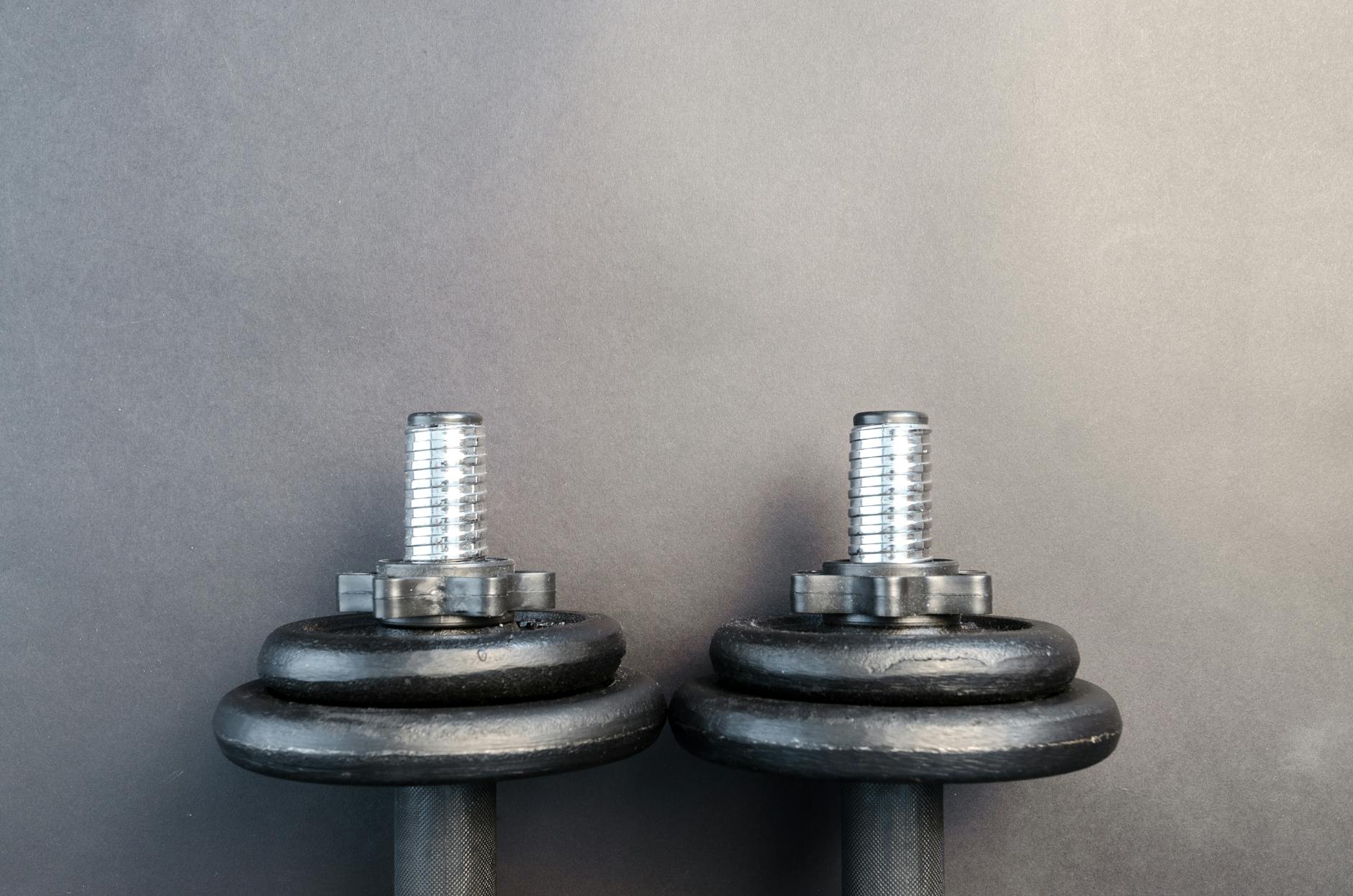
- A pair of adjustable dumbbells ($80-150): The single best home gym investment. Opens up hundreds of exercises.
- Pull-up bar ($25-40): Doorframe mounted. Pull-ups are the king of upper body exercises.
Total: under $200 for a complete home setup that lasts years. Check our HIIT timer apps if you want to time your rest periods precisely.
Common Beginner Mistakes
Too many exercises. Fifteen exercises per session is not better than five. It's just more fatigue with less focus. Stick to the basics in this strength workout routine.
Ignoring legs. Your legs are the biggest muscles in your body. Skip them and you're leaving the majority of your potential gains on the table.
No tracking. If you don't write down your reps and sets, you're guessing. Guessing doesn't lead to progressive overload. Use a notebook or a simple app.
Ego lifting. Doing half-reps with bad form to feel strong is the fastest path to injury. Full range of motion, controlled tempo, every rep.
Nutrition Basics for Strength
You can't build muscle without fuel. The basics:
- Protein: 0.7-1g per pound of bodyweight daily. Non-negotiable.
- Calories: Eat at maintenance or slight surplus if you want to build muscle. Slight deficit if fat loss is the priority.
- Timing: Eat protein within 2 hours of training. Beyond that, meal timing barely matters.
- Sleep: 7-9 hours. Growth hormone peaks during deep sleep. Skimp on sleep and you're sabotaging recovery.
Nutrition doesn't need to be perfect. It needs to be consistent. Hit your protein target and eat like an adult. That covers 80% of it.
FAQ
How long does it take to see results from a strength workout routine?
Strength gains: 2-4 weeks (neural adaptation — your body learns the movements). Visible muscle changes: 8-12 weeks with consistent training and adequate protein. Be patient with the mirror. Trust the numbers.
Should beginners do full body or split routines?
Full body. Always. Beginners recover faster than they think and benefit from hitting each muscle group three times per week. Split routines are for intermediate and advanced lifters.
How heavy should I lift as a beginner?
Light enough to maintain perfect form for all reps. Heavy enough that the last 2-3 reps are challenging. If you can easily complete all reps, increase the difficulty. If your form breaks down, decrease it.
Can I do strength training every day?
Not the same muscles. Your muscles need 48 hours to recover from strength training. Three full-body sessions per week, or you can alternate upper/lower if you want to train more frequently.
— Dolce

Comments
Comments powered by Giscus. Sign in with GitHub to comment.