You Are Spinning Your Wheels in the Gym
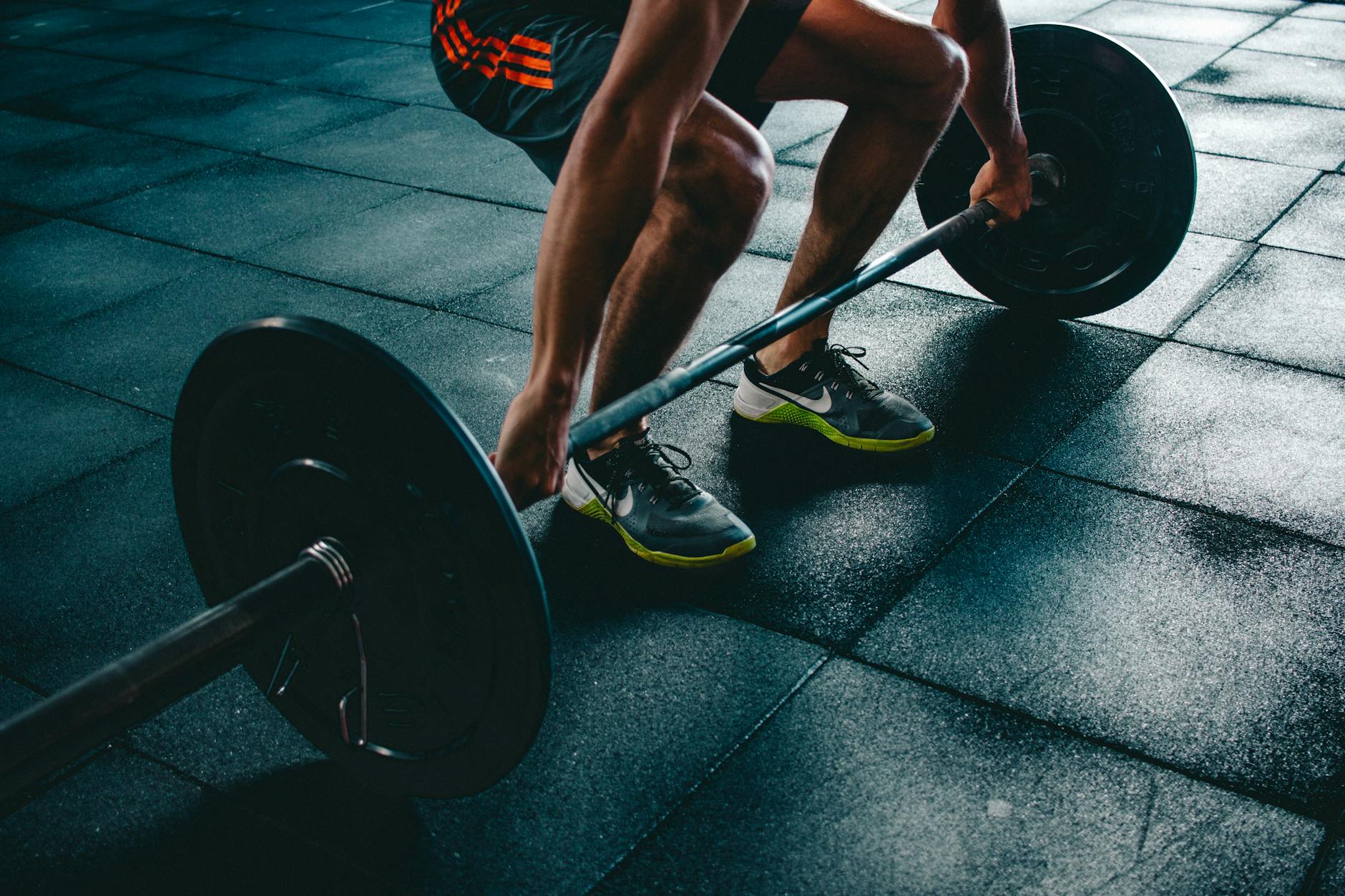
You show up. You lift. You leave. But the weights on the bar have not changed in months. You follow random workouts from social media. A chest day here. An arm day there. No structure. No progression. No results. A proper powerlifting routine fixes this by giving you a clear plan built around the three lifts that matter most: squat, bench press, and deadlift.
Powerlifting is not about looking good in a mirror. It is about moving heavy weight with precision. And that focus on measurable progress is exactly what makes a powerlifting routine so effective, even if you never plan to compete.
What Makes a Powerlifting Routine Different
Bodybuilding programs chase muscle size. Powerlifting programs chase strength. The difference shows up in every variable.
Rep ranges. Powerlifting routines primarily work in the 1 to 5 rep range. This trains your nervous system to recruit more muscle fibers, which is the key to lifting heavier weight.
Exercise selection. Everything revolves around the squat, bench press, and deadlift. Accessory work exists only to support those three movements.
Progressive overload. A good powerlifting routine adds weight to the bar systematically. You are not guessing. You are following a plan that forces adaptation.
Rest periods. You rest 3 to 5 minutes between heavy sets. This is not cardio. Full recovery between sets lets you maintain intensity.
A Simple Powerlifting Routine That Works
Here is a proven 4-day powerlifting routine for beginners and intermediates. It uses an upper/lower split with dedicated heavy and volume days.
Day 1: Heavy Squat and Deadlift
- Back Squat: 5 sets of 3 reps at 85% of your 1RM
- Conventional Deadlift: 4 sets of 3 reps at 82%
- Barbell Row: 3 sets of 6 reps
- Leg Press: 3 sets of 8 reps
Day 2: Heavy Bench Press
- Bench Press: 5 sets of 3 reps at 85%
- Overhead Press: 4 sets of 5 reps
- Weighted Dips: 3 sets of 6 reps
- Tricep Pushdowns: 3 sets of 10 reps
Day 3: Volume Squat and Deadlift
- Back Squat: 4 sets of 6 reps at 72%
- Romanian Deadlift: 4 sets of 8 reps
- Bulgarian Split Squats: 3 sets of 8 per leg
- Leg Curls: 3 sets of 10 reps
Day 4: Volume Bench Press
- Bench Press: 4 sets of 6 reps at 72%
- Incline Dumbbell Press: 3 sets of 8 reps
- Barbell Row: 4 sets of 8 reps
- Face Pulls: 3 sets of 15 reps
Run this for 4 weeks. Add 2.5 kg to upper body lifts and 5 kg to lower body lifts each cycle. If you do not have gym access, a solid home workout guide can keep you moving between sessions.
Progressive Overload: The Engine of Your Powerlifting Routine
Without progressive overload, a powerlifting routine is just exercise. Overload is what turns it into training.
The simplest approach is linear progression. Add weight every session or every week. This works for beginners because their bodies adapt quickly.
Once linear progression stalls, move to weekly undulation. Alternate between heavy days and volume days within the same week. The routine above already does this. Heavy days build peak strength. Volume days build the muscle mass that supports heavier lifts later.
Intermediate lifters can also use percentage-based programming. Work at specific percentages of your one-rep max and increase those percentages over a training block of 4 to 6 weeks.
Recovery Is Half the Program
You do not get stronger while lifting. You get stronger while recovering. A powerlifting routine demands serious recovery.
Sleep. Aim for 7 to 9 hours. Growth hormone peaks during deep sleep. Cutting sleep short cuts your gains short.
Nutrition. Eat enough protein. A minimum of 1.6 grams per kilogram of bodyweight daily. More is fine. Less is a problem.
Deload weeks. Every 4 to 6 weeks, cut your training volume and intensity by 40 to 50 percent. This lets accumulated fatigue dissipate so you can push harder in the next cycle.
Mobility work. Heavy squats and deadlifts demand hip and ankle mobility. Spend 10 minutes before each session on dynamic stretching. Your joints will thank you.
Common Mistakes That Kill Progress
Ego lifting. Adding weight before your form is solid is a fast track to injury. A powerlifting routine built on sloppy reps will eventually break you.
Skipping accessories. The big three are the priority but accessory work prevents imbalances. Weak hamstrings will limit your deadlift. Weak triceps will limit your bench. Train them.
Ignoring weak points. If you always fail a squat at the bottom, you need pause squats. If your bench stalls at lockout, you need board presses. Diagnose your weaknesses and attack them.
Program hopping. Switching routines every two weeks guarantees you never adapt to anything. Stick with your powerlifting routine for at least 8 to 12 weeks before evaluating results.
For tracking your workouts and staying consistent, a dedicated app like GymCoach can help you log lifts and monitor progression over time.
How to Know Your Powerlifting Routine Is Working
Track two things. First, are the weights on the bar going up over time. Second, are your RPE ratings staying consistent. If you are lifting more weight at the same perceived effort, your routine is working.
Keep a training log. Write down every set, every rep, every weight. Numbers do not lie. Feelings do.
FAQ
How many days per week should a powerlifting routine have?
Three to four days works best for most people. This allows enough training stimulus while leaving adequate recovery time. Advanced lifters may train up to five days, but more is not always better.
Can beginners follow a powerlifting routine?
Yes. Beginners actually progress faster on a powerlifting routine because their nervous system adapts rapidly to heavy compound movements. Start with conservative weights and focus on form for the first month.
Do I need a belt and other gear for powerlifting?
Not immediately. Train without a belt for your first 6 to 12 months to build core strength. Add a belt when your squat exceeds 1.5 times your bodyweight. Wrist wraps and knee sleeves are optional but can help with heavier loads.
How long until I see results from a powerlifting routine?
Most beginners add 20 to 30 kg to their squat and deadlift within the first three months. Bench press gains are typically slower, around 10 to 15 kg. Visible body composition changes take 8 to 12 weeks.
-- Dolce

Comments
Comments powered by Giscus. Sign in with GitHub to comment.