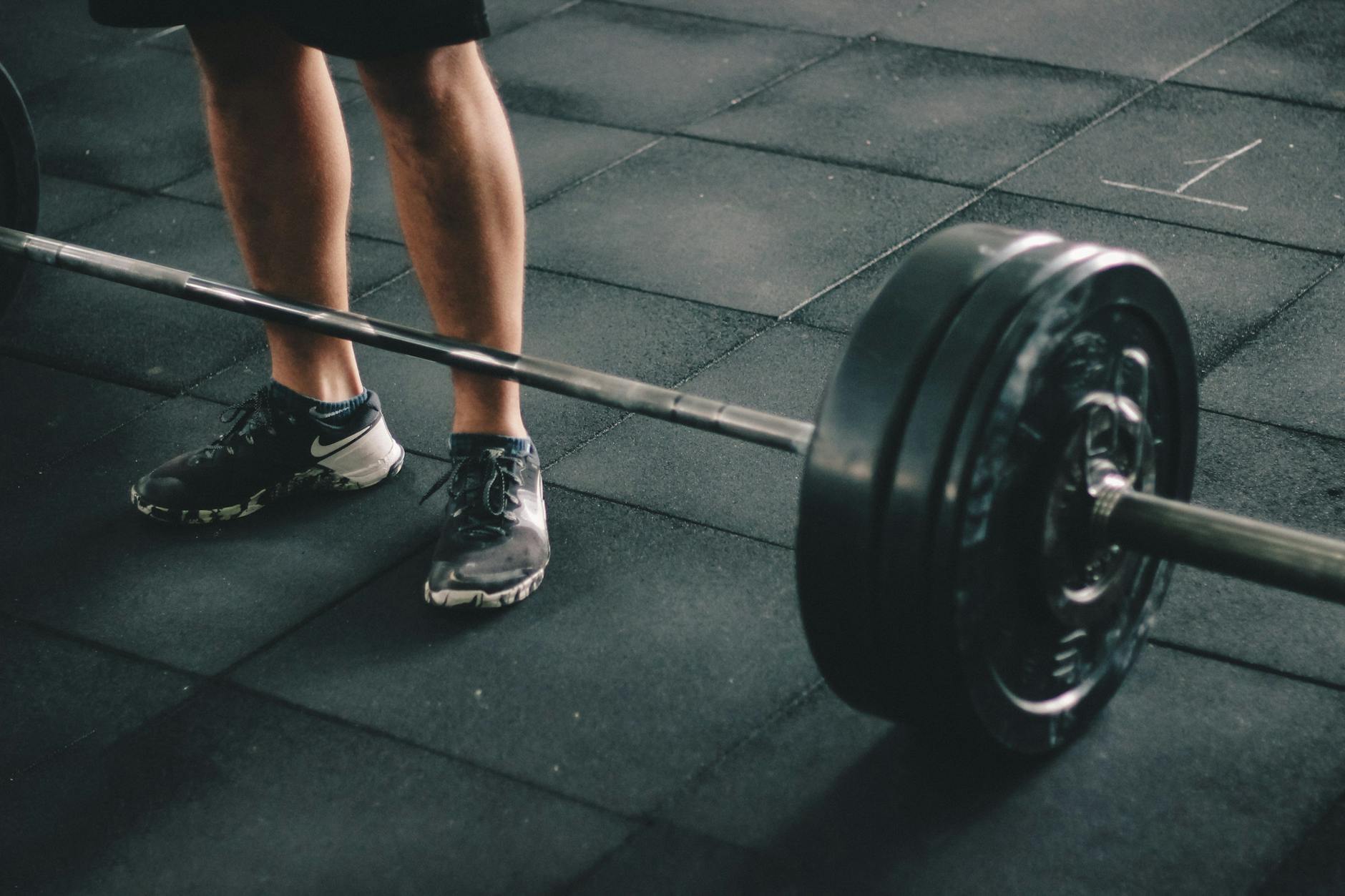
The Only Leg Routine for Mass You Actually Need
Your upper body looks great. Your legs tell a different story. You have been skipping leg day or doing it wrong — half-hearted leg presses and a few sets of curls before heading home. Meanwhile, your jeans fit like tubes and your squat numbers have not moved in months. That ends today.
A proper leg routine for mass is not complicated. It does not require seventeen exercises or two hours in the gym. But it does require you to suffer. Heavy compound movements, progressive overload, and enough volume to force adaptation. That is the recipe. Everything else is noise.
This guide gives you a proven leg routine for mass, explains the science behind exercise selection, and shows you how to structure your training for maximum growth.
Why Most Leg Routines Fail
People overcomplicate leg training. They bounce between programs. They prioritize machines over free weights. They train with moderate intensity and wonder why nothing changes.
The legs contain the largest muscle groups in your body. Your quads, hamstrings, and glutes are built for heavy, demanding work. They need serious mechanical tension to grow. Light leg extensions are not going to cut it.
The other problem is frequency. Training legs once a week is the bare minimum. If your legs are lagging, hitting them twice per week accelerates growth dramatically. Research consistently shows that higher frequency produces better hypertrophy when volume is equated.
The Complete Leg Routine for Mass
Here is the routine. It hits all major muscle groups of the lower body with the right balance of compound and isolation work.
Exercise 1: Barbell Back Squat — 4 sets x 6-8 reps
The king of leg exercises and the foundation of any leg routine for mass. Nothing loads the quads, glutes, and spinal erectors like a heavy back squat. Use a full range of motion — at least parallel, deeper if your mobility allows. Rest 3 minutes between sets.
If you cannot squat due to injury, front squats or belt squats are acceptable substitutes. But do not skip squatting just because it is hard.
Exercise 2: Romanian Deadlift — 4 sets x 8-10 reps
This targets your hamstrings and glutes through a deep stretch under load. The eccentric lengthening is what drives growth. Lower the bar slowly, feel the stretch in your hamstrings, and drive your hips forward to stand. Do not yank the weight. Control it.
Exercise 3: Leg Press — 3 sets x 10-12 reps
After squats have fatigued your stabilizers, the leg press lets you continue hammering your quads with heavy loads in a controlled path. Place your feet in the middle of the platform, shoulder width apart. Go deep. Half reps build half legs.
Exercise 4: Walking Lunges — 3 sets x 12 reps per leg
Unilateral work fixes imbalances and forces each leg to carry its own weight. Walking lunges also challenge your balance and coordination, recruiting stabilizer muscles that bilateral movements miss. Use dumbbells or a barbell.
Exercise 5: Leg Curl — 3 sets x 10-12 reps
Your hamstrings have two functions: hip extension and knee flexion. The Romanian deadlift covered hip extension. Leg curls hit knee flexion. You need both for complete hamstring development. Squeeze at the top. Control the negative.
Exercise 6: Calf Raises — 4 sets x 15-20 reps
Calves need high reps and full range of motion. Pause at the bottom stretch for two seconds and squeeze hard at the top. Alternate between standing and seated variations across workouts to hit both the gastrocnemius and soleus.
Progressive Overload: The Key to This Leg Routine for Mass
The routine means nothing without progression. Every week, you need to push harder than the last. This can mean more weight on the bar, more reps at the same weight, or an extra set.
Track everything. Write down your weights and reps. If you squatted 225 for 4 sets of 7 last week, aim for 4 sets of 8 this week. Once you hit the top of the rep range on all sets, increase the weight by 5-10 pounds.
This sounds simple because it is. The execution is where people fail. They stop pushing when it gets uncomfortable. Mass requires discomfort.
Nutrition for Leg Growth
You cannot build leg mass in a caloric deficit. Period. Eat at a surplus of 300-500 calories above maintenance. Prioritize protein — at least 0.8 grams per pound of body weight daily, ideally closer to 1 gram.
Carbohydrates fuel your leg workouts. Do not fear them. Eat a solid meal with complex carbs 2-3 hours before training and replenish glycogen afterward.
Recovery Matters
Legs take longer to recover than arms or shoulders. Sleep 7-9 hours. Stay hydrated. Manage stress. If you are training legs twice per week, space sessions at least 72 hours apart.
For a complete training plan you can follow at home or in the gym, check out our home workout guide. And if you want structured programming with built-in progression tracking, our GymCoach app handles the planning so you just show up and lift.
FAQ
How many times per week should I train legs for mass?
Twice per week is ideal for most people. This gives you enough frequency and volume to stimulate growth while allowing adequate recovery between sessions. Space your leg days at least 72 hours apart.
How long does it take to see results from a leg routine for mass?
With consistent training, proper nutrition, and progressive overload, you should notice visible changes in 8-12 weeks. Strength gains come faster — often within the first 3-4 weeks as your nervous system adapts.
Should I train to failure on leg exercises?
Take your working sets to 1-2 reps short of failure. Going to true failure on heavy compounds like squats is dangerous and increases recovery demands without proportional benefit. Save failure training for isolation exercises like leg curls and calf raises.
Can I build leg mass without squats?
Yes, but it is harder. Leg presses, hack squats, and belt squats can substitute. The squat remains the most efficient leg builder because it loads so many muscles simultaneously. Only skip it if injury prevents you from squatting safely.
-- Dolce


Comments
Comments powered by Giscus. Sign in with GitHub to comment.