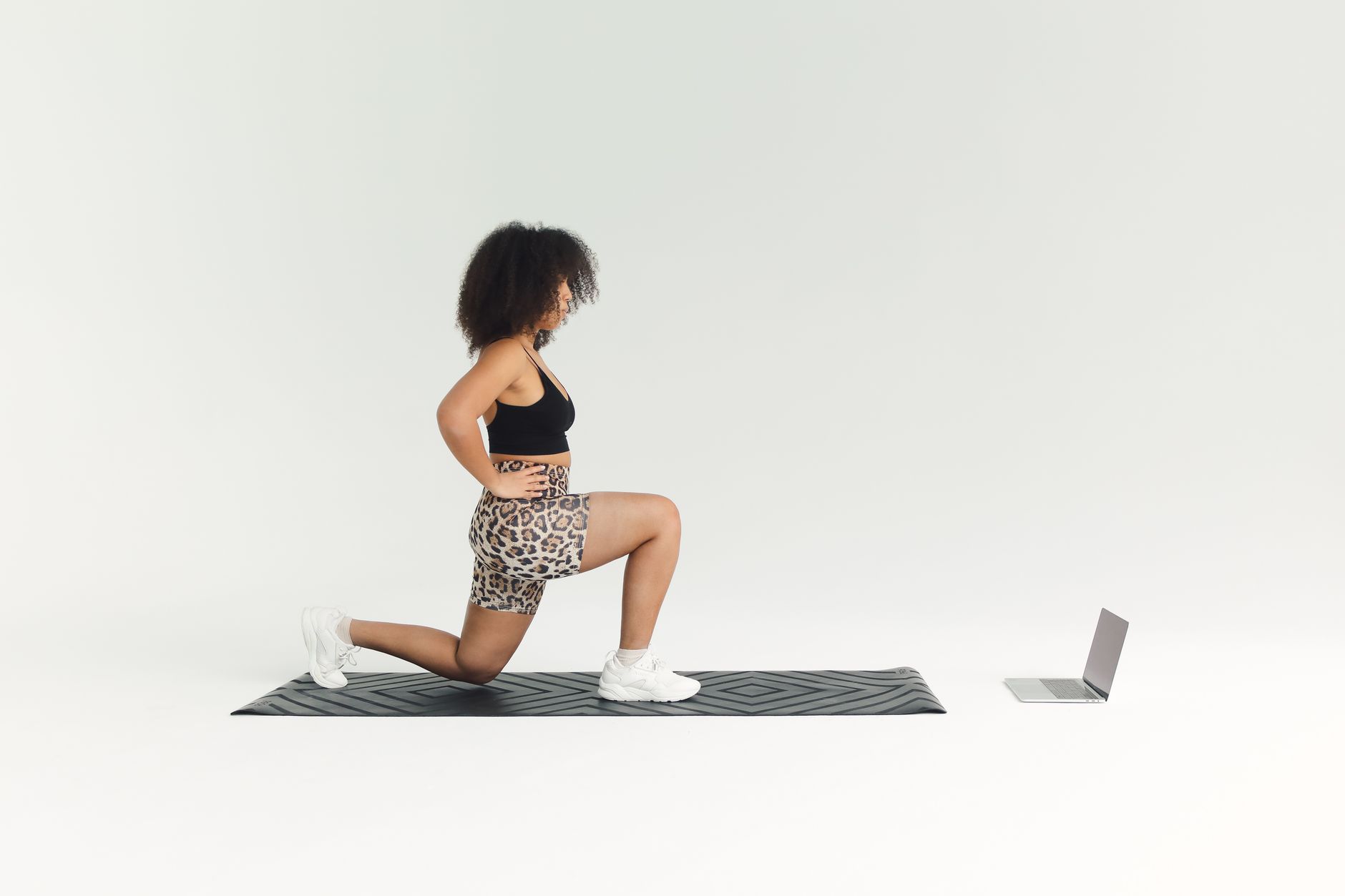
You've done the YouTube HIIT classes. Thirty minutes of jumping jacks, high knees, and mountain climbers while someone with visible abs yells encouragement at a camera. You were drenched in sweat. You felt destroyed. And three months later, you look exactly the same.
Most HIIT workouts at home are just cardio with extra steps. They spike your heart rate and make you feel like you worked hard, but they don't build muscle, don't create progressive overload, and don't change your body composition. Sweat is not a metric. Adaptation is.
Here's how to structure home HIIT that actually works — no equipment, no nonsense, real results.
What HIIT Workouts at Home Should Actually Look Like
HIIT stands for High-Intensity Interval Training. The key word is intensity — not speed, not exhaustion, not how fast you can flail your arms. True intensity means working at 85-95% of your maximum effort during work intervals, then recovering enough to hit that level again.
The problem with most home HIIT programs is they confuse movement speed with intensity. Doing 50 jumping jacks as fast as possible isn't high intensity. It's high volume at low intensity. Your heart rate goes up because you're moving a lot, not because you're demanding much from your muscles.
Real HIIT uses compound movements that challenge multiple muscle groups under meaningful resistance — even if that resistance is just your bodyweight.
The Protocol: 3 HIIT Workouts at Home Per Week
Do these on non-consecutive days. Monday, Wednesday, Friday works. Each session is 20-25 minutes including warm-up. That's it. If you're going longer, you're not working hard enough during the intervals.
Workout A: Lower Body Focus
Warm-up (3 minutes): Bodyweight squats × 10, leg swings × 10 each side, hip circles × 10 each direction.
Circuit — 30 seconds work / 15 seconds rest, 4 rounds:
- Jump squats (full depth, explode up, soft landing)
- Reverse lunges alternating (controlled down, drive up)
- Broad jump to backpedal (jump forward, walk back, repeat)
- Wall sit hold (thighs parallel, back flat against wall)
- Single-leg glute bridge alternating (squeeze at top for one count)
Rest 90 seconds between rounds. If you can talk comfortably during work intervals, you're sandbagging.
Workout B: Upper Body and Core
Warm-up (3 minutes): Arm circles × 15 each direction, push-ups × 5 slow, dead bugs × 10.
Circuit — 30 seconds work / 15 seconds rest, 4 rounds:
- Push-up to shoulder tap (full push-up, tap opposite shoulder, alternate)
- Diamond push-ups (hands close together, elbows tight)
- Plank to pike (walk feet toward hands, walk back out)
- Burpees with push-up (chest touches floor every rep)
- Bicycle crunches (slow and controlled, elbow to opposite knee)
Rest 90 seconds between rounds.
Workout C: Full Body
Warm-up (3 minutes): Jog in place × 30 seconds, inchworms × 5, bodyweight squats × 10.
Circuit — 40 seconds work / 20 seconds rest, 4 rounds:
- Squat to push-up (squat down, hands to floor, kick back, push-up, reverse)
- Split jumps (lunge position, explode up, switch legs mid-air)
- Pike push-ups (hips high, press head toward floor)
- Lateral bounds (jump side to side, stick the landing, 1-second pause)
- V-ups (legs and torso rise simultaneously, touch toes at top)
Rest 2 minutes between rounds. This one earns the longer rest.
For detailed guidance on bodyweight movement progressions and building strength without a gym, check out our complete home workout guide.
Why This Works When Other Programs Don't
Progressive overload is built in. Each workout has movements you can make harder. Can't do jump squats yet? Do regular squats fast. Jump squats too easy? Add a pause at the bottom. Push-ups too hard? Elevate your hands on a chair. Too easy? Elevate your feet. The movements scale with you.
The work-to-rest ratios are honest. Thirty seconds on, 15 seconds off is a 2:1 ratio. That's genuine HIIT territory. Programs with 45 seconds work and 45 seconds rest (1:1) are interval training, not high-intensity interval training. The distinction matters for metabolic adaptation.
Three days is enough. Your muscles need 48 hours to recover from genuine high-intensity work. People who do HIIT daily either aren't going hard enough or are heading toward overtraining. Three sessions per week with full effort beats six sessions at half effort.
The Biggest Home HIIT Mistakes
Going too long. If your HIIT workout lasts 45 minutes, it's not HIIT. True high-intensity work is unsustainable beyond 20-25 minutes. The people doing hour-long "HIIT" classes are doing moderate-intensity interval training. Different stimulus, different results.
Never progressing the movements. Doing the same workout at the same difficulty for months is how you plateau. Every two weeks, make one change: add a round, shorten the rest, progress to a harder variation. Small jumps. Consistent progression.
Skipping the warm-up. Three minutes of warm-up prevents weeks of injury recovery. Cold muscles under explosive load is how you pull a hamstring reaching for a jump squat. Non-negotiable.
Ignoring recovery. Sleep 7-8 hours. Eat enough protein — 0.7 to 1 gram per pound of bodyweight. Drink water before, during, and after. The workout is the stimulus. Recovery is where the change happens. Our guide on how much water you actually need breaks down hydration needs for active people.
If you want to track these workouts and build a progression plan, Gym Coach lets you log bodyweight sessions and track your improvements over time.
FAQ
How many times a week should I do HIIT workouts at home?
Three times per week with at least one rest day between sessions. This gives your muscles and nervous system time to recover and adapt. More isn't better — it's just more fatigue without proportional results. On off days, walk, stretch, or do light yoga.
Can HIIT workouts at home build muscle without weights?
Yes, especially for beginners and intermediates. Bodyweight movements like push-ups, squats, and lunges provide meaningful resistance when performed explosively with proper form. The key is progressive overload — harder variations, slower tempos, shorter rest periods. You'll eventually hit a ceiling, but most people are nowhere near it.
How long before I see results from home HIIT?
You'll feel stronger within two weeks. Visible body composition changes typically appear around 4-6 weeks with consistent training and adequate nutrition. The scale may not move much initially because you're building muscle while losing fat. Measurements and photos are better progress markers than weight.
Is HIIT better than steady-state cardio for fat loss?
For time efficiency, yes. A 20-minute HIIT session can burn comparable calories to 40-50 minutes of moderate jogging, with the added benefit of excess post-exercise oxygen consumption (EPOC), which elevates your metabolism for hours after the workout. But the best exercise for fat loss is whichever one you'll actually do consistently.
-- Dolce


Comments
Comments powered by Giscus. Sign in with GitHub to comment.