Most fitness advice assumes you have a gym membership, expensive equipment, or the coordination of a gymnast.
That’s garbage.
You don’t need any of that to get strong. Your bodyweight is the only equipment you need for an effective bodyweight workout for beginners. I’ve been building fitness apps for years, and the most successful users start simple. They master their own body first.
Gyms are intimidating. Equipment is expensive. Bodyweight exercises are free, private, and available 24/7 in your living room.
Why Bodyweight Training Works
Your muscles don’t care if resistance comes from iron plates or gravity. They respond to progressive overload either way.
Bodyweight exercises teach you functional movement patterns. You learn to move your body through space efficiently. This translates to real-world strength better than machine exercises.
Plus, you can’t make excuses. No “gym was closed” or “forgot my workout clothes.” Your body travels with you everywhere.
Essential Beginner Bodyweight Exercises
Start with these six movements. Master them before chasing fancy variations.
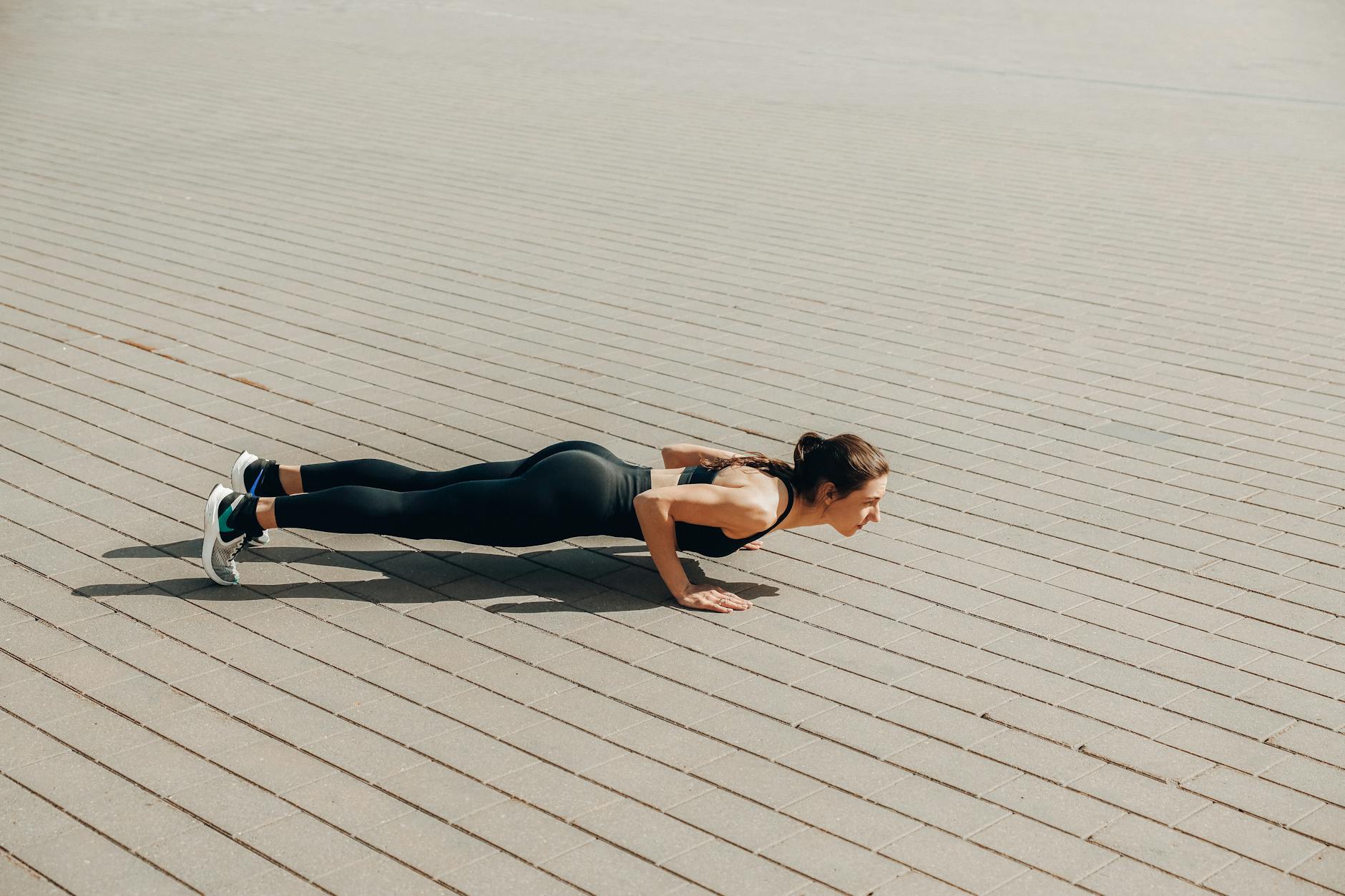
Push-ups
The king of upper body bodyweight exercises. Start on your knees if needed. Progress to full push-ups, then elevate your feet.
Form beats reps every time. Better to do 5 perfect push-ups than 20 sloppy ones.
Squats
Bodyweight squats build leg strength and teach proper hip hinge patterns. Keep your weight on your heels. Don’t let your knees cave inward.
Planks
Core stability matters more than six-pack abs. Hold a plank with perfect form. Start with 20 seconds. Build up slowly.
Lunges
Single-leg strength prevents imbalances. Step forward into a lunge, then push back to standing. Alternate legs.
Glute Bridges
Sitting all day weakens your glutes. Lie on your back, feet flat on floor. Squeeze your glutes and lift your hips up.
Modified Pull-ups
Find a sturdy table. Lie underneath and pull your chest toward the edge. This builds pulling strength without a pull-up bar.
Your First Beginner Bodyweight Workout Routine
Day 1: Full Body
- 5-10 push-ups (on knees if needed)
- 10-15 squats
- 20-30 second plank
- 10 lunges (5 each leg)
- 10 glute bridges
- 5 modified pull-ups
Rest 30-60 seconds between exercises. Complete 2-3 rounds total.
This home workout guide has more detailed routines once you master the basics.
Day 2: Rest or light walking
Day 3: Repeat Day 1 routine
Track your workouts. I built Tempo specifically for bodyweight sessions. It keeps you focused without staring at your phone between sets.
Progressive Overload Without Weights
Bodyweight training isn’t limited to basic exercises forever. Progress by:
Adding reps. If you can do 10 perfect squats, aim for 12 next week.
Decreasing rest time. Rest 45 seconds instead of 60 between sets.
Increasing difficulty. Elevate your feet for harder push-ups. Add a pause at the bottom of squats.
Adding time under tension. Lower yourself slowly into push-ups. Take 3 seconds down, 1 second up.
Progressing to harder variations. Standard squats become jump squats. Regular lunges become reverse lunges.
Common Beginner Mistakes
Doing too much too soon. Your enthusiasm will fade when your body rebels. Start conservatively.
Ignoring form for reps. Perfect form prevents injuries and builds strength correctly. Ego lifting applies to bodyweight training too.
Expecting instant results. Strength takes time. Trust the process. Small improvements compound over weeks and months.
Skipping warm-ups. Do arm circles, leg swings, and light movement before jumping into exercises. Cold muscles get injured easily.
Not tracking progress. Write down your reps and sets. What gets measured gets improved.
Creating Your Weekly Schedule
Monday: Full body workout
Tuesday: Rest or light activity
Wednesday: Full body workout
Thursday: Rest or light activity
Friday: Full body workout
Saturday: Rest or light activity
Sunday: Rest
Three sessions per week allows recovery time. Your muscles grow during rest, not during workouts.
Some people benefit from tracking their nutrition alongside training. My intermittent fasting guide covers simple eating strategies that complement bodyweight training.
When to Level Up
You’re ready for intermediate exercises when you can complete:
- 20 perfect push-ups
- 50 bodyweight squats
- 60-second plank
- 20 lunges per leg
- 15 glute bridges
This might take 2-3 months of consistent training. Don’t rush it.
Advanced bodyweight exercises like pistol squats, handstand push-ups, and muscle-ups require this foundation. Skip the basics and you’ll hit frustrating plateaus later.
For those who enjoy HIIT-style training, these HIIT timer apps can add intensity to your bodyweight workouts once you’ve mastered the basics.
Staying Motivated
Set process goals, not just outcome goals. “I’ll do 3 workouts this week” beats “I’ll lose 10 pounds this month.”
Find an accountability partner. Text someone after each workout. Public commitment increases follow-through.
Celebrate small wins. Completing your first full push-up deserves recognition.
Mix up your routine every few weeks. Boredom kills consistency faster than anything.
Consider using GymCoach for personalized workout suggestions once you’ve established the habit.
FAQ
How often should I do bodyweight workouts as a beginner?
Start with 3 sessions per week, allowing at least one rest day between workouts. This gives your muscles time to recover and grow stronger.
Can bodyweight exercises build muscle effectively?
Yes, bodyweight training builds muscle through progressive overload. Increase difficulty by adding reps, changing tempo, or progressing to harder exercise variations.
What’s the best beginner bodyweight workout routine?
Focus on compound movements: push-ups, squats, planks, lunges, and glute bridges. Start with 2-3 sets of each exercise, 3 times per week.
How long before I see results from bodyweight training?
You’ll notice strength improvements in 2-3 weeks. Visible muscle changes typically appear after 6-8 weeks of consistent training with proper nutrition.
Sources
- World Health Organization — Physical Activity
- Physical Activity Guidelines for Americans, 2nd edition
This article is general information, not medical advice. Talk to a qualified professional about anything affecting your health.
— Dolce
Comments
Comments powered by Giscus. Sign in with GitHub to comment.