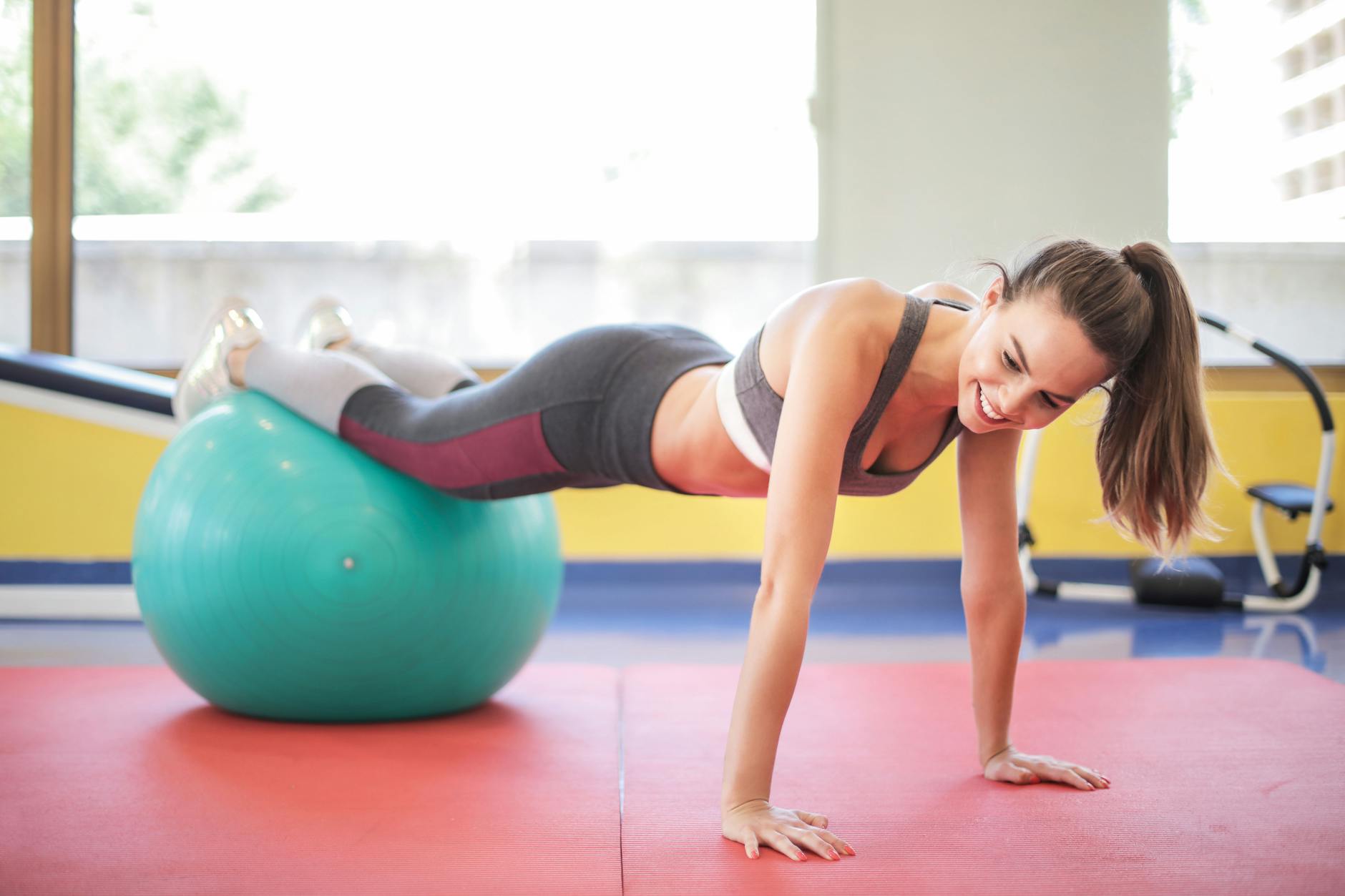
Crunches are not core training. I will die on this hill.
You can do 500 crunches a day and still have a weak core. Because crunches train one muscle in one direction. Your core is a complex system of muscles that wraps around your entire torso. Training it with crunches is like training your legs with only calf raises.
Real core muscle exercises train stability, rotation, anti-rotation, and bracing. They build a core that actually does something. Not one that just looks decent when you flex in the mirror.
I have spent years programming core work for myself and building fitness tools. Here are the core muscle exercises that actually matter, why they work, and how to program them.
What Your Core Actually Is
Before we get into exercises, let me fix a common misunderstanding. Your core is not your abs. Your abs are part of your core. Big difference.
The core includes:
- Rectus abdominis. The "six pack" muscle. Flexes your spine forward.
- Obliques (internal and external). The muscles on your sides. Handle rotation and lateral bending.
- Transverse abdominis. The deep inner layer. Acts like a natural weight belt. Stabilizes everything.
- Erector spinae. The muscles running along your spine. Extend your back and keep you upright.
- Multifidus. Small deep muscles along the spine. Critical for spinal stability.
- Diaphragm and pelvic floor. Yes, these are core muscles. They create intra-abdominal pressure that stabilizes your spine under load.
Effective core muscle exercises train all of these. Not just the ones you can see.
The 15 Best Core Muscle Exercises
Organized by function. Your core does four main jobs. Train all four.
Anti-Extension Exercises
These train your core to resist your spine arching backward. This is what planks are actually for.
1. Dead Bug
Lie on your back. Arms pointing at the ceiling. Knees bent at 90 degrees. Slowly extend your opposite arm and leg toward the floor while keeping your lower back pressed flat against the ground. If your back arches, you have gone too far.
This is the single best core exercise for beginners. It teaches bracing without loading the spine.
2. Ab Wheel Rollout
Kneel on the floor. Grip the ab wheel. Roll forward as far as you can control. Pull back. The key is not letting your hips sag. If your lower back dips, shorten your range of motion.
This is a dead bug on hard mode. Absolutely brutal when done correctly.
3. Plank
The classic. But please stop holding planks for five minutes. If you can hold a plank for over 60 seconds, it is too easy and you are training endurance, not strength. Add weight on your back or progress to a harder variation.
If you want complete bodyweight workout routines that include proper core progressions, check out our home workout guide.
Anti-Rotation Exercises
These train your core to resist twisting. Crucial for sports, lifting, and not throwing out your back picking up groceries.
4. Pallof Press
Stand sideways to a cable machine or band anchor. Hold the handle at your chest. Press it straight out. The band tries to rotate you. You resist. That is the exercise. Simple. Devastatingly effective.
5. Single-Arm Farmer Carry
Grab one heavy dumbbell or kettlebell. Walk. The offset load tries to pull you sideways. Your core fights to keep you upright and straight. This is functional core training at its finest.
6. Bird Dog
On all fours. Extend your right arm and left leg simultaneously. Hold for a beat. Return. Switch sides. Keep your hips square to the ground. No rotation. No wobbling. Harder than it looks when done with control.
Rotation Exercises
Your core also needs to produce rotation, not just resist it.
7. Cable Woodchop
Set a cable at high or low position. Pull diagonally across your body. The power comes from your core rotating, not your arms pulling. Keep your arms relatively straight and let your torso do the work.
8. Russian Twist
Sit with knees bent, lean back slightly, and rotate side to side. The catch: do it slowly with control. Most people whip through these with momentum and their core barely fires. Hold a weight at your chest. Slow down. Feel each rep.
9. Medicine Ball Rotational Throw
Stand sideways to a wall. Rotate and throw a medicine ball into the wall. Catch and repeat. This trains explosive rotational power. Essential for any sport involving throwing, swinging, or changing direction.
Spinal Flexion (Yes, Some Is Fine)
Spinal flexion exercises are not evil. They are just overused. Include a small amount for balanced development.
10. Cable Crunch
Kneel in front of a cable machine. Crunch down, bringing your elbows toward your knees. The cable provides constant tension through the full range. Far superior to floor crunches.
11. Hanging Leg Raise
Hang from a pull-up bar. Raise your legs to parallel or higher. Control the descent. No swinging. This trains your lower abs and hip flexors hard while decompressing your spine.
12. V-Up
Lie flat. Simultaneously raise your legs and torso, reaching your hands toward your toes. This is advanced. If you cannot do it with control, stick with dead bugs and leg raises until you build the strength.
Hip and Lower Back (The Forgotten Core)
Most core muscle exercises programs completely ignore the posterior chain. Do not be most programs.
13. Glute Bridge
Lie on your back, feet flat, drive your hips up. Squeeze your glutes at the top. Hold for two seconds. This trains your glutes and lower back, both essential core muscles that get neglected.
14. Superman Hold
Lie face down. Lift your arms and legs off the ground. Hold. This is the anti-extension exercise for your back side. It trains the erector spinae and multifidus that keep your spine healthy.
15. Side Plank
Lie on your side. Prop yourself up on your elbow. Lift your hips. Hold. This trains the obliques and quadratus lumborum. If the basic version is easy, lift your top leg or add a hip dip.
How to Program Core Muscle Exercises
Do not just throw five core exercises at the end of your workout and call it done. Be strategic.
Pick one exercise from each category per session. That gives you four core exercises covering all functions. Rotate exercises every 3-4 weeks.
Rep ranges. Stability exercises (planks, dead bugs): 3 sets of 20-30 seconds. Strength exercises (ab wheel, hanging leg raise): 3 sets of 8-12 reps. Power exercises (med ball throws): 3-4 sets of 5-8 reps.
Frequency. Train core 3-4 times per week. It recovers faster than most muscle groups because it is designed to work all day.
When in your workout. Light core activation before heavy lifts (dead bugs, bird dogs). Heavier core work after your main lifts. Never exhaust your core before squats or deadlifts.
Use GymCoach AI to build a program that integrates core work with your main training instead of treating it as an afterthought.
FAQ
How long does it take to see results from core muscle exercises?
Strength improvements happen within 2-3 weeks. You will notice better posture, more stability during lifts, and less lower back discomfort. Visible changes take longer and depend heavily on body fat percentage. You can have a strong core hidden under body fat. Reducing body fat reveals the muscle underneath. Training builds it. Nutrition reveals it.
Can I train core every day?
You can train core daily if you vary the exercises and intensity. Your core is built for endurance, it works all day to keep you upright. However, if you are doing heavy loaded core work like ab wheel rollouts or weighted cable crunches, give those specific exercises 48 hours of recovery. Light activation work like dead bugs and bird dogs can be done daily.
Will core exercises fix lower back pain?
Often, yes. A large percentage of non-specific lower back pain comes from weak core stabilizers, particularly the transverse abdominis and multifidus. Exercises like dead bugs, bird dogs, and planks strengthen these muscles and reduce pain. However, if you have sharp, shooting, or radiating pain, see a doctor before training through it. Core exercises are preventive and rehabilitative, but they are not a substitute for medical diagnosis.
Are planks better than crunches for core training?
Planks train anti-extension stability. Crunches train spinal flexion. They are different movements targeting different functions. For overall core health and injury prevention, planks and their progressions are more valuable. Crunches are fine in moderation but should not be the foundation of your core training. A complete program includes both stability and movement-based core muscle exercises.
-- Dolce

Comments
Comments powered by Giscus. Sign in with GitHub to comment.