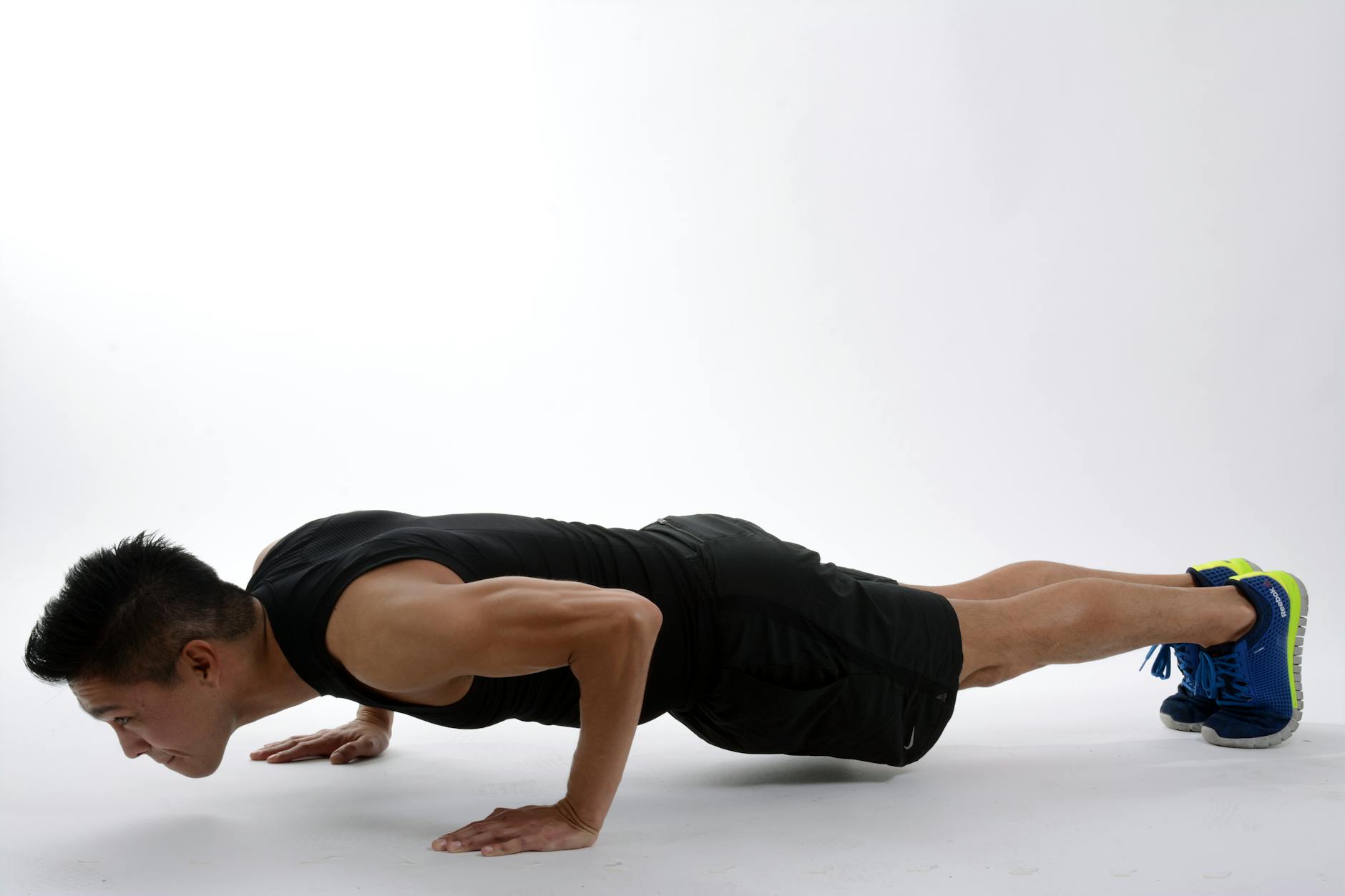
Bodyweight Arm Workouts That Build Real Muscle
You do not need a gym to build impressive arms. You do not need dumbbells, barbells, or cable machines. What you need is your own bodyweight, a floor, and maybe a doorframe. That is it.
Most people dismiss bodyweight arm workouts because they think push-ups are the only option. They are wrong. There are dozens of progressions that target your biceps, triceps, and forearms with enough intensity to drive serious muscle growth. Gymnasts have been proving this for decades.
Why Bodyweight Arm Workouts Actually Build Muscle
Muscle does not care what provides the resistance. It responds to mechanical tension, metabolic stress, and progressive overload. Bodyweight exercises deliver all three when programmed correctly.
The advantage of bodyweight training is that it forces compound movement. You cannot isolate a single muscle with your bodyweight the way you can with a dumbbell curl. Every exercise recruits stabilizers, core muscles, and supporting muscle groups. The result is functional strength that transfers to real life, not just mirror muscles.
The disadvantage is that progression requires creativity. You cannot just add five pounds to the bar. Instead, you change leverage, tempo, and range of motion. More on that below.
The Best Bodyweight Arm Workouts by Muscle Group
Triceps -- The Meat of Your Arm
Your triceps make up roughly two-thirds of your upper arm mass. If you want bigger arms, triceps are where you start.
Diamond push-ups. Hands together under your chest, forming a diamond shape. Lower until your chest touches your hands. This shifts the load from your chest to your triceps. Three sets of 12 to 15 reps.
Bench dips. Hands on a chair or bench behind you, feet on the floor. Lower your body by bending your elbows to 90 degrees. Extend back up. Three sets of 15 reps. To progress, elevate your feet on another surface.
Pike push-ups. Set up in a downward dog position with your hips high. Bend your elbows and lower your head toward the floor. This hammers the triceps and front delts simultaneously. Three sets of 10 reps.
Bodyweight tricep extensions. Place your hands on a low surface like a countertop. Walk your feet back. Bend at the elbows, lowering your head below your hands, then extend. This mimics a skull crusher without weights. Three sets of 12 reps.
Biceps -- The Show Muscle
Biceps are harder to target with bodyweight alone because they require a pulling motion. But it is absolutely doable.
Doorframe curls. Grip a sturdy doorframe with one hand. Lean back until your arm is straight. Curl yourself toward the frame. This is a legitimate bicep curl using your bodyweight as resistance. Three sets of 10 per arm.
Chin-ups. The king of bodyweight bicep exercises. Grab a bar or sturdy ledge with an underhand grip. Pull yourself up until your chin clears the bar. If you cannot do a full chin-up yet, use a chair for assisted reps or do slow negatives. Three sets to failure.
Inverted rows with supinated grip. Use a low bar or the edge of a sturdy table. Lie underneath, grab with palms facing you, and pull your chest to the bar. Three sets of 12 reps.
Forearms -- The Forgotten Piece
Dead hangs. Hang from a bar or ledge with straight arms for as long as possible. This builds crushing grip strength and forearm endurance. Three sets of 30 to 60 seconds.
Fingertip push-ups. Standard push-ups on your fingertips instead of flat palms. Start on your knees if needed. Three sets of 8 reps.
A Complete Bodyweight Arm Workouts Routine
Do this three times per week with at least one rest day between sessions.
- Chin-ups -- 3 sets x max reps
- Diamond push-ups -- 3 sets x 15 reps
- Doorframe curls -- 3 sets x 10 per arm
- Bodyweight tricep extensions -- 3 sets x 12 reps
- Inverted rows (supinated) -- 3 sets x 12 reps
- Bench dips -- 3 sets x 15 reps
- Dead hangs -- 3 sets x max hold
Rest 60 to 90 seconds between sets. The entire session takes about 30 minutes.
For a full body approach that complements these arm exercises, check out our complete home workout guide.
How to Progress Without Adding Weight
Progression is what separates results from spinning your wheels. Here are your levers.
Slow the tempo. Take three seconds to lower, pause for one second at the bottom, then explode up. This doubles the time under tension without changing the exercise.
Reduce leverage. Move your hands closer together on push-ups. Elevate your feet. Use one arm instead of two. Each change increases difficulty.
Add pauses. Hold the hardest position of each rep for two to three seconds. Isometric holds build strength at the weakest points of the movement.
Increase volume. Add one rep per set each week. When you can do 20 reps of an exercise, move to a harder variation.
Track your workouts with a training app to make sure you are actually progressing and not just going through the motions.
The Results Timeline
Weeks one through four you build neuromuscular coordination. Your muscles learn the movements. Strength increases fast but size changes are minimal.
Weeks four through eight visible changes start. Triceps fill out first since they respond quickly to high-rep training.
Weeks eight through twelve your arms look noticeably different. The combination of tricep mass and bicep definition creates the look most people are chasing.
Consistency beats intensity. Three solid sessions per week for 12 weeks will outperform six sessions per week for three weeks followed by quitting.
-- Dolce
FAQ
Can bodyweight arm workouts replace weight training for arm size?
For most people, yes. Unless you are competing in bodybuilding, bodyweight progressions provide more than enough stimulus for impressive arm development. The key is progressive overload through leverage changes, tempo manipulation, and volume increases rather than adding external weight.
How long does it take to see results from bodyweight arm workouts?
Most people notice strength gains within the first two weeks and visible size changes around weeks four to six. Full noticeable transformation typically takes eight to twelve weeks of consistent training three times per week. Nutrition and sleep quality significantly impact the timeline.
What if I cannot do a single chin-up yet?
Start with negative chin-ups. Jump to the top position and lower yourself as slowly as possible over five seconds. Do three sets of five negatives. Within four to six weeks, most people can perform at least one full chin-up. Doorframe curls and inverted rows also build the pulling strength needed.
Should I do bodyweight arm workouts every day?
No. Muscles grow during rest, not during training. Three sessions per week with at least 48 hours between workouts is optimal. Training arms daily leads to overuse injuries and actually slows muscle growth because you never allow adequate recovery.

Comments
Comments powered by Giscus. Sign in with GitHub to comment.