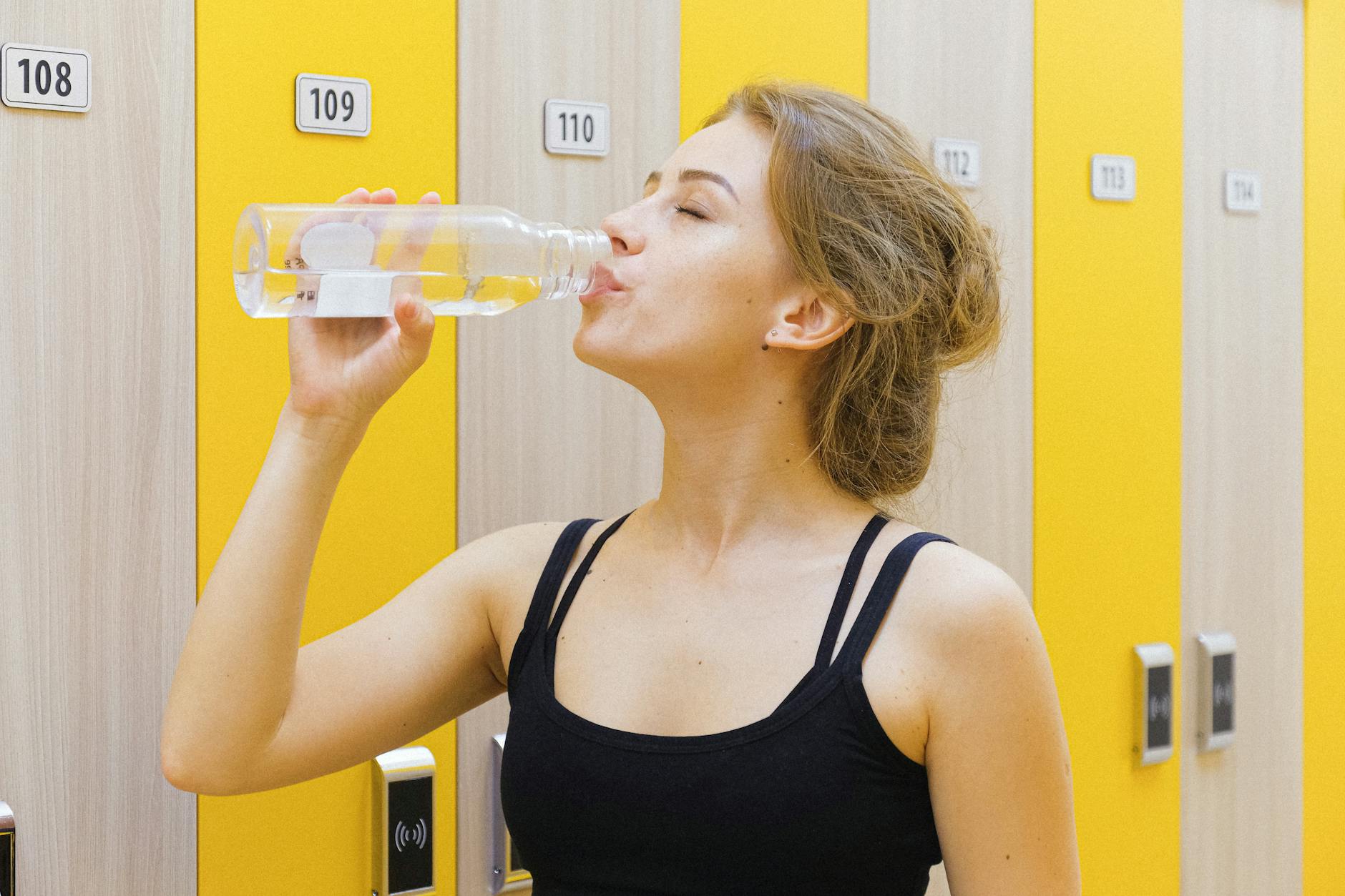
Your body is 60% water.
Your brain is 75% water.
Every cell, every function, every thought depends on it.
Here’s what happens when you don’t drink enough — and why proper hydration matters more than you think.
What Water Does in Your Body
1. Temperature Regulation
When you’re hot, you sweat. Sweat evaporates, cooling you down.
Without adequate water, this system fails. Overheating follows.
2. Nutrient Transport
Blood is mostly water. Blood carries nutrients to cells.
Dehydration = thicker blood = less efficient nutrient delivery.
3. Waste Removal
Your kidneys filter waste through urine. Your colon needs water for regular bowel movements.
Less water = toxin buildup + constipation.
4. Joint Lubrication
Synovial fluid (joint lubricant) requires water.
Chronic dehydration = joint discomfort and increased wear.
5. Cellular Function
Every chemical reaction in your body happens in water.
Dehydrated cells function poorly.
6. Brain Function
Your brain floats in cerebrospinal fluid. It needs water for neurotransmitter production.
Dehydration directly impairs thinking.
The Dehydration Cascade
Here’s what happens as dehydration progresses:
1% Body Water Loss
- Thirst begins
- Performance starts declining
- Most people don’t notice
2% Body Water Loss
- Cognitive impairment measurable
- Athletic performance drops 10-20%
- Mood deteriorates
- Fatigue increases
3% Body Water Loss
- Significant mental fog
- Coordination affected
- Headaches common
- Muscle cramps possible
5%+ Body Water Loss
- Severe impairment
- Medical concern
- Heat stroke risk
The scary part: Most people walk around at 1-2% chronically dehydrated and think it’s normal.
What Research Shows
Cognitive Performance
Two companion trials from the University of Connecticut are the ones usually cited here, and they are usually cited wrong, so here they are separately.
In women, mild dehydration averaging 1.36% of body mass produced worse mood, more fatigue, more headache and a higher perceived task difficulty (Armstrong et al., 2012, Journal of Nutrition). In men, dehydration of about 1.59% degraded vigilance and working memory and increased tension and anxiety (Ganio et al., 2011, British Journal of Nutrition).
Both were small (25 women, 26 men), both used young, healthy, physically active volunteers, and neither group was reliably thirsty at those levels. Small samples in a single lab are a starting point, not a settled finding.
Physical Performance
The National Athletic Trainers’ Association position statement on fluid replacement is the standard reference: dehydration above roughly 2% of body mass degrades endurance performance and cognitive function, with the penalty growing in hot conditions (McDermott et al., 2017, Journal of Athletic Training).
The size of that penalty depends heavily on heat, humidity, exercise intensity and training status. Anyone quoting you one tidy percentage for endurance loss is flattening a very wide range.
Weight Loss
- Pre-meal water helps modestly. In a 12-week trial, adults on a hypocaloric diet who drank 500 ml before each meal lost about 2 kg more than those who didn’t (Dennis et al., 2010, Obesity).
- Water-induced thermogenesis is contested. The original study reported a ~30% rise in metabolic rate after 500 ml, peaking around 30-40 minutes (Boschmann et al., 2003, JCEM). Later attempts to replicate it found a much smaller effect or none. Don’t build a weight-loss plan on it.
- Water has no calories, so it displaces drinks that do. That is the boring mechanism, and it is the one with the least doubt attached.
Chronic Disease
Adequate hydration is associated with reduced risk of kidney stones, urinary tract infections and constipation. These are largely observational associations, which means they show a link, not proof that drinking more water causes the lower risk. The Institute of Medicine review below is the careful summary.
How Much Water Do You Need?
The “8 glasses” rule is oversimplified.
Better calculation:
Your weight (lbs) ÷ 2 = ounces per day
150 lbs = 75 oz (about 2.2 liters) 200 lbs = 100 oz (about 3 liters)
Adjust for:
- Exercise (+12-32 oz per hour of activity)
- Hot weather (+16-32 oz)
- Caffeine/alcohol (+8 oz per drink)
- Altitude
- Illness
Signs you’re drinking enough:
- Urine is light yellow (not clear, not dark)
- You’re not constantly thirsty
- Good energy levels
- Regular bowel movements
The Myth of Overhydration
Yes, you can drink too much water (hyponatremia).
But this is rare and requires extreme consumption (gallons quickly).
For most people, the risk is chronic underhydration, not overhydration.
What Counts as Water
Full credit:
- Plain water
- Sparkling water
- Herbal tea
- Water with fruit infusions
Partial credit:
- Coffee (about 60-70% counts)
- Tea (caffeine is a mild diuretic)
- Milk
- Juice (counts but has calories/sugar)
- Soup/broth
Doesn’t count (or negative):
- Alcohol (net dehydrating)
- Sugary sodas (hydrating but terrible for health)
The Timing Factor
When you drink matters.
Morning
You wake up dehydrated. 7-8 hours without water.
Recommendation: 16 oz within 30 minutes of waking.
Before meals
Water before eating reduces calorie intake and aids digestion.
Recommendation: 8-16 oz 30 minutes before meals.
During exercise
Hydrate before, during, and after.
Recommendation: 4-8 oz every 15-20 minutes during activity.
Before bed
Drink earlier in evening. Late water = midnight bathroom trips.
Recommendation: Reduce intake 2 hours before bed.
Signs of Chronic Dehydration
Many people don’t realize they’re dehydrated because they’ve always been this way.
Check yourself:
- Frequent headaches (especially afternoon)
- Constant fatigue
- Difficulty concentrating
- Dark urine
- Dry skin and lips
- Constipation
- Dizziness when standing
- Intense afternoon cravings (thirst mimics hunger)
Making Hydration Automatic
Environment design
- Water bottle always visible
- Glass on your desk
- Bottle by your bed
Habit stacking
- Drink water after every bathroom trip
- Water before coffee
- Water with every meal
Tracking
- Use a water tracking app
- Mark water bottle with time goals
- Simple tally on paper
WaterDrop automates this with smart reminders and one-tap tracking.
FAQ
Is cold or room temperature water better? Doesn’t matter much for hydration. Room temp may be better for digestion.
Can I drink too much water? Theoretically yes (hyponatremia), but rare. Most people drink too little.
Does coffee dehydrate you? Mild diuretic effect, but you still absorb most of the water. Coffee counts partially.
Why do I pee so much when I drink more? Your body adjusts. Takes 1-2 weeks. If excessive, you might be drinking too fast — spread it out.
Is sparkling water as good as still? Yes, equally hydrating. The carbonation doesn’t change water absorption.
Related reads:
- Best Water Reminder Apps for iPhone — app reviews
Sources
- Institute of Medicine — Dietary Reference Intakes for Water
- Harvard T.H. Chan School of Public Health — The Nutrition Source: Water
- Armstrong et al. (2012), “Mild dehydration affects mood in healthy young women”, J Nutr
- Ganio et al. (2011), “Mild dehydration impairs cognitive performance and mood of men”, Br J Nutr
- McDermott et al. (2017), NATA Position Statement: Fluid Replacement for the Physically Active, J Athl Train
- Dennis et al. (2010), “Water consumption increases weight loss during a hypocaloric diet intervention”, Obesity
- Boschmann et al. (2003), “Water-induced thermogenesis”, JCEM
This article is general information, not medical advice. Talk to a qualified professional about anything affecting your health.
— Dolce
Comments
Comments powered by Giscus. Sign in with GitHub to comment.