Your Anxiety Isn't a Character Flaw. Your Breathing Is Just Wrong.
Your chest is tight. Your thoughts are racing. You've been told to "just relax" approximately eight hundred times. Thanks, very helpful. Here's what actually works: deep breathing for anxiety relief. Not the vague "take a deep breath" advice people throw around. Real, specific techniques that change your nervous system's response in minutes.
This isn't woo-woo. It's biology.
When you're anxious, your sympathetic nervous system is running the show. Your body thinks there's a threat. Your breath gets shallow and fast, which tells your brain to stay on high alert. It's a feedback loop. Deep breathing breaks that loop by activating your parasympathetic nervous system -- the one that tells your body the danger has passed.
But most people breathe wrong when they try to calm down. Let's fix that.
Why Shallow Breathing Makes Anxiety Worse
Watch yourself the next time you're stressed. You're probably breathing into your chest. Short, quick breaths. Maybe you're even holding your breath without realizing it.
This pattern floods your blood with too much oxygen relative to carbon dioxide. The imbalance triggers dizziness, tingling, and more panic. You're literally hyperventilating in slow motion.
Deep breathing reverses this. When you breathe slowly into your diaphragm, you restore the oxygen-CO2 balance, lower your heart rate, and reduce cortisol levels. Studies from Harvard Medical School and the Journal of Clinical Psychology have confirmed this repeatedly.
The problem isn't that deep breathing for anxiety relief doesn't work. The problem is nobody teaches you how to do it properly.
The Best Deep Breathing for Anxiety Relief Techniques
1. The 4-7-8 Method
Developed by Dr. Andrew Weil, this is the most reliable anxiety killer I've found.
- Breathe in through your nose for 4 seconds
- Hold for 7 seconds
- Exhale through your mouth for 8 seconds
- Repeat 4 times
The extended exhale is the key. A longer exhale directly stimulates the vagus nerve, which triggers relaxation. Most people rush the exhale. Don't.
2. Box Breathing
Navy SEALs use this before high-stress operations. If it works for combat, it works for your Monday morning meeting.
- Breathe in for 4 seconds
- Hold for 4 seconds
- Breathe out for 4 seconds
- Hold for 4 seconds
- Repeat 4-6 times
The symmetry makes this one easy to remember and easy to do anywhere -- your desk, your car, the bathroom before a presentation.
3. Diaphragmatic Breathing
Place one hand on your chest and one on your belly. Breathe in through your nose. Only the hand on your belly should move. If your chest is rising, you're doing it wrong.
This is the foundation of all effective breathing techniques. Master this first and everything else gets easier. For a step-by-step walkthrough, check out our complete guide to breathing exercises for sleep -- the diaphragmatic technique covered there works just as well for daytime anxiety.
4. Physiological Sigh
This one comes from Stanford neuroscience research. It's the fastest method on this list.
- Take a normal inhale through your nose
- Immediately take a second, shorter inhale on top of it (a double inhale)
- Long, slow exhale through your mouth
- One to three repetitions is usually enough
Your body actually does this naturally when you cry or right before you fall asleep. You're just doing it on purpose.
How to Build a Deep Breathing Habit for Anxiety Relief
Knowing these techniques is useless if you only remember them mid-panic attack. By then, your prefrontal cortex is offline and you can't think clearly enough to recall a sequence of numbers.
You need to practice when you're calm so it becomes automatic when you're not.
Here's the minimum effective dose: five minutes per day. That's it. Pick one technique. Do it every morning before you check your phone. After two weeks, the pattern will be wired in enough that you'll default to it under stress.
The Breathing Exercises app can guide you through each technique with visual timers and haptic cues. It removes the guesswork so you can focus on the breathing instead of counting in your head.
When Deep Breathing Isn't Enough
Let's be honest. Deep breathing is a tool, not a cure. If your anxiety is severe, persistent, or interfering with your daily life, breathing exercises are a complement to professional help -- not a replacement for it.
That said, for the everyday anxiety that most of us deal with -- work stress, social pressure, racing thoughts at 2 AM -- these techniques are remarkably effective. They cost nothing, take minutes, and have zero side effects.
Common Mistakes That Kill the Effect
Breathing too fast. If you're rushing through the counts, you're not getting the parasympathetic activation. Slow down. It should feel almost uncomfortably slow at first.
Forcing huge breaths. Deep doesn't mean maximal. You don't need to inflate like a balloon. Breathe naturally but direct the air into your belly.
Only practicing during panic. This is the biggest mistake. You wouldn't try to learn to swim while drowning. Practice daily when you're baseline calm.
Giving up after one session. One round of box breathing won't cure your anxiety. But a consistent daily practice will noticeably reduce your baseline anxiety within two to three weeks. The research is clear on this.
Why Deep Breathing for Anxiety Relief Beats Medication for Mild Cases
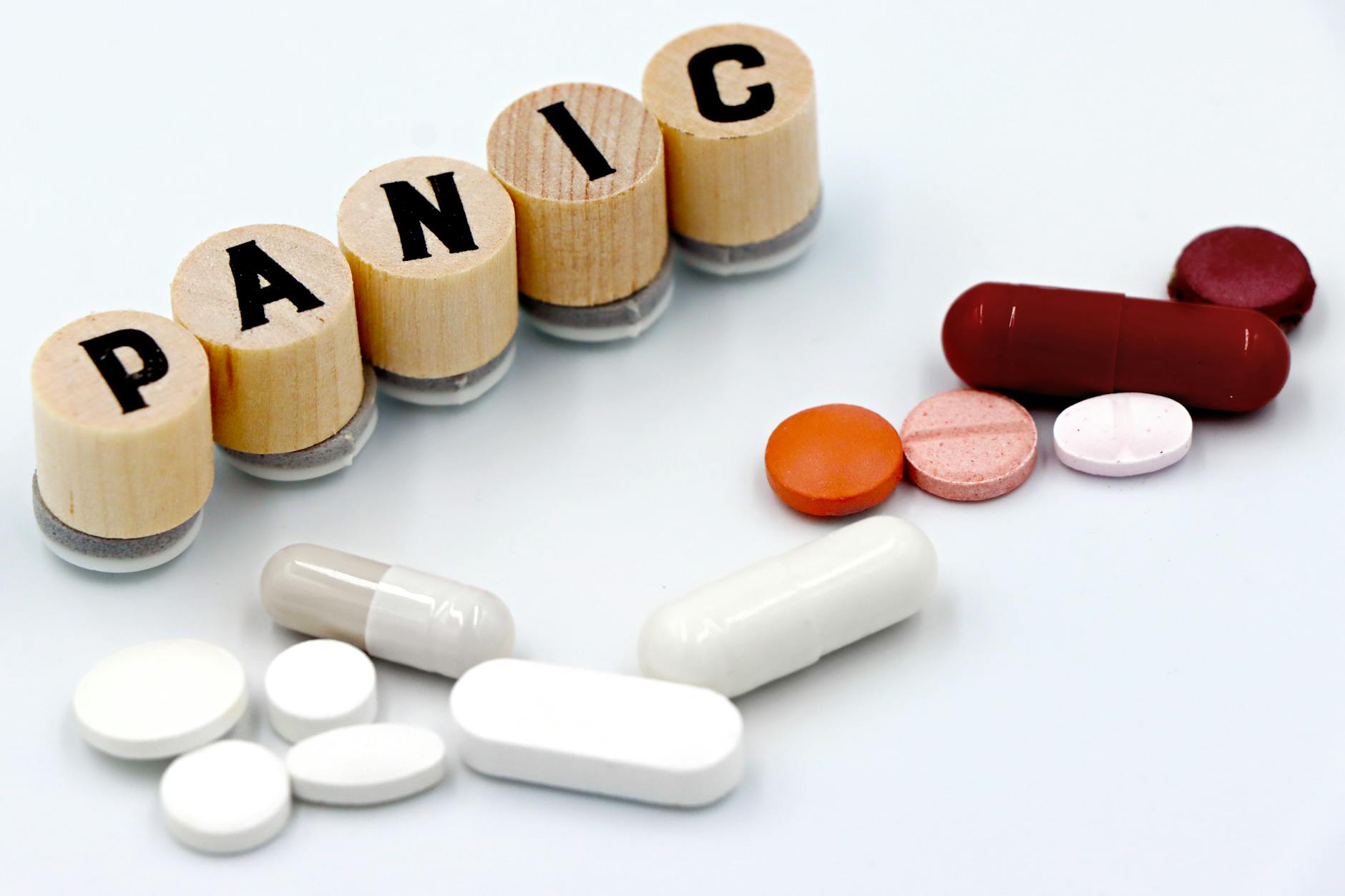
This isn't anti-medication. If you need it, take it. But for mild to moderate everyday anxiety, deep breathing has advantages that pills don't. Zero side effects. No prescriptions. No dependency risk. You can do it anywhere, anytime, for free.
A 2024 meta-analysis in the Journal of Affective Disorders found that structured breathing exercises reduced generalized anxiety symptoms by 30 to 40 percent in participants with mild anxiety -- comparable to low-dose medication without the adjustment period.
The catch is consistency. You have to actually do it. Every day. That's where most people fall off.
Make It Automatic
Set a daily reminder. Use an app like Breathing Exercises to keep you consistent. Stack it onto an existing habit -- right after brushing your teeth, right before lunch, right when you sit in your car after work.
Anxiety thrives on autopilot. Deep breathing puts you back in the driver's seat. Not by fighting the anxiety, but by changing the physiological state that feeds it.
Your breath is the one part of your autonomic nervous system you can consciously control. Use it.
-- Dolce
Comments
Comments powered by Giscus. Sign in with GitHub to comment.