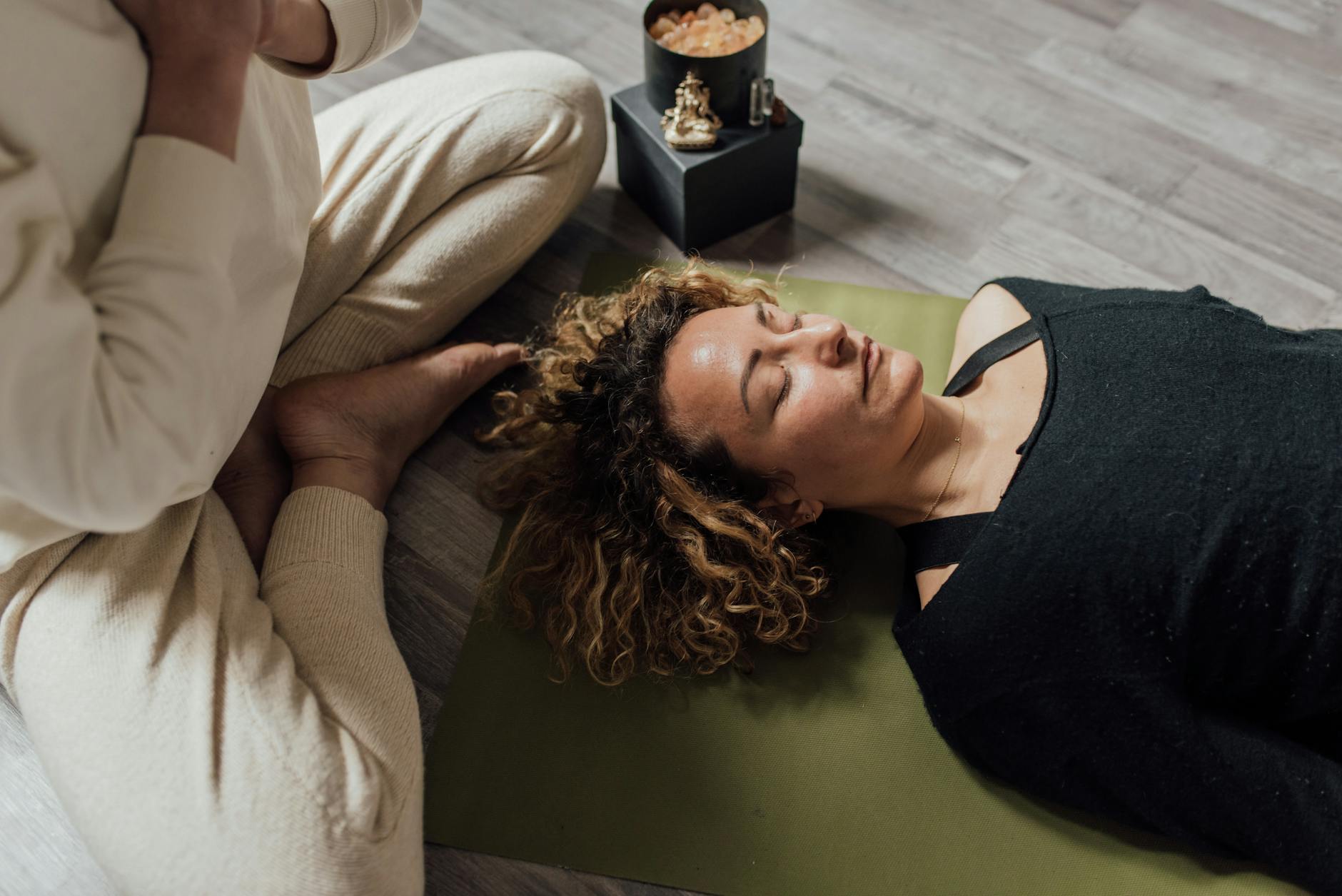
You have tried to meditate. You sat down, closed your eyes, and your brain immediately produced a highlight reel of every embarrassing thing you did in 2019. You opened your eyes two minutes later convinced meditation does not work for you.
It does. You are just doing it wrong. Calm meditation is not about turning off your thoughts. It is about changing your relationship with them. That distinction is everything.
What Calm Meditation Actually Is
Calm meditation — often called Shamatha or tranquility meditation — is a concentration-based practice. You pick a single anchor, usually your breath, and return to it every time your mind wanders. That is the entire technique.
The goal is not emptiness. The goal is stability. You are training your attention the same way you train a muscle. Each time you notice your mind wandered and bring it back, that is one rep. The wandering is not failure. The noticing is the practice.
This is what separates calm meditation from visualization, body scans, or mantra-based practices. Pure concentration on a single point. Simple to explain. Brutally difficult to execute.
Why Your Mind Refuses to Be Quiet
Your brain evolved to think. Constantly. Scanning for threats, planning meals, replaying social interactions. Asking it to stop is like asking your heart to stop beating. It is doing exactly what it was designed to do.
The problem is not that you think too much. The problem is that you are fused with your thoughts. You do not observe them — you become them. A worry about tomorrow hijacks your entire nervous system. A regret about yesterday floods you with cortisol.
Calm meditation creates a gap between you and the thought. You still see the thought. You just stop climbing inside it.
How to Practice Calm Meditation (The Real Way)
Forget the 30-minute sessions. If you are new, start with five minutes. That is not a suggestion — it is a strategy. Five minutes is short enough that you will actually do it. Consistency matters infinitely more than duration.
Here is the method:
1. Sit comfortably. Chair, cushion, floor. Spine straight but not rigid. Hands on your knees or in your lap. Close your eyes or soften your gaze toward the floor.
2. Find your breath. Do not control it. Just notice where you feel it most — nostrils, chest, belly. That spot is your anchor.
3. Stay with the anchor. Feel each inhale. Feel each exhale. When your mind wanders — and it will, within seconds — gently return to the breath. No frustration. No judgment. Just return.
4. Count if it helps. Inhale, one. Exhale, two. Up to ten, then restart. If you lose count, start over at one. The counting gives your monkey brain just enough structure to settle.
5. End deliberately. When your timer goes off, do not jump up. Take three deep breaths. Notice how your body feels. Open your eyes slowly.
Need a guided start? Our 5-minute meditation routine walks through this step by step. Or grab the Breathing Exercises app for timed sessions with gentle cues.
The Timeline Nobody Tells You About
Week 1-2: You will feel like you are terrible at this. Your mind wanders every three seconds. This is normal. Everyone experiences this. You are not uniquely broken.
Week 3-4: You start noticing gaps. Brief moments of genuine stillness between thoughts. They last maybe two seconds. That is progress.
Month 2-3: The gaps get longer. You start noticing your mind wandering faster, which means your awareness is sharpening. Off the cushion, you catch yourself spiraling before the spiral takes hold.
Month 6+: Calm meditation changes how you respond to stress. Not because stressful things stop happening, but because you have trained a buffer between stimulus and response. You get the email that would have ruined your afternoon and you feel the spike of anxiety, but you do not become the anxiety.
This timeline is approximate. Some people progress faster. The variable that matters most is consistency, not talent.
When to Practice Calm Meditation
Morning, before you check your phone. The data on this is clear. Morning meditators stick with the practice at dramatically higher rates than those who try to meditate at random times. Your willpower is highest in the morning. Your mind is less cluttered. The day has not gotten to you yet.
Set your alarm five minutes earlier. That is all it takes. If your sleep suffers, fix that first — try white noise for sleep or adjust your evening routine.
The Mistake That Kills Most Meditation Practices
Perfectionism. People have one bad session where their mind raced for the entire five minutes, and they quit. They decide they are not a meditation person.
There is no such thing as a bad session. A session where your mind wandered fifty times and you brought it back fifty times was a session with fifty reps of attention training. That is an excellent workout.
The only bad session is the one that did not happen.
Calm Meditation vs. Other Styles
Mindfulness meditation is broader — you observe whatever arises without an anchor. Calm meditation is narrower — you maintain focus on one thing. For beginners, the narrow focus of calm meditation is significantly easier because it gives you a concrete task.
Start with calm meditation. Build your concentration. Then explore other styles from a foundation of stability rather than chaos.
Making It Stick
Same time every day. Same spot. Same duration. Remove every barrier to sitting down. The Breathing Exercises app can send you a daily reminder and track your streak — because what gets measured gets done.
Do not increase your time until five minutes feels easy for two consecutive weeks. Then go to seven. Then ten. Slow progression beats ambitious burnout every single time.
Your mind will get quieter. Not because you forced it to, but because you stopped fighting it.
-- Dolce


Comments
Comments powered by Giscus. Sign in with GitHub to comment.