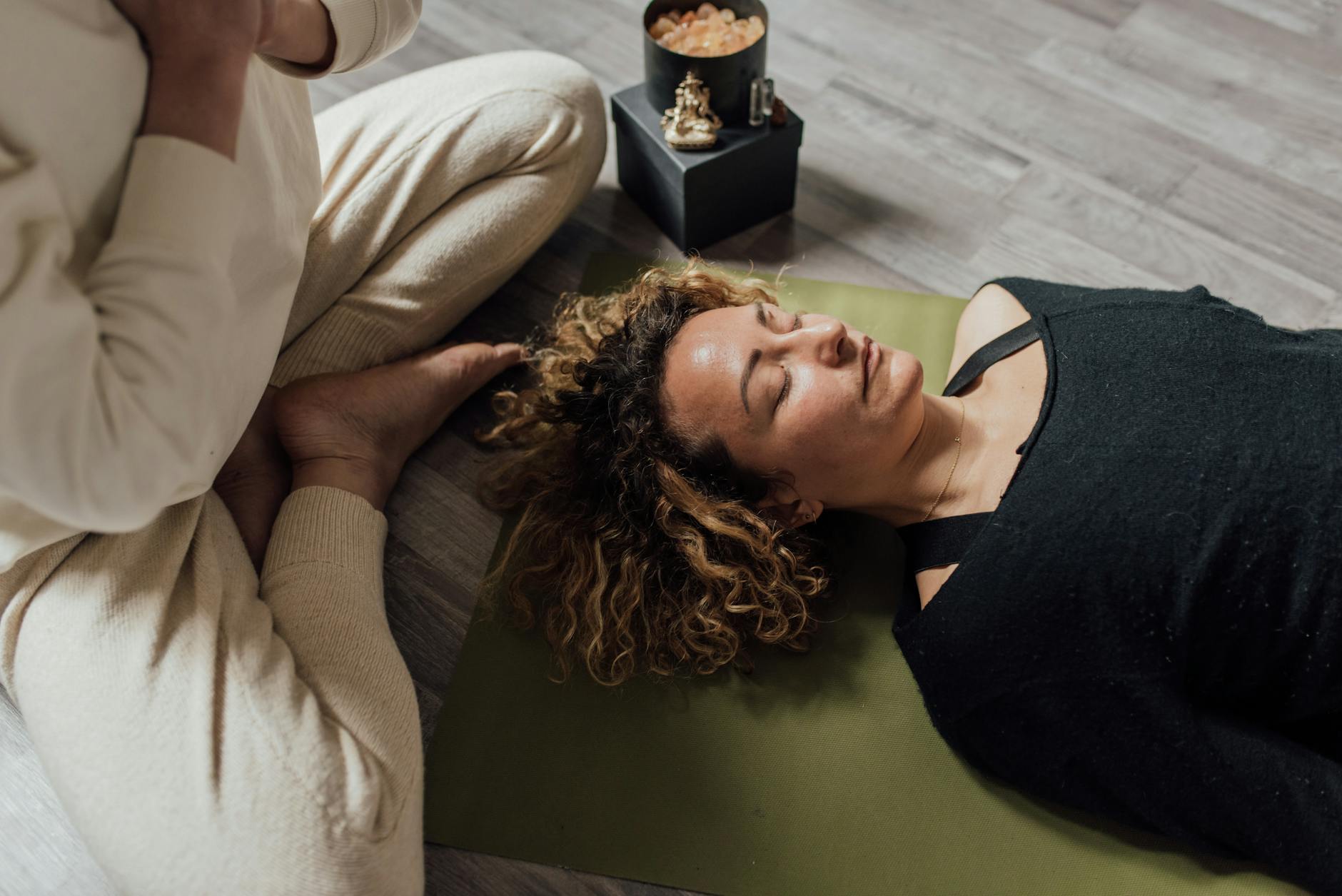
Your Mind Is Loud. That Is Normal.
You have tried to meditate. You sat down, closed your eyes, and your brain immediately started screaming about your to-do list, that awkward thing you said in 2019, and what you are going to eat for dinner. So you decided meditation is not for you. You were wrong. What you were actually looking for -- and what you gave up on too soon -- is peaceful mindfulness. Not the Instagram version with candles and crystals. The real version. The one that works even when your life is chaos.
Peaceful mindfulness is not about thinking nothing. It is about changing your relationship with your thoughts. You notice them without reacting. You observe without judgment. You let them pass like cars on a highway instead of chasing every single one. This is a skill. And like any skill, it gets better with practice.
What Peaceful Mindfulness Actually Is
Let me clear up some misconceptions. Mindfulness is not:
- Clearing your mind completely (impossible and not the goal)
- Sitting cross-legged for an hour (unnecessary)
- A religious practice (it can be, but it does not have to be)
- Something only calm people can do (it is built for stressed people)
Mindfulness is the practice of paying attention to the present moment without judgment. Peaceful mindfulness is the state that emerges when you do this consistently. Your baseline stress drops. Your reactions become responses. Your mental chatter gets quieter -- not silent, but quieter.
Research backs this up. Studies show that regular mindfulness practice reduces cortisol levels, lowers anxiety, improves sleep quality, and even changes the structure of your brain. The amygdala -- your brain's alarm system -- literally shrinks with consistent practice. The prefrontal cortex -- responsible for decision-making and emotional regulation -- gets thicker.
This is not woo-woo. It is neuroscience.
How to Start a Peaceful Mindfulness Practice
Forget everything you think you know about meditation. Here is how to actually begin.
Step 1: Pick a Time and Keep It Short
Five minutes. That is all. Do not start with 20 minutes because some app told you to. You will hate it, skip it, and quit within a week. Five minutes, same time every day. Morning is ideal because your mind has not yet been hijacked by the day's demands.
Need a structured starting point? Our 5-minute meditation routine walks you through exactly what to do in those five minutes. No guesswork.
Step 2: Focus on Your Breath
Sit comfortably. Close your eyes or soften your gaze. Breathe normally -- do not force anything. Notice the sensation of air entering your nostrils, filling your lungs, and leaving again.
That is it. That is the entire technique.
When your mind wanders -- and it will, within seconds -- gently bring your attention back to your breath. No frustration. No judgment. The moment you notice you have wandered and come back, that is the rep. That is the exercise. You are building the muscle of attention.
Step 3: Name Your Thoughts
This technique is a game changer. When a thought arises, label it. "Planning." "Worrying." "Remembering." "Judging." You are not engaging with the thought. You are categorizing it and letting it go.
This creates distance between you and your mental noise. You stop being your thoughts and start being the observer of your thoughts. That shift is where peaceful mindfulness lives.
Step 4: Expand Beyond the Cushion
Mindfulness is not just for meditation sessions. It is for life. Practice it while:
- Eating: Taste your food. Notice the texture. Put your phone down.
- Walking: Feel your feet on the ground. Notice the air on your skin.
- Listening: Actually listen when someone talks. Do not plan your response while they are still speaking.
- Waiting: In line, in traffic, in a waiting room. Instead of reaching for your phone, just be there. Notice what you see, hear, and feel.
These micro-practices throughout the day reinforce what you build in your morning session. They are how mindfulness stops being a thing you do and becomes a way you live.
Breathing Techniques for Deeper Calm
Your breath is the fastest lever you have for changing your mental state. When you are stressed, your breathing is shallow and fast. When you are calm, it is slow and deep. The hack is that this works in reverse too. Slow your breathing and your nervous system calms down automatically.
Three techniques that work:
Box breathing: Inhale for 4 counts. Hold for 4. Exhale for 4. Hold for 4. Repeat. Used by Navy SEALs for stress management. It works under pressure because it gives your mind a pattern to follow.
4-7-8 breathing: Inhale for 4 counts. Hold for 7. Exhale for 8. This activates your parasympathetic nervous system -- the "rest and digest" mode. Excellent before sleep.
Extended exhale: Inhale naturally. Then exhale for twice as long. If you breathe in for 3 seconds, breathe out for 6. The extended exhale is the simplest way to trigger a calm response.
For guided breathing sessions with timers and haptic cues, Breathing Exercises walks you through these techniques and more. Having a guide removes the mental overhead so you can focus entirely on the practice.
We also have a full breakdown of breathing exercises for sleep if nighttime anxiety is keeping you up.
Why Most People Fail at Mindfulness
They expect immediate results. Peaceful mindfulness is a practice, not a pill. You would not go to the gym once and expect visible muscles. The same applies here. Give it two weeks of daily practice before you evaluate.
They think they are doing it wrong. If your mind wanders, you are not failing. You are practicing. The wandering and returning is the exercise. A session where your mind wanders 50 times and you bring it back 50 times is a great session.
They try to do too much too soon. Twenty-minute sessions. Multiple techniques. Guided meditations with complex visualizations. Start simple. Five minutes of breath awareness. Master that first.
They stop when life gets busy. The times you feel too busy to meditate are the times you need it most. Five minutes. You have five minutes. You spent more time than that scrolling this morning.
Building Your Daily Practice
Here is a realistic 30-day progression:
Week 1: 5 minutes of breath awareness each morning. Week 2: 5 minutes in the morning plus one mindful activity during the day (mindful eating, walking, or listening). Week 3: Increase to 7-8 minutes. Add a breathing technique before bed. Week 4: 10 minutes in the morning. Multiple mindful moments throughout the day. Breathing practice before sleep.
By the end of the month, you will notice changes. Lower baseline stress. Better sleep. More patience. A sense of space between stimulus and response that was not there before. That is peaceful mindfulness. Not a destination. A direction.
You do not need to be a monk. You do not need a retreat. You need five minutes and the willingness to sit with yourself. Start today.
-- Dolce
Frequently Asked Questions
How long does it take for peaceful mindfulness to reduce stress?
Most people report feeling calmer within the first week of daily practice. Measurable changes in stress hormones and brain activity typically appear after 2-4 weeks of consistent practice. The key word is consistent -- sporadic sessions will not produce lasting results.
Can I practice mindfulness if I have anxiety or ADHD?
Yes. In fact, people with anxiety and ADHD often benefit the most from mindfulness practice. Start with shorter sessions (3-5 minutes) and use breath-focused or body-scan techniques that give your mind an anchor. If you find sitting still difficult, walking meditation is an excellent alternative.
Is mindfulness the same as meditation?
Meditation is the formal, seated practice. Mindfulness is the broader skill of present-moment awareness that you can apply anywhere. Meditation builds mindfulness, but mindfulness extends far beyond meditation sessions into everyday activities like eating, walking, and conversation.
What is the best time of day to practice mindfulness?
Morning works best for most people because it sets a calm tone for the day before external stressors kick in. However, the best time is the time you will actually do it consistently. If evenings work better for your schedule, practice in the evening. Regularity matters more than timing.


Comments
Comments powered by Giscus. Sign in with GitHub to comment.