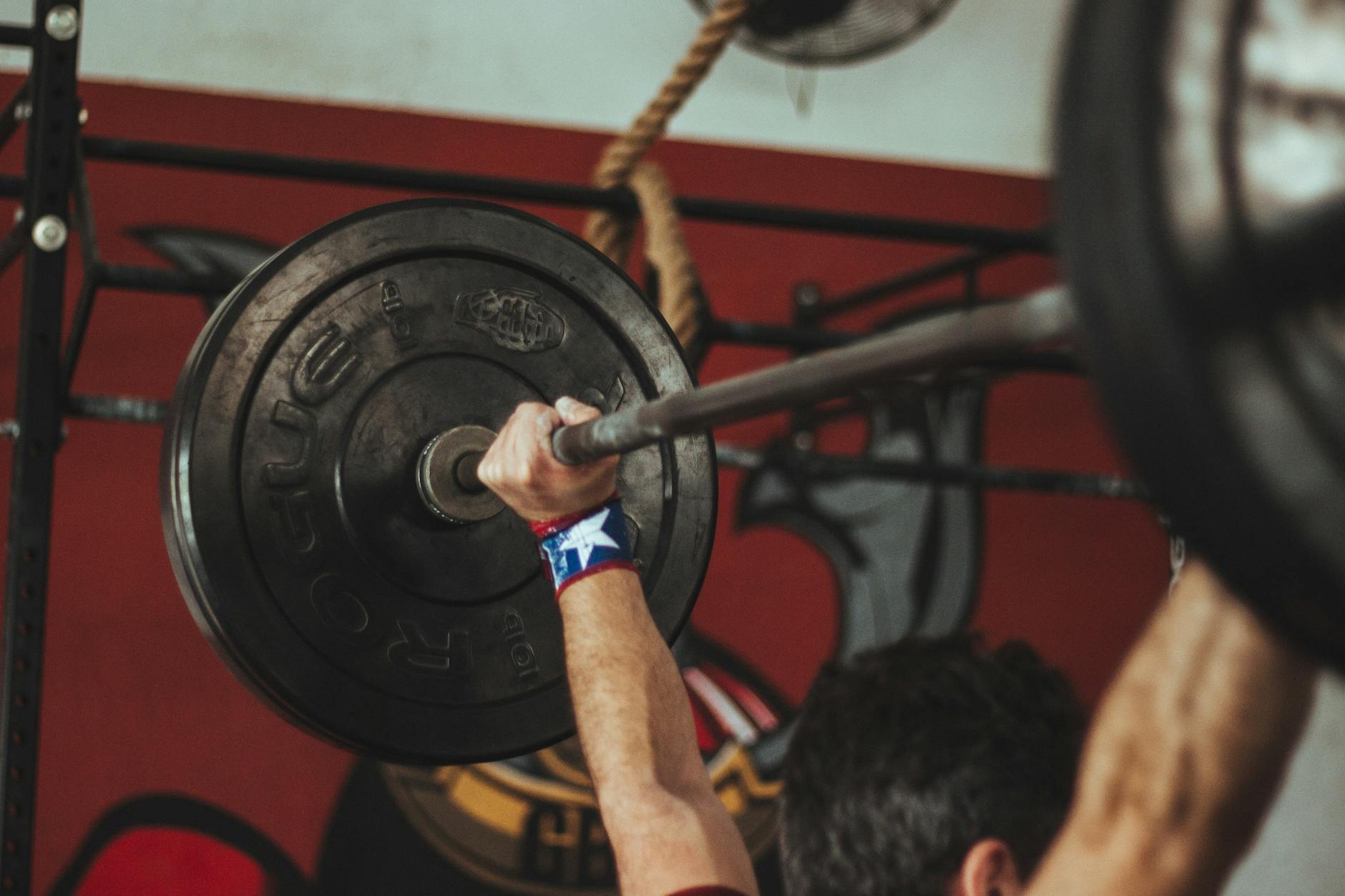
You finished your WOD. You're drenched. You can barely walk to your car. And somehow, six months later, you look exactly the same.
That's the dirty secret of most crossfit workout routine programming. It's designed to exhaust you, not transform you. High rep counts, random exercise selection, zero progressive overload. You're paying premium gym fees to do a slightly more organized version of flailing.
Time to fix that.
Why Your CrossFit Workout Routine Isn't Working
The average CrossFit box programs for one thing: intensity. Heart rate up, sweat on the floor, people collapsed in the corner. Great for Instagram stories. Terrible for actual muscle development.
Here's the problem. Muscle grows from progressive tension, not accumulated fatigue. When you do 50 thrusters for time, you're training your cardiovascular system and your pain tolerance. You're not giving your muscles a stimulus they need to adapt and grow. The weight is too light. The reps are too high. The rest is nonexistent.
That doesn't mean CrossFit is useless. The movement patterns are solid. Squats, deadlifts, presses, pulls, Olympic lifts. That's a better exercise library than 90% of commercial gym programs. The execution is just wrong.
The real issue is that most boxes follow competition-style programming for a general population that has no business competing. Competitive CrossFit athletes need to practice high-rep, mixed-modal workouts because that's the sport. But you're not going to the Games. You want to look better and feel stronger. Those require a fundamentally different approach.
A Smarter CrossFit Workout Routine: The 3-Day Split
Here's a program that keeps the intensity but adds structure. Three training days per week. Each one has a strength block and a conditioning block. The strength work comes first while you're fresh. The metcon comes second as a finisher.
Day 1: Lower Body Strength + Conditioning
Strength Block (25 minutes):
- Back Squat: 5x5 at 80% 1RM, 2-minute rest
- Romanian Deadlift: 4x8, controlled tempo
- Bulgarian Split Squat: 3x10 each leg
Conditioning Block (12 minutes):
- 4 rounds: 12 wall balls, 10 box jumps, 200m run
Day 2: Upper Body Strength + Conditioning
Strength Block (25 minutes):
- Strict Press: 5x5 at 80% 1RM
- Weighted Pull-ups: 4x6
- Dumbbell Bench Press: 3x10
Conditioning Block (12 minutes):
- 5 rounds: 10 push-ups, 10 ring rows, 15 cal row
Day 3: Olympic Lifts + Full Body Conditioning
Skill Block (20 minutes):
- Clean and Jerk: 5x3 at 70-75%
- Snatch: 5x2 at 70%
Conditioning Block (15 minutes):
- 3 rounds: 12 deadlifts (60%), 12 hang power cleans (50%), 12 front squats (50%), 400m run
The key difference? You do the heavy lifting fresh, with real rest periods. Then you earn your suffering in the conditioning block. Your muscles get the tension they need to grow. Your lungs still get the punishment they're used to.
Notice what's missing from this program: kipping pull-ups, butterfly anything, and high-rep Olympic lifts for time. Those aren't excluded by accident. Kipping puts your shoulders in a compromised position under fatigue. High-rep snatches at speed are an injury waiting to happen for anyone who isn't a competitive athlete. This program respects your joints while still making you work.
Progressive Overload: The Missing Piece
Every two weeks, add 5 pounds to your main lifts. Every four weeks, test a new working max. Write your numbers down. If your crossfit workout routine doesn't have a progression scheme, it's just exercise. Not training.
This is where most CrossFit programming completely falls apart. Tuesday's workout has no relationship to Thursday's workout, which has no relationship to next Tuesday's workout. You're just doing random hard things. A structured home workout guide follows the same principle. Progressive. Measurable. Intentional.
Progressive overload doesn't mean adding weight every single session forever. It means having a plan. Some weeks you add reps. Some weeks you add weight. Some weeks you reduce rest periods in the conditioning block. But every week, something moves forward. Without that direction, you're running on a treadmill in every sense of the word.
Recovery: Stop Ignoring It
You can't train like this six days a week. Three days of this program will produce more results than six days of random WODs. On off days, do mobility work. Walk. Sleep eight hours. If you're struggling with sleep quality, white noise can make a measurable difference.
Nutrition matters more than your conditioning piece. You need protein. At least 0.8g per pound of bodyweight. Track it for two weeks with a solid calorie calculator and you'll probably discover you're eating half of what you need.
Most CrossFitters dramatically undereat protein. They think because they "eat clean" they're covered. Brown rice and chicken breast three times a day isn't enough when you're squatting heavy and running metcons. Calculate your actual needs. Hit your numbers. Watch what happens to your body in four weeks.
Hydration is another blindspot. Losing even 2% of your body water tanks your strength output. If you're showing up to a heavy squat session already dehydrated from yesterday's conditioning, you're leaving pounds on the bar. Track your daily water intake as seriously as your macros.
Who This CrossFit Workout Routine Is For
This isn't for competitive CrossFit athletes prepping for the Open. This is for the person who loves the CrossFit community and the movement patterns but is frustrated with their lack of visible progress.
You want to be strong, look strong, and still be able to run a mile without stopping. This program does that. The typical box programming doesn't.
Stop confusing exhaustion with progress. Your body doesn't care how hard you breathed. It cares about the mechanical tension you placed on your muscles and whether you gave them enough protein and sleep to recover.
If your current routine has you doing hero WODs five days a week and wondering why your squat hasn't gone up since last year, you already know something needs to change. This is the change. Less volume. More structure. Actual results.
Track your lifts with GymCoach so you actually know if you're getting stronger or just getting tired.
-- Dolce
Comments
Comments powered by Giscus. Sign in with GitHub to comment.