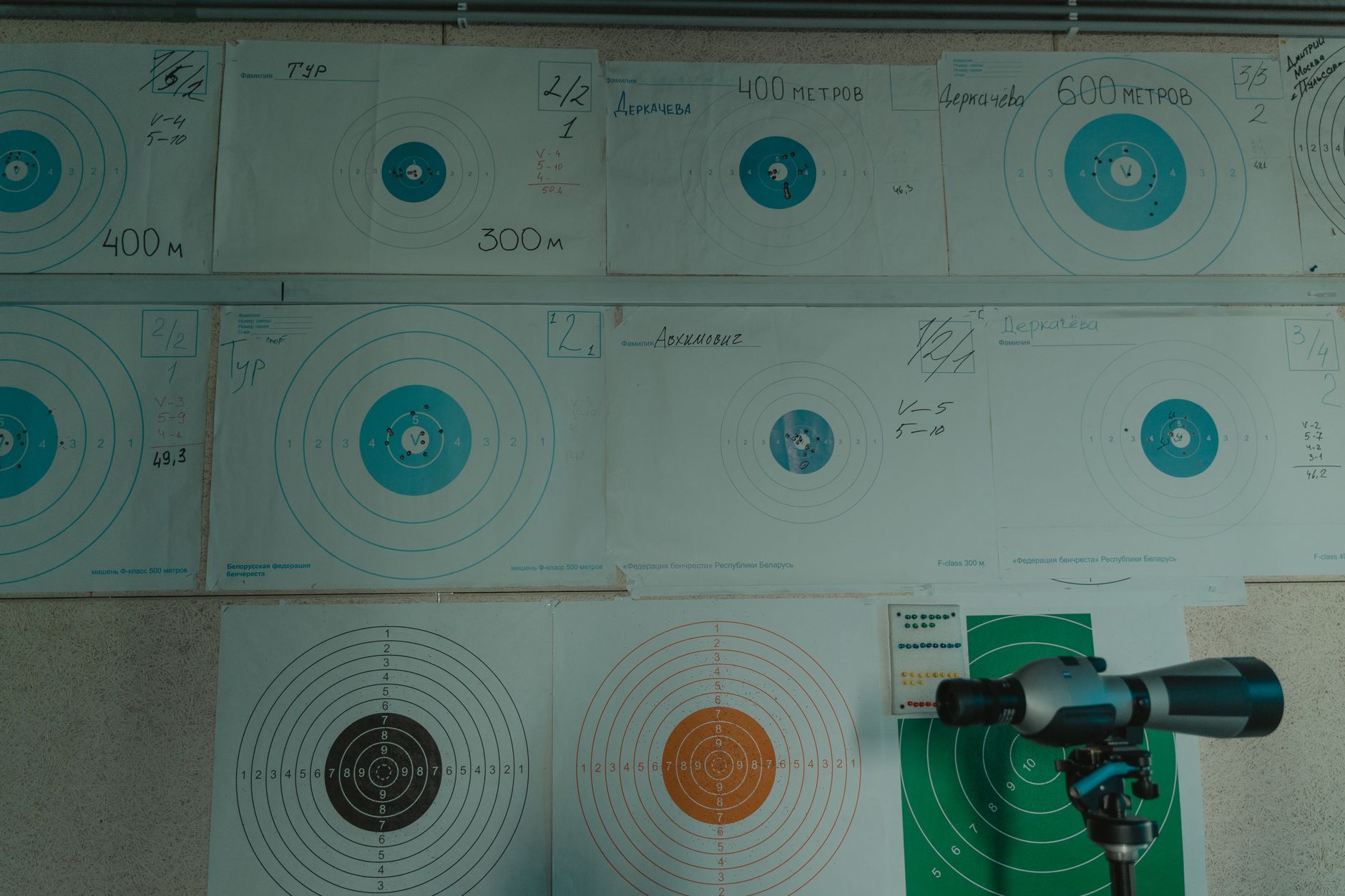
Best Range Finder App for iPhone in 2026
You bought a $300 laser range finder and used it twice. It is sitting in a drawer right now. Meanwhile your phone can do the same job for free. A good range finder app turns your iPhone into a distance-measuring tool that actually lives in your pocket. No extra gear. No dead batteries in the garage. No fumbling through a toolbox when you just need a quick measurement.
Let me save you the research spiral.
Why a Phone-Based Range Finder App Beats Hardware
Dedicated devices are accurate. Nobody disputes that. But they solve a problem most people face once a month at best. Golfers, hunters, and contractors use them daily. Everyone else needs an occasional measurement and nothing more.
These apps use your phone's camera, LiDAR sensor (on Pro models), and accelerometer to estimate distance. Modern iPhones with LiDAR get shockingly close to laser-grade accuracy at short to mid range. For casual use — furniture spacing, room dimensions, trail distances — an app is more than enough.
The real advantage is convenience. You already carry your phone. You do not carry a range finder. The best tool is the one that is actually on you when you need it. That alone makes a phone-based solution worth considering before you spend another dollar on hardware.
Cost matters too. A decent laser rangefinder runs $150-400. Most measurement apps are free or under $5. Even the premium ones cost less than a single replacement battery pack for some dedicated units.
Top Distance Measurement Apps Worth Installing
Apple Measure (Free, Built-In)
Apple ships a measurement app on every iPhone. It uses ARKit and LiDAR to measure distances, dimensions, and even a person's height. It is basic. It works. For quick around-the-house measurements, start here before downloading anything else.
Accuracy within 1-2% on LiDAR-equipped iPhones. Older models rely on ARKit alone and drift more. The app also measures rectangular objects automatically, detecting edges and giving you length and width without manually placing pins.
EasyMeasure
Point your camera at an object and EasyMeasure estimates the distance using your phone's height and camera angle. It works without LiDAR, which means it runs on older devices. The interface is dead simple — open, point, read the number.
The app overlays distance readings directly on your camera view. You can snap a photo with the measurement baked into the image, which is useful for sharing dimensions with contractors or furniture shoppers. It is not lab-grade accurate. It does not pretend to be. For ballpark figures at a glance, it delivers.
Best for: outdoor distance estimates where you need a ballpark figure fast.
Moasure
Moasure takes a different approach. You physically move your phone from point A to point B, and it uses motion sensors to calculate the distance. It sounds clunky. It is surprisingly accurate for room measurements and plot dimensions.
The app also handles elevation changes, angles, and area calculations. Walk the perimeter of a room and it maps the floor plan. Walk a property line and it calculates square footage. The learning curve is steeper than point-and-shoot apps, but the flexibility is unmatched.
Best for: real estate walkthroughs and property measurements.
Golf GPS and Rangefinder Apps
If golf is your use case, dedicated golf rangefinder apps like Golfshot or SwingU combine GPS course mapping with distance measurement. They give you yardage to the pin, hazard distances, and club recommendations. General-purpose distance apps cannot compete here.
These apps pull from databases of mapped courses, so accuracy depends on the course being in their system. Major courses are covered. Smaller municipal courses might not be. Check before you rely on one for your weekend round.
CamToPlan
CamToPlan deserves a mention for anyone doing home improvement projects. It lets you draw floor plans using your camera, measuring walls and rooms in real time. The AR overlay shows your measurements as you trace edges, and it exports to PDF for sharing with contractors or designers.
Best for: renovation planning and room layout projects.
How to Get the Most Accurate Readings
Accuracy depends on your technique as much as the app. A great distance tool in shaky hands produces garbage numbers. Here is how to get consistent results.
Hold your phone steady. Shaky hands introduce error in AR-based measurements. Brace your elbows against your body or rest the phone on a surface. Even leaning against a wall helps.
Calibrate first. Most apps ask you to scan the floor or set your phone height. Do not skip this step. A wrong calibration cascades through every measurement. Spend thirty seconds getting it right.
Use good lighting. AR features track visual features in your environment. Dim rooms and featureless white walls confuse the sensors. Turn on lights. Open blinds. If you are outside, avoid pointing directly into the sun.
Stay within range. Phone-based tools lose accuracy beyond 15-20 meters for AR measurements. GPS-based tools work at longer distances but with less precision. Know the limits of your chosen app and stay within them.
Take multiple readings. Measure twice, trust once. If two readings disagree by more than a few percent, something is off with your technique or environment. Adjust and try again.
When You Actually Need Dedicated Hardware
Be honest with yourself. If you are a surveyor, contractor, or competitive long-range shooter, a phone app is not replacing your Bushnell. Professional work demands sub-inch accuracy at 500+ yards. No app delivers that. The physics of phone sensors simply cannot match a focused laser beam at distance.
But if you are measuring your backyard for a fence, checking distances on a golf course for fun, or figuring out if that couch fits through the doorway, a range finder app handles it. Most people overestimate how much precision they need. You do not need millimeter accuracy to buy the right curtains.
Productivity Beyond Measurement
The best tool is the one you actually use. That applies to measurement apps and everything else on your phone. Your iPhone replaces dozens of single-purpose devices if you let it.
If you want to squeeze more productivity out of your device, the Pomodoro Technique is a proven way to structure focused work sessions. Twenty-five minutes of deep work followed by a five-minute break. Simple. Effective. Backed by decades of research.
And if you need a timer that does the heavy lifting, FocusTimer keeps you locked in without the clutter of a general productivity suite. No social feeds. No distracting features. Just a timer and your work.
The point is simple. Your phone replaces dozens of single-purpose tools. A range finder app is one more gadget you can leave in the drawer. Stop buying hardware for problems software already solved.
-- Dolce
Comments
Comments powered by Giscus. Sign in with GitHub to comment.