Rest days feel lazy.
Like you’re losing progress. Falling behind. Being weak.
Here’s the truth: Rest days are when progress happens.
Muscle Growth 101
When you train, you create micro-tears in muscle fibers.
When you rest, your body repairs those tears — making the muscle stronger and bigger than before.
This is called supercompensation. And it only happens during recovery.
No recovery = no supercompensation = no gains.
How Long Does Recovery Take?
It depends on:
1. Muscle Size
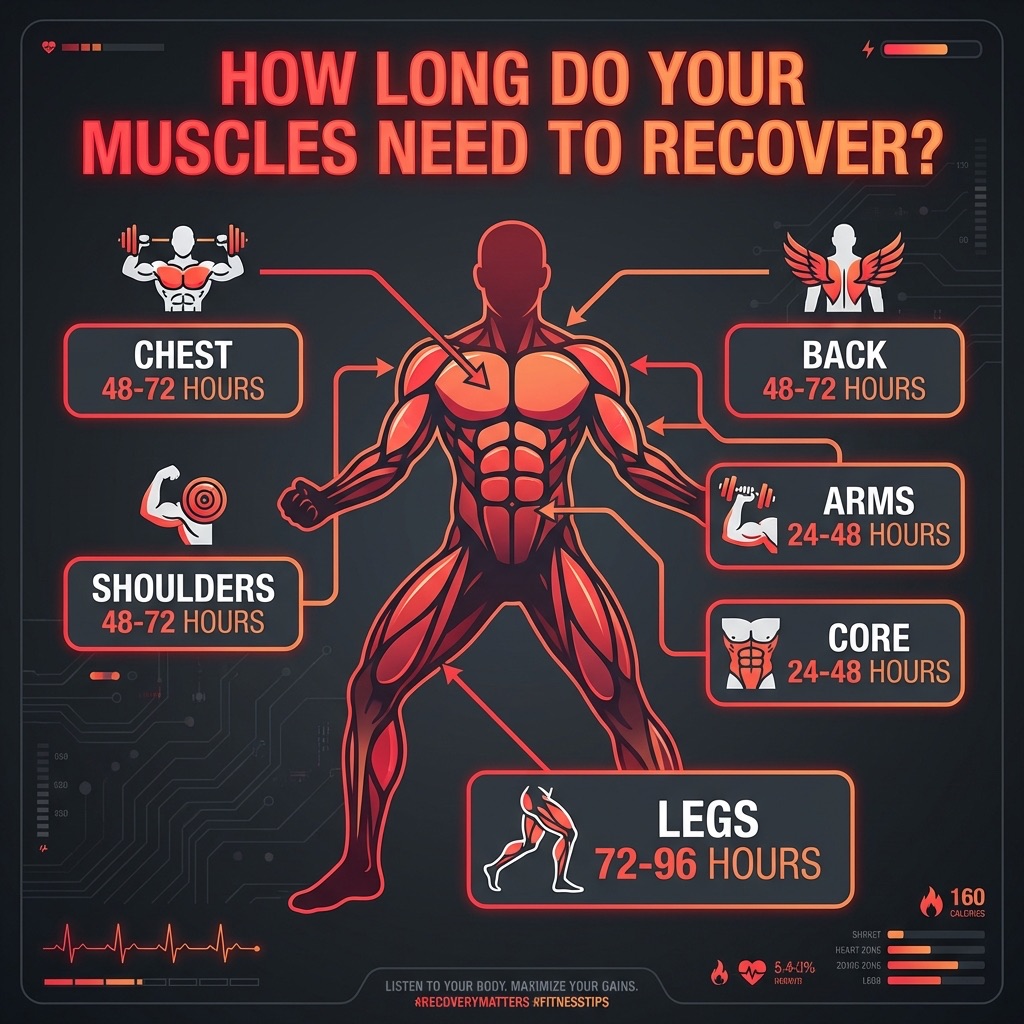
Bigger muscles take longer to recover.
- Legs: 72-96 hours (4-5 days)
- Back: 48-72 hours (3-4 days)
- Chest: 48-72 hours (3-4 days)
- Shoulders: 48-72 hours (3-4 days)
- Arms: 24-48 hours (2-3 days)
- Core: 24-48 hours (2-3 days)
2. Training Intensity
Light workout? Recover in 24 hours.
Grind to failure on every set? Could be 5+ days.
3. Your Fitness Level
Beginners recover faster (less damage per session) but also need more practice (higher frequency).
Advanced lifters can cause more damage and need more recovery time.
4. Sleep, Nutrition, Stress
Bad sleep? Extends recovery. Low protein? Extends recovery. High life stress? Extends recovery.
Signs You’re Not Recovered
Performance decline If weights that were easy last week feel impossible now, you’re undertrained.
Persistent soreness Some soreness is fine. Being sore 24/7 means you’re not recovering.
Low motivation Don’t want to train? Your body might be telling you something.
Sleep issues Trouble falling asleep or staying asleep can indicate overtraining.
More injuries Tweaks, strains, and nagging pains that won’t heal.
The Smart Approach
Train each muscle 2x per week
Monday chest, Thursday chest. Not Monday, Wednesday, Friday.
Unless you’re doing very light sessions, twice per week is plenty for most people.
Earn your training days
Don’t just follow a schedule blindly. Check in with your body.
If you’re supposed to train legs but they’re still sore from 3 days ago, wait another day.
Prioritize sleep
This is when most recovery happens. HGH is released during deep sleep. Protein synthesis peaks.
7-9 hours. Non-negotiable if you’re serious about results.
Active recovery beats full rest
Light walking, swimming, or mobility work on rest days can speed recovery vs. sitting on the couch.
The Tracker
I built GymCoach AI specifically for this problem.
Log your workouts. See a visual map of which muscles are recovered and which aren’t. Stop guessing.
The app shows you exactly when you’re ready to train each muscle group again.
Because the best thing you can do for gains is sometimes… not train.
— Dolce

Comments
Comments powered by Giscus. Sign in with GitHub to comment.