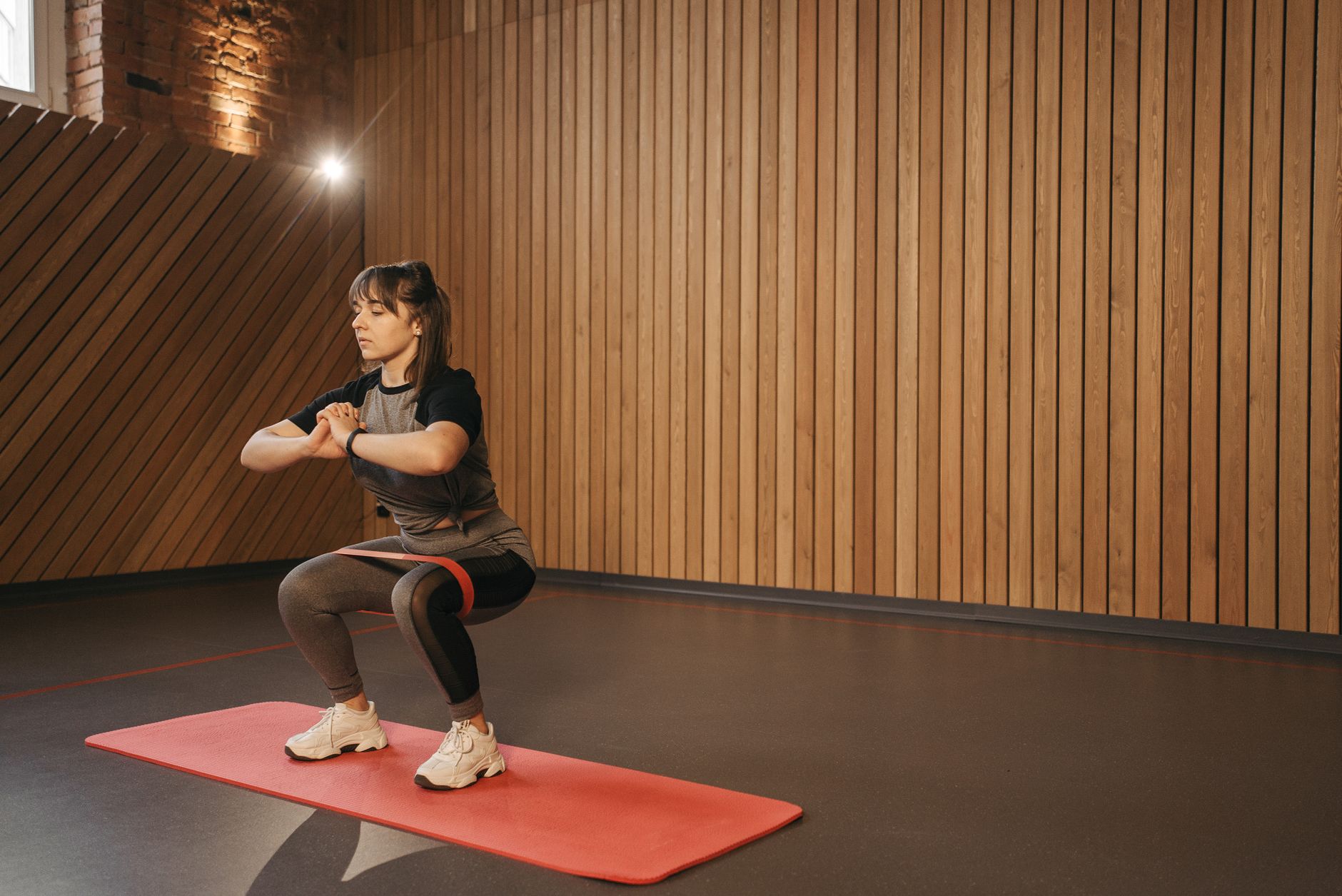
Resistance Training for Beginners: Your No-Nonsense Starter Guide
Resistance training for beginners does not need to be complicated. You push against resistance. Your muscles adapt. You get stronger. That is the entire concept. But the gap between understanding it and actually doing it stops most people cold.
This guide closes that gap. No jargon. No overwhelming science. Just what you need to start this week.
What Counts as Resistance Training
Anything where your muscles work against a force. That includes:
- Barbells and dumbbells (free weights)
- Machines (cable stations, leg press, etc.)
- Resistance bands (cheap, portable, effective)
- Bodyweight (push-ups, squats, pull-ups)
- Kettlebells, sandbags, anything heavy
You do not need a gym membership. You do not need a home gym. You need resistance and consistency. That is it.
Why Resistance Training for Beginners Pays Off Fast
Cardio gets all the attention. But lifting weights delivers benefits that running simply cannot:
Muscle preservation. After age 30, you lose 3-5% of muscle mass per decade without strength training. That decline accelerates after 50. The earlier you start fighting it, the better off you are at 60, 70, and beyond.
Metabolism boost. Muscle burns more calories at rest than fat. More muscle means a higher resting metabolic rate. This is why strength training is the long-term play for body composition.
Bone density. Resistance training loads your skeleton, which signals your body to build stronger bones. Critical for long-term health and preventing osteoporosis.
Joint protection. Stronger muscles stabilize joints and reduce injury risk in daily life. Your knees, shoulders, and back all benefit.
Mental health. Studies consistently show that strength training reduces symptoms of anxiety and depression. It is not just physical. The confidence that comes from getting stronger carries into every area of your life.
The sooner you start, the more you benefit. Age, gender, body type -- none of it matters. Resistance training works for everyone.
The Beginner Exercises You Need to Learn
Master these movement patterns and you can build any program:
Squat Pattern
Goblet Squat: Hold a dumbbell at your chest. Feet shoulder-width apart. Sit down and back like you are aiming for a chair. Drive through your heels to stand. This trains your quads, glutes, and core all at once.
Hinge Pattern
Romanian Deadlift: Hold dumbbells in front of your thighs. Push your hips back while keeping a slight bend in your knees. Lower the weights along your legs until you feel a stretch in your hamstrings. Stand up by squeezing your glutes. This is the most important pattern most people never learn.
Push Pattern
Dumbbell Bench Press: Lie on a bench. Press dumbbells from chest level to full arm extension. Lower with control. If no bench, start with push-ups from your knees or against a wall. Both work.
Pull Pattern
Dumbbell Row: One hand and knee on a bench. Row a dumbbell from arm's length to your hip. Squeeze your shoulder blade at the top. This builds your back and biceps and balances out all the pushing.
Carry Pattern
Farmer's Walk: Grab heavy dumbbells. Walk with good posture for 30-40 seconds. Sounds simple. It trains your grip, core, shoulders, and cardiovascular system all at once. Deceptively brutal.
Your First Resistance Training Program
Three days per week. Full body each session. Here is the template:
Day A (Monday):
- Goblet Squat: 3 sets x 10 reps
- Dumbbell Bench Press: 3 sets x 10 reps
- Dumbbell Row: 3 sets x 10 reps per arm
- Plank: 3 sets x 30 seconds
Day B (Wednesday):
- Romanian Deadlift: 3 sets x 10 reps
- Overhead Press: 3 sets x 10 reps
- Lat Pulldown or Band Pull-Apart: 3 sets x 12 reps
- Farmer's Walk: 3 sets x 40 seconds
Day C (Friday):
- Lunge: 3 sets x 8 reps per leg
- Push-Ups: 3 sets x max reps
- Cable Row or Band Row: 3 sets x 12 reps
- Dead Bug: 3 sets x 8 reps per side
Rest 90 seconds between sets. Each session takes about 40 minutes. That is all you need to build a real foundation.
How to Progress as a Beginner
Progression is simple at the start:
Week 1-2: Learn the movements with light weight. Focus on form. Film yourself if needed. This phase is not about breaking a sweat. It is about building motor patterns.
Week 3-4: Add weight in small increments. Two to five pounds per exercise is plenty. Your body adapts fast at this stage.
Week 5+: Continue adding weight whenever you complete all prescribed reps with good form. This linear progression works for months before you need anything fancier.
If you stall, add one extra rep per set before increasing weight. Going from 3x10 to 3x12 at the same weight still counts as progress. Do not let the scale on the dumbbell be your only measure.
Mistakes That Derail Beginners
Starting too heavy. Your ego is not your friend. Light weight with perfect form builds a foundation. Heavy weight with bad form builds injuries. You have decades of training ahead. There is no rush.
Skipping warm-ups. Five minutes of light cardio and some dynamic stretching is all you need. But you need it. Cold muscles do not perform well and they get hurt more easily.
Program hopping. Pick a program and stick with it for 8-12 weeks. Switching every two weeks means you never adapt to anything. The magic is in the consistency, not the novelty.
Ignoring recovery. Muscles grow during rest, not during the workout. Sleep 7-9 hours. Eat enough protein -- aim for 0.7 grams per pound of bodyweight. Take your rest days seriously. They are part of the program.
Getting Started Today
Our home workout guide is a great companion resource if you are doing resistance training for beginners without a gym. It covers bodyweight progressions and minimal-equipment setups that pair perfectly with the program above.
For a fully customized plan that adjusts as you get stronger, Gym Coach builds your program based on your experience level, available equipment, and goals. It takes the guesswork out of programming so you can focus on showing up and putting in the work.
Resistance training for beginners is not about being perfect. It is about being consistent. Start light. Learn the movements. Show up three times a week. The results take care of themselves.
-- Dolce

Comments
Comments powered by Giscus. Sign in with GitHub to comment.