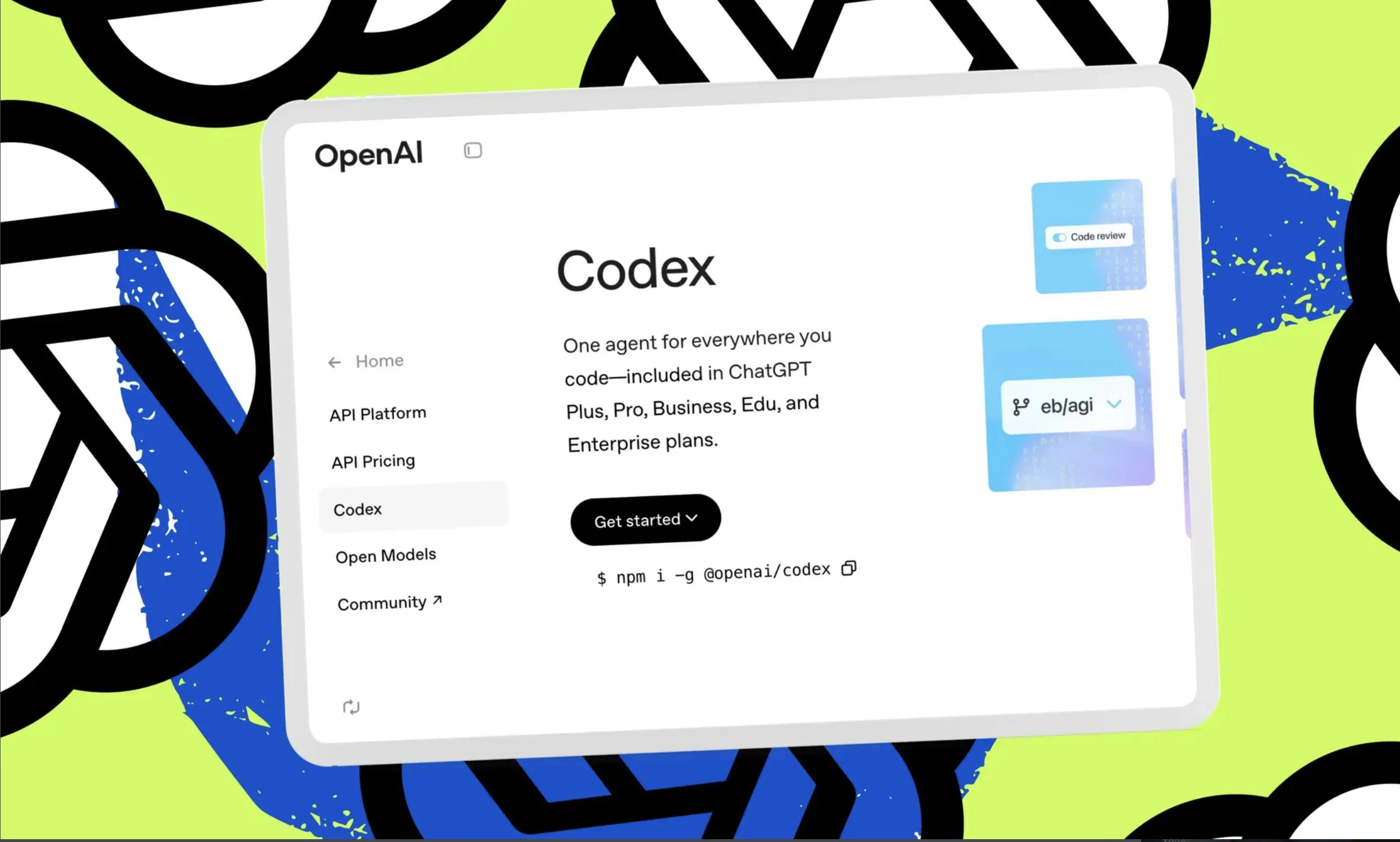
One million developers used Codex last month. Usage doubled since December.
Now OpenAI just dropped a desktop app that makes Claude Code look like a text editor.
What OpenAI Just Shipped
On February 2nd, OpenAI released the Codex desktop app for macOS. It’s not a chatbot. It’s not an autocomplete plugin.
It’s a command center for AI coding agents.
Here’s what it does:
- Multiple agents work on the same repo simultaneously
- Each agent runs in its own worktree — no conflicts
- Agents can work autonomously for 30 minutes before checking in
- Skills let you extend agents beyond code — research, writing, workflows
- Automations run agents on a schedule, even when you’re not there
You wake up. Your agents already fixed three bugs, wrote tests, and opened PRs.
That’s not hype. That’s the product.
Powered by GPT-5.2-Codex
Sam Altman called it “the strongest model by far” for sophisticated coding work.
GPT-5.2-Codex launched in December. Since then, Codex usage grew 20x from August levels. A million developers in one month.
The desktop app is the delivery mechanism. The model is the engine.
The Three Features That Matter
1. Worktrees
Multiple agents. Same codebase. Zero conflicts. Each agent works on an isolated copy. You review and merge what you want.
This solves the biggest problem with AI coding — when two changes break each other. Worktrees kill that entirely.
2. Skills
This is where it gets interesting. Skills bundle instructions, resources, and scripts so agents can do things beyond writing code:
- Gather market research
- Synthesize documents
- Run deployment workflows
- Follow your team’s specific conventions
Skills turn a coding agent into a business agent.
3. Automations
Set a schedule. Define a task. Codex runs it automatically. Results land in a review queue.
Imagine: every morning at 6 AM, an agent scans your error logs, writes fixes, and opens PRs. You review over coffee.
That’s the pitch. And honestly? It’s compelling.
The War Between Anthropic and OpenAI
This launch didn’t happen in a vacuum. The same week:
- Anthropic dropped Claude Sonnet 5 with Swarm mode — parallel agents, self-organizing dev teams
- OpenAI countered with the Codex desktop app — multi-agent, autonomous, scheduled
Both companies are betting everything on the same thesis: the future of coding is delegation, not typing.
You don’t write code. You manage agents that write code.
The difference? Anthropic’s Swarm is open-ended — agents spawn other agents based on what the task needs. OpenAI’s Codex is more structured — you define Skills and Automations, and agents follow the playbook.
Neither approach is obviously better yet. What’s clear is that single-agent coding is already legacy.
What This Means If You’re Building Something
If you’re a solo builder, this is your moment.
The cost of building software just dropped by an order of magnitude. Not because the tools are cheaper — they are — but because the time collapsed.
A feature that took a week with one AI agent now takes hours with five agents in parallel.
A solo founder with Codex or Swarm can ship at the pace of a funded startup with a dev team. Without the payroll. Without the meetings. Without the politics.
The playing field didn’t just level. It inverted.
The Risk Nobody’s Mentioning
Here’s the uncomfortable part: when agents code autonomously for 30 minutes and you review after, are you really reviewing? Or just rubber-stamping?
At some point, the volume of AI-generated code exceeds any human’s ability to meaningfully review it. We’re approaching that point now.
The answer isn’t to slow down. It’s to build better testing infrastructure. CI/CD pipelines. Staging environments. Automated security scanning. Let AI write the code. Let automated systems verify it. You make the final call on what ships.
The developers who thrive in 2026 aren’t the best coders. They’re the best reviewers, architects, and decision-makers.
The code writes itself now. Your job is to point it in the right direction.
— Dolce
Comments
Comments powered by Giscus. Sign in with GitHub to comment.