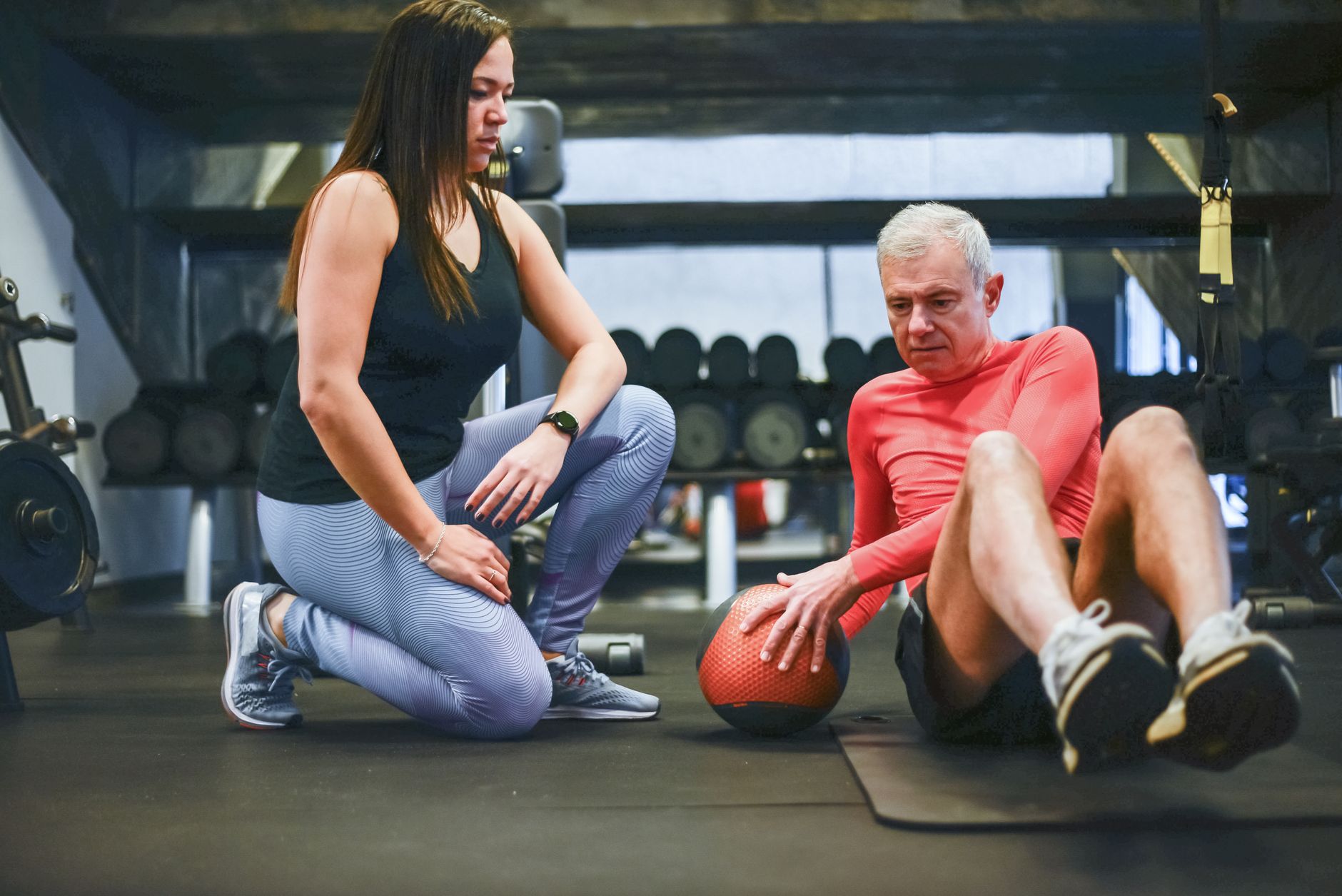
Getting Older Does Not Mean Getting Weaker
Somewhere along the way, someone decided that aging means slowing down. Sitting more. Moving less. Being careful. That advice is not just wrong. It is dangerous. Inactivity is what causes the falls, the frailty, and the loss of independence. Not age itself. A low impact workout for seniors is the antidote. It builds the strength, balance, and mobility that keep you independent and capable. And no, it does not require jumping, running, or anything that wrecks your joints.
If you can stand, you can start. If standing is difficult, you can start seated. There are no prerequisites here except the decision to begin.
Why Low Impact Training Matters After 60
High impact exercise -- jumping, sprinting, heavy plyometrics -- puts enormous stress on joints. For someone with decades of wear on their knees, hips, and spine, that stress creates more problems than it solves.
Low impact training removes the jarring forces while keeping all the benefits. You still build muscle. You still improve cardiovascular health. You still strengthen bones. You just do it without the pounding.
After 60, the priorities shift. Muscle preservation becomes critical because you lose roughly 3 to 5 percent of muscle mass per decade after 30. Balance training becomes essential because falls are the leading cause of injury in older adults. Flexibility matters because stiff joints limit everything from walking to reaching overhead.
A good low impact workout for seniors addresses all three. Not just one.
The Complete Low Impact Workout for Seniors
Warm-Up: 5 Minutes
March in place for two minutes. Lift your knees to a comfortable height. Swing your arms naturally. This gets blood flowing without any impact.
Follow with arm circles. Ten forward, ten backward. Then gentle torso rotations, hands on hips, turning left and right. Ten each side.
Finish with ankle circles. Hold onto a chair and rotate each ankle ten times in each direction. This warms up the joints most prone to stiffness.
Strength: 20 Minutes
Chair squats. Stand in front of a sturdy chair. Lower yourself until you lightly touch the seat. Stand back up. That is one rep. Do 10. Rest. Repeat twice. This is the single best lower body exercise for seniors because the chair provides a safety net.
Wall push-ups. Stand arm's length from a wall. Place your hands shoulder-width apart on the wall. Bend your elbows and lean in. Push back. Do 10. Rest. Repeat twice. As you get stronger, move to a countertop, then a sturdy table, then eventually the floor.
Seated rows with a resistance band. Sit on the edge of a chair, loop the band around your feet, and pull the ends toward your ribcage. Squeeze your shoulder blades together. Do 12. Rest. Repeat twice. This strengthens the upper back and improves posture.
Standing calf raises. Hold a chair for balance. Rise up on your toes. Lower slowly. Do 15. Rest. Repeat twice. Strong calves support ankle stability and walking endurance.
Bicep curls with light dumbbells or water bottles. Stand or sit. Curl the weight to your shoulder. Lower slowly. Do 12 each arm. Rest. Repeat twice. Arm strength matters for carrying groceries, opening jars, and daily tasks you want to keep doing yourself.
Balance: 10 Minutes
Single leg stand. Hold a chair with one hand. Lift one foot an inch off the ground. Hold for 15 seconds. Switch. As confidence builds, use one finger on the chair instead of a full grip. Eventually, no chair at all.
Heel-to-toe walk. Place one foot directly in front of the other, heel touching toe. Walk forward 10 steps. Turn around and come back. This mimics the balance demands of real-world walking on uneven surfaces.
Weight shifts. Stand with feet hip-width apart. Shift your weight to the left foot, lifting the right slightly. Hold five seconds. Shift right. Repeat 10 times each side.
Cool Down: 5 Minutes
Seated hamstring stretch. Sit on the edge of a chair. Extend one leg straight. Lean forward gently from the hips. Hold 20 seconds each side.
Standing quad stretch. Hold a chair. Bend one knee and grab your ankle behind you. If you cannot reach, loop a towel around your ankle. Hold 20 seconds each side.
Shoulder stretch. Bring one arm across your body. Use the opposite hand to gently press it closer. Hold 20 seconds each side.
Deep breathing. Three slow breaths in through the nose, out through the mouth. You are done.
How Often Should You Do This Workout
Three times per week with rest days in between. Monday, Wednesday, Friday works well. On off days, a 20 to 30 minute walk is ideal active recovery.
Consistency beats intensity. Doing this routine three times per week for six months will transform your strength, balance, and confidence. Doing an intense routine once and quitting will do nothing.
Use a workout timer to keep your rest periods consistent and your sessions on track. Structure removes the need for willpower.
Progressing Safely Over Time
Add resistance gradually. Start with bodyweight. After two weeks of comfortable sessions, add light dumbbells or a resistance band. Increase weight only when the current level feels easy for all reps.
Add reps before adding weight. Going from 10 to 12 to 15 reps at the same weight is safer than jumping to heavier loads.
Listen to your body. Joint pain is a stop signal, not a push-through signal. Muscle soreness the day after is normal and expected. Sharp pain during an exercise is not. Learn the difference.
Our home workout guide has additional bodyweight progressions that pair well with this routine as you get stronger.
The Investment That Pays for Itself
Every chair squat you do today is an insurance policy against the fall you will not take next year. Every balance exercise is another year of independence. Every push-up is proof that your body still responds to effort.
A low impact workout for seniors is not about looking a certain way. It is about living a certain way. Mobile. Independent. Capable.
Start this week. Three sessions. Forty minutes each. That is all it takes to begin changing the trajectory of your health.
-- Dolce


Comments
Comments powered by Giscus. Sign in with GitHub to comment.