You're limping out of HIIT class, your knees sound like bubble wrap, and you've gained two pounds this month. Something doesn't add up.
Here's the uncomfortable truth the fitness industry won't tell you: brutally hard workouts aren't required to lose fat. In fact, low impact exercises for weight loss often outperform high-impact training over time because you can actually stick with them. No recovery weeks. No joint flare-ups. No dreading every session.
The best workout isn't the hardest one. It's the one you'll still be doing six months from now.
Why Low Impact Exercises for Weight Loss Beat High-Impact Training
Let's kill a myth. "Low impact" doesn't mean "low effort." It means at least one foot stays on the ground, or there's minimal jarring force on your skeleton. You can absolutely be drenched in sweat and gasping for air during a low-impact session.
The real advantage? Sustainability. A 2024 study in the British Journal of Sports Medicine found that exercise adherence — not intensity — was the single strongest predictor of long-term weight loss. People who chose moderate, joint-friendly routines lost more weight over 12 months than those who started aggressive programs and burned out by week eight.
High-impact training has its place. But if you're carrying extra weight, have cranky joints, or you're over 35, pounding the pavement five days a week is a fast track to injury.
The 7 Best Low Impact Exercises for Weight Loss
1. Walking (Yes, Walking)
Before you roll your eyes — a 180-pound person burns roughly 400 calories during a brisk 60-minute walk. Do that daily and you're looking at nearly 3,000 calories a week without a single burpee. Walk on an incline and those numbers jump 40-60%.
The trick: speed matters less than duration. Aim for 45-75 minutes at a pace where you can talk but wouldn't want to sing.
2. Swimming
Water supports roughly 90% of your body weight. That means you can push hard with almost zero joint stress. Freestyle swimming torches 500-700 calories per hour depending on intensity. Even treading water burns more than most machine-based gym exercises.
3. Cycling (Stationary or Outdoor)
Cycling is a calorie furnace that spares your knees. A moderate 45-minute ride burns 400-600 calories. Stationary bikes let you control resistance precisely, and there's zero impact on every pedal stroke.
4. Rowing
The rowing machine is the most underrated piece of equipment in any gym. It works 86% of your muscles in a single stroke — legs, back, core, arms. Thirty minutes of moderate rowing burns 300-400 calories and builds functional strength simultaneously.
5. Elliptical Training
The elliptical gets mocked by gym bros. Ignore them. A 30-minute session at moderate resistance burns 270-380 calories with zero ground impact. Crank the resistance up and use the arm handles and you've got a full-body session.
6. Strength Training
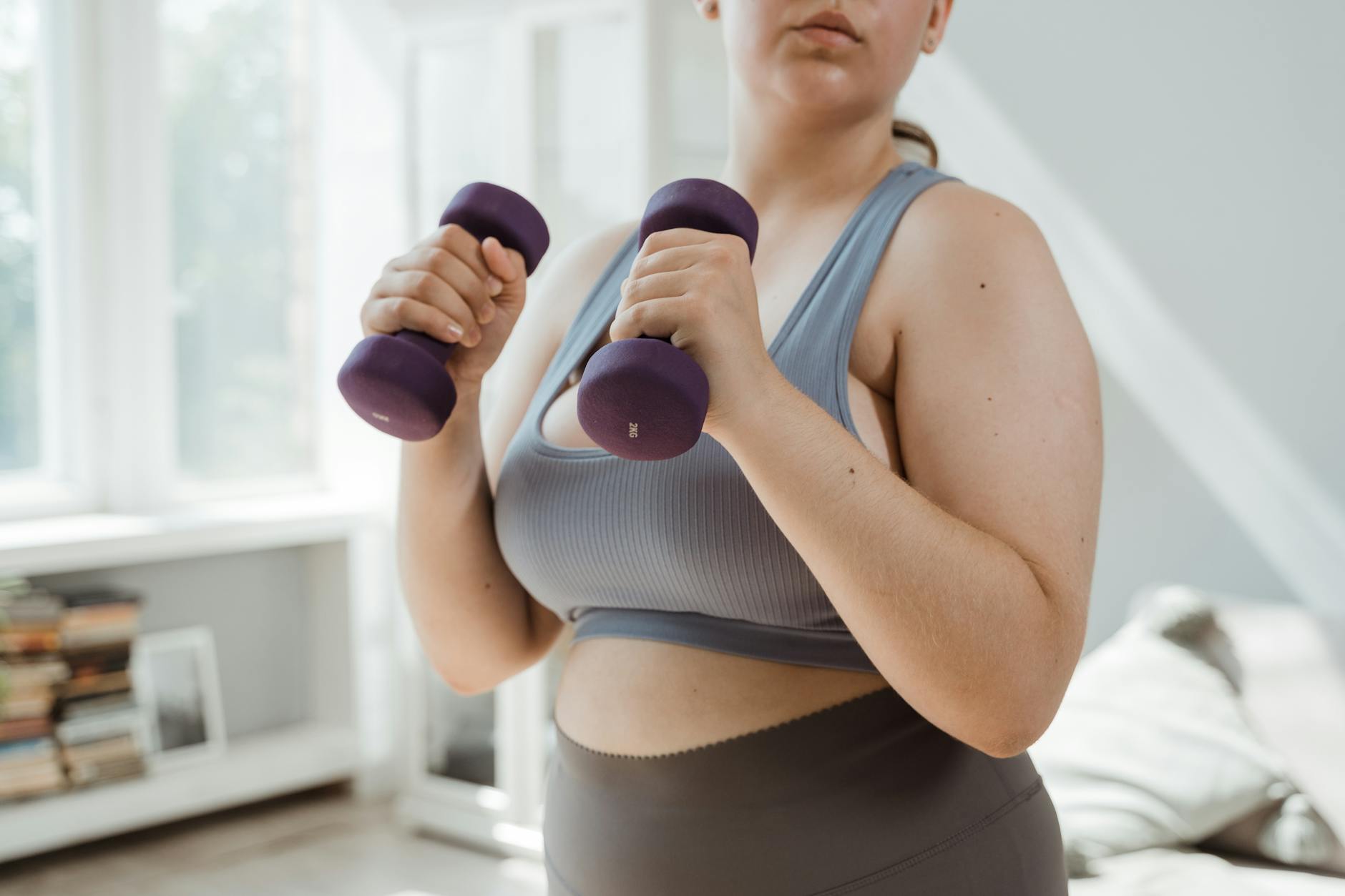
This is the secret weapon most people overlook. Lifting weights is inherently low-impact — no jumping, no pounding. But the metabolic payoff is massive. Every pound of muscle you add burns an extra 6-7 calories per day at rest. Over a year, adding five pounds of muscle means your body burns roughly 12,000 extra calories while you do nothing.
Start with compound movements: goblet squats, dumbbell rows, overhead presses, deadlifts. Three sessions per week is plenty.
7. Yoga Power Flow
Not the candle-lit restorative kind. A vigorous vinyasa flow burns 400-600 calories per hour while building flexibility and core stability. It's demanding, it's low-impact, and the stress reduction benefits help regulate cortisol — a hormone that directly promotes belly fat storage.
How to Structure Your Week
Here's a practical weekly template that balances low impact exercises for weight loss with recovery:
- Monday: 45-minute brisk walk + 20-minute strength circuit
- Tuesday: 30-minute swim or rowing session
- Wednesday: 60-minute walk (recovery pace)
- Thursday: 40-minute cycling + 15-minute core work
- Friday: 30-minute strength training (compound lifts)
- Saturday: 60-minute yoga flow or long hike
- Sunday: Rest or gentle stretching
This gives you six active days with zero high-impact stress. Pair it with a modest caloric deficit — 300-500 calories below maintenance — and you'll lose 1-2 pounds per week consistently.
Need help structuring your home workouts without equipment? We've got a full guide for that.
The Nutrition Piece Nobody Wants to Hear
Exercise alone rarely produces dramatic weight loss. You can't outwalk a bad diet. A single restaurant meal can wipe out an entire week of workout calories in one sitting.
Track your intake — even loosely. Use a calorie calculator to find your maintenance number, subtract 300-500 calories, and eat mostly whole foods. The Calorie Calculator app makes this dead simple.
Low impact exercises for weight loss create the deficit. Nutrition determines how big that deficit actually is.
Common Mistakes That Stall Progress
Going too easy. Low impact doesn't mean lounging. You still need to challenge yourself. If you're not slightly breathless, increase the pace or resistance.
Ignoring strength training. Cardio-only approaches lead to muscle loss, which tanks your metabolism. Lift something heavy at least twice a week.
Obsessing over the scale. Weight fluctuates 2-4 pounds daily from water alone. Track weekly averages, not daily numbers.
Skipping rest days. Recovery is when adaptation happens. More isn't always better.
The Mental Game
Here's what nobody talks about: the biggest barrier to low impact exercise isn't physical. It's psychological. People feel guilty for not pushing harder. They see someone drenched in sweat on the assault bike and think their walking session doesn't count.
It counts. Every calorie burned counts. Every session completed counts. The person walking consistently for a year will be in dramatically better shape than the person who did brutal HIIT for six weeks and quit.
Build the habit first. Intensity can come later. Track your sessions with the Habit Tracker app and watch the streak become its own motivation.
Consistency compounds. A 300-calorie walk done 300 days a year is 90,000 calories — roughly 26 pounds of fat. That's a complete body transformation from walking.
If you need a structured program that tracks your workouts and progress, the GymCoach app builds routines tailored to your experience level and goals.
-- Dolce
Comments
Comments powered by Giscus. Sign in with GitHub to comment.