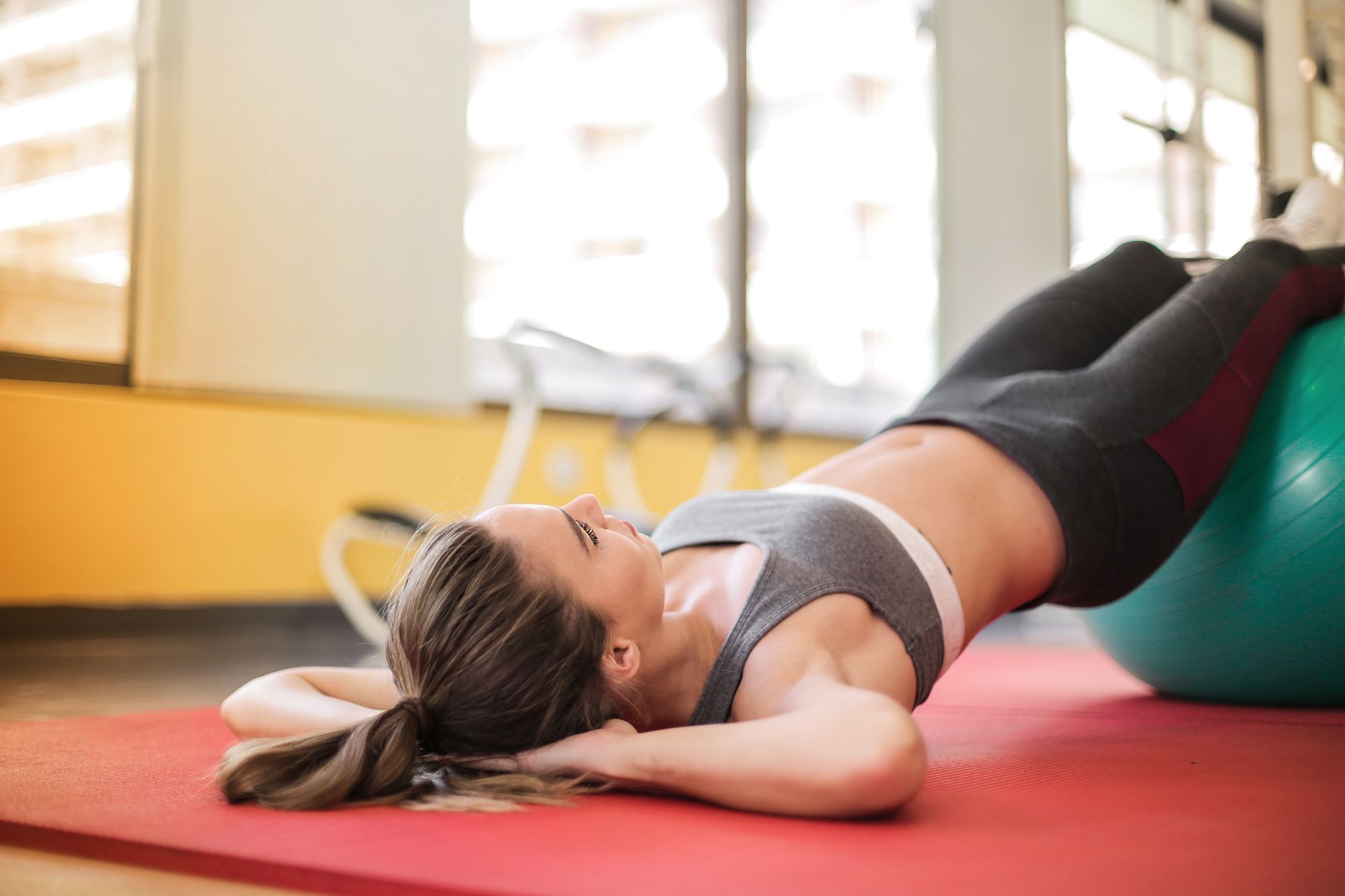
You've been doing crunches for three years and your abs still don't show. That's not a body fat problem — well, partially — but it's mostly a training problem. The gym exercises for abs that most people rely on are the least effective options available to them.
Crunches are to ab training what jogging is to sprinting. Low intensity, low reward, high volume for minimal results. The gym has cable machines, barbells, adjustable benches, and pull-up bars that can load your core with real resistance. Yet people ignore all of it to lie on the floor and do the same movement they've done since middle school PE.
Let's fix that.
Why Most Gym Exercises for Abs Don't Work
Your abs are muscles. They respond to progressive overload just like your chest, back, and legs. If you bench pressed an empty bar for sets of 50 every workout, your chest would never grow. But that's exactly what you're doing with bodyweight crunches — high reps, no progression, same stimulus forever.
The abs need to be trained with resistance. They need to be challenged through their full range of motion. And they need exercises that hit all four functions: spinal flexion, anti-extension, anti-rotation, and hip flexion with a stable spine.
Here's the actual list.
The Best Gym Exercises for Abs: Loaded and Effective
Cable Crunches (Spinal Flexion)
Kneel in front of a cable stack with a rope attachment at the top. Hold the rope at your temples. Crunch your ribcage toward your pelvis against the cable resistance. The key: your hips stay stationary. If your butt moves toward your heels, you're doing a hip flexion movement, not an ab crunch.
Start with 40-50 lbs. Work up to 100+. Three sets of 12-15.
This is the single most underrated ab exercise in any gym. You can progressively overload it for years.
Hanging Leg Raises (Hip Flexion + Anti-Extension)
Hang from a pull-up bar. Raise your legs until your thighs pass parallel. Control the descent — no swinging. If you can't do straight-leg raises yet, bend your knees.
The magic happens at the top of the movement when your pelvis tucks under. That posterior pelvic tilt is where your abs actually engage. Stopping at 90 degrees is a hip flexor exercise. Going past 90 is an ab exercise. Big difference.
Three sets of 8-12. Add a dumbbell between your feet when bodyweight gets easy.
Ab Wheel Rollouts (Anti-Extension)
Nothing loads the anterior core like a full ab wheel rollout. Start from your knees. Roll out until your arms are fully extended and your body is nearly parallel to the floor. Pull back using your abs, not your hip flexors.
If you can do 3 sets of 15 from your knees without your lower back sagging, progress to standing rollouts. Most people never get there. That's fine. Kneeling rollouts with slow eccentrics are plenty.
Pallof Press (Anti-Rotation)
Set a cable at chest height. Stand perpendicular to the machine. Press the handle straight out from your chest and hold for 3 seconds. Your obliques are fighting the rotational pull of the cable. That's the entire exercise.
This looks easy. It isn't. Use moderate weight and focus on zero trunk rotation. Three sets of 10 per side.
Weighted Decline Sit-Ups (Spinal Flexion Under Load)
Hook your feet into a decline bench. Hold a plate against your chest. Sit up with control, curling your spine segment by segment. Don't yank yourself up with momentum.
Start with a 10 lb plate. Progress to 25, then 45. When you can do 3x12 with a 45 lb plate on a steep decline, your abs are legitimately strong.
Landmine Rotations (Oblique Power)
Set a barbell in a landmine attachment. Hold the end with both hands at chest height. Rotate the bar side to side in a controlled arc. Your feet stay planted; the rotation comes from your thoracic spine and obliques.
Three sets of 8-10 per side with moderate weight.
Programming Your Ab Work
Pick two or three of these gym exercises for abs and do them twice per week. One spinal flexion movement, one anti-extension movement, one rotation movement. That covers all functions.
Sample session: Cable crunches 3x15, Hanging leg raises 3x10, Pallof press 3x10 each side. Fifteen minutes. Done.
Progress the weight or reps every two weeks. Treat ab training like you treat any other muscle group — structured, tracked, and progressive.
For a complete program that organizes all your training including core work, check out our home workout guide or use GymCoach to build and track a routine that actually progresses over time.
The Body Fat Truth
I'd be lying if I didn't mention this: you need to be under roughly 15% body fat as a man or 22% as a woman for abs to be visible regardless of how strong they are. Training builds the muscle. Nutrition reveals it. Both matter. But most people have the nutrition part figured out and the training part completely wrong.
Build abs worth revealing. Then reveal them.
-- Dolce
Comments
Comments powered by Giscus. Sign in with GitHub to comment.