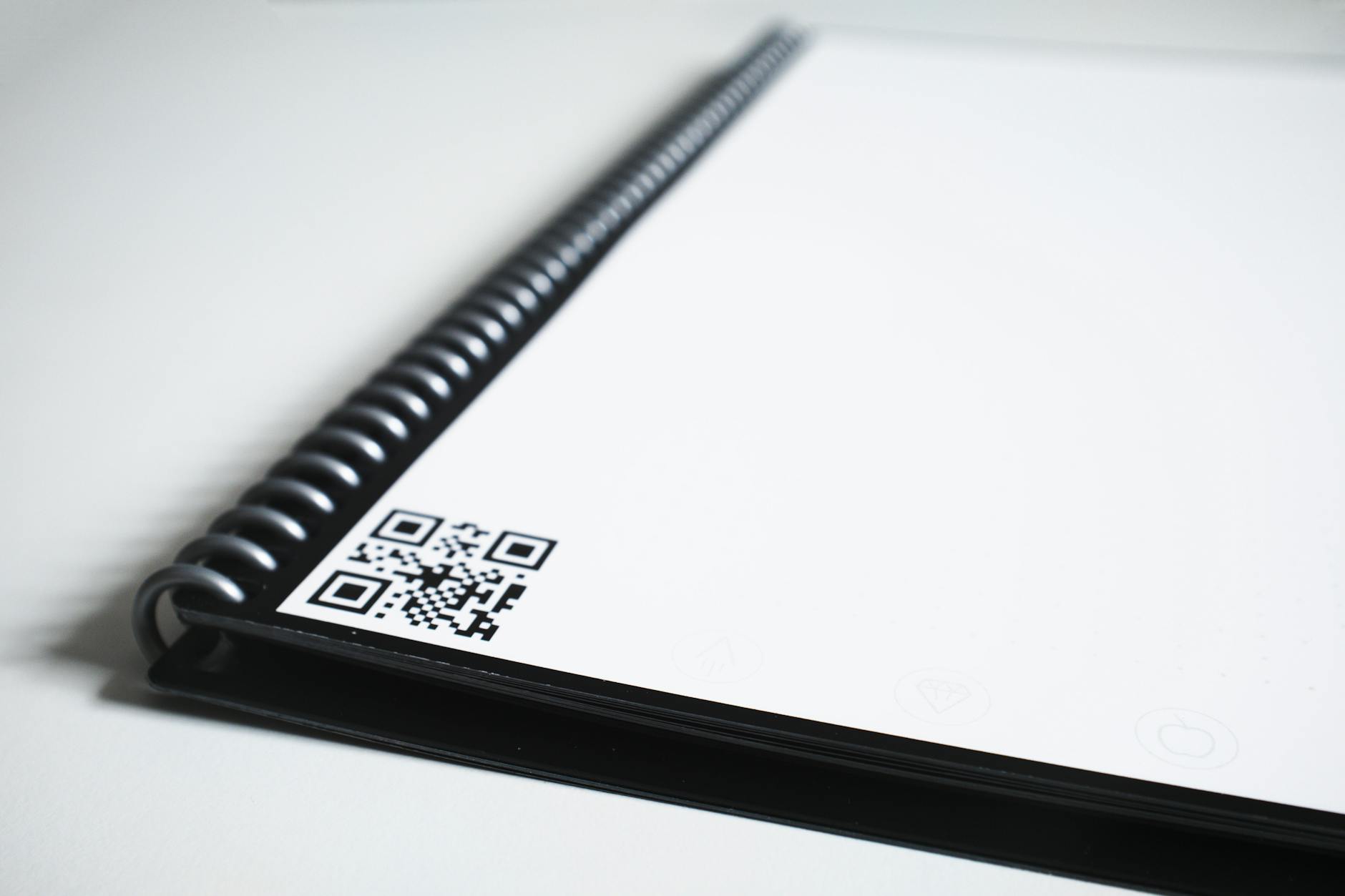
Your phone already scans documents. It has for years, it costs nothing, and for a lot of people that is the end of the story.
So the useful question isn’t “which scanner app is best”. It’s narrower than that: what does a paid scanner do that the free one on your phone doesn’t?
Sometimes the answer is “quite a lot”. Often it’s “nothing you need”.
How this list is sourced
I have not run every one of these apps for a month. You should be sceptical of any blog that says it has.
What I have done is check the things that are checkable. Every app name, developer and rating below was pulled from the US App Store on 11 August 2026. Behaviour descriptions come from each app’s own store listing and documentation.
There are no prices in the comparison table, and that’s deliberate. Every scanner app in this article is free to download. All of them make their money from subscriptions or in-app purchases that vary by region, by promotion, and by month. Any figure I print here is wrong within a year. Check the App Store listing before you commit to anything.
Three things this page used to get wrong
Worth saying out loud, because a lot of scanner guides still repeat all three.
1. Scanner Pro is not a one-time purchase any more. Older articles list it at around $10 forever. As of 11 August 2026, Scanner Pro・Scan PDF Documents from Readdle Technologies Limited is free to download, and the paid features sit behind in-app purchases branded “Scanner Pro Plus”. If you bought it years ago as a paid app, that’s a different situation to buying it today.
2. Microsoft Lens is gone. It used to be the standard free recommendation. Microsoft retired it: the app was removed from app stores on 9 February 2026, and stopped creating new scans on 9 March 2026. It no longer returns a result in the US App Store. Microsoft’s own suggested replacement is the scan feature inside OneDrive. Don’t build a workflow on Lens.
3. Apple Notes does read text. Plenty of comparison tables still put a cross next to Notes for OCR. That hasn’t been true for years. Notes has a built-in document scanner and Live Text, so text inside a scan is selectable and searchable on-device. Apple documents both in its own iPhone user guide.
”Free” has stopped meaning what you think
Here is the thing that reframes this whole category.
Every single scanner app I checked on 11 August 2026 was free to download. Adobe Scan, Genius Scan, CamScanner, iScanner, Scanner Pro, SwiftScan, all of them. Zero dollars at the checkout.
So “free vs paid” is no longer a choice between two kinds of app. It’s a choice between:
- Genuinely free — a scanner built into software you already have, with no upsell
- Free to start — a full-featured scanner that will ask you for a subscription the moment you want OCR export, batch processing, or cloud sync
Neither is wrong. But if you install a “free” scanner expecting the second to behave like the first, you’ll be annoyed within a week.
Pick your category before you pick an app
Most people fall into one of three groups, and the right answer is completely different for each.
- You scan a few things a year — a lease, a passport, a form for your accountant → use what’s already on your phone, stop reading
- You want a searchable archive — receipts, invoices, contracts you’ll need to find in eighteen months → you need real OCR and folders, which is where paid tiers start earning their keep
- You scan as part of a job — expenses, site paperwork, client documents, dozens a week → automation and cloud upload is the actual product, and the subscription is a business cost
Work out which one you are first. It removes about 80% of this decision.
Quick comparison
Developers and ratings verified on the US App Store, 11 August 2026. Every app listed is free to download.
| App | Developer | Rating | Ratings | What it’s for |
|---|---|---|---|---|
| Notes | Apple Inc. | 4.8 | 624,281 | Already on your iPhone |
| Google Drive | Google LLC | 4.8 | 7,714,565 | Scan straight into Drive |
| Microsoft OneDrive | Microsoft Corporation | 4.7 | 486,662 | Microsoft’s Lens replacement |
| Adobe Scan | Adobe Inc. | 4.9 | 1,576,510 | OCR and PDF export |
| Genius Scan | The Grizzly Labs | 4.9 | 1,350,973 | Batch scanning, organisation |
| Scanner Pro | Readdle Technologies Limited | 4.9 | 333,356 | Workflows and auto-upload |
| CamScanner | INTSIG Information Co., Ltd | 4.8 | 1,862,150 | Most-rated in the category |
| iScanner | BP Mobile LLC | 4.8 | 1,393,938 | Scanning plus measuring tools |
| SwiftScan | Maple Media Apps, LLC | 4.8 | 18,943 | Fax and cloud upload |
Note the rating counts. CamScanner, Adobe Scan, Genius Scan and iScanner all sit above a million ratings. SwiftScan has under twenty thousand. That doesn’t make SwiftScan bad, but it does mean far fewer people have stress-tested it.
The genuinely free options
Apple Notes
Built into iOS, no account, no upsell, no ads. Open a note, tap the attachment button, pick Scan Documents. Auto edge detection, multi-page, perspective correction, PDF export.
Text recognition happens on-device via Live Text, so a scanned receipt is searchable without anything leaving your phone.
What it doesn’t do: export OCR to Word or Excel, batch-process a stack of twenty pages, or organise scans into anything more structured than notes and folders.
Use it if you scan occasionally and you’re on an iPhone. This is the honest default.
Google Drive
4.8 stars across 7.7 million ratings, which is the largest number on this page by a long way, though most of those ratings are for Drive as storage rather than as a scanner.
Scans go straight into Drive, and Drive already indexes text in your files, so a scanned document becomes searchable alongside everything else you keep there.
Use it if your documents already live in Google Drive. Scanning into a different silo just creates a second place to lose things.
Microsoft OneDrive
The direct answer to “what replaced Microsoft Lens”, because Microsoft says so. Plus button, Scan photo, saves into OneDrive.
One caveat Microsoft states plainly: OneDrive’s scanner does not support saving scans locally on your device. If you want the file on your phone rather than in the cloud, this isn’t your tool.
The free-to-start scanners
These are the ones with a paid tier. All free to download.
Adobe Scan — 4.9 stars, 1,576,510 ratings
The heaviest OCR reputation in the category, and the obvious pick if the scan is going to end up in Acrobat anyway. Free tier covers scanning, PDF creation and text recognition. The paid tier is where export to Word and Excel, file combining and the more advanced OCR options live.
Worth it if you regularly need scanned text back out as an editable document rather than as a PDF.
Genius Scan — 4.9 stars, 1,350,973 ratings
Built around getting through a stack quickly. Fast multi-page capture, sensible folders, and export options that don’t fight you. The Grizzly Labs also ship a separate signing app, Genius Sign, if that’s the part you actually need.
Worth it if volume is your problem rather than accuracy.
Scanner Pro — 4.9 stars, 333,356 ratings
The automation one. Workflows let you say “every scan tagged Receipts goes to this Dropbox folder as a PDF named by date”, and then stop thinking about it.
Free to download; the paid features are sold as Scanner Pro Plus in-app purchases, and Readdle lists several purchase options at different price points, so check what you’re actually subscribing to.
Worth it if the tedious part isn’t the scanning, it’s what you do with the file afterwards.
CamScanner — 4.8 stars, 1,862,150 ratings
The most-rated scanner on the App Store. Full feature set, free tier is usable, paid tier removes limits.
iScanner — 4.8 stars, 1,393,938 ratings
A scanner that has grown extra tools around it, including measurement and counting features. If you only want document capture, that’s noise. If you’re on a site measuring things, it isn’t.
SwiftScan — 4.8 stars, 18,943 ratings
Fax, cloud upload and OCR in one. Far fewer ratings than the rest of this list, so weigh it accordingly.
What you’re actually paying for
Strip the marketing and the paid tiers buy you five things:
- OCR you can export. Free OCR usually means “you can search it”. Paid OCR usually means “you can get it out as .docx or .xlsx”. That gap is the single most common reason people upgrade.
- Batch handling. Twenty pages in one pass, reordered afterwards, without tapping through each one.
- Organisation that survives a year. Folders, tags, and search that works across every scan you’ve ever made. Free tools generally give you a pile.
- Automation. Auto-upload to a cloud folder, consistent file naming, export presets.
- Signing and annotation. Filling and signing a form without printing it.
What you’re not paying for
Image quality. The lens, the sensor and the light in the room decide how good your scan looks. A subscription app and a free one photographing the same page in the same light produce results most people cannot tell apart.
If your scans look bad, the fix is usually more light and a flatter page, not a subscription.
Edge detection is the one place where the paid apps do tend to be a bit better at finding a document against a busy background. It’s a real difference, and it is a small one.
The privacy question, and how to actually test it
Scanner apps handle passports, bank statements and contracts. “Is my data safe” deserves better than a shrug.
The thing that matters is whether text recognition happens on your device or on someone’s server. On-device means the image never leaves your phone. Cloud means it does.
You can test this yourself in thirty seconds. Put the phone in airplane mode, scan a page, and see whether OCR still works. If the text is recognised with no connection, it ran locally. If it hangs or errors, it didn’t.
That test is worth more than any privacy policy summary I could write, because it checks the app you have installed today rather than the one that was reviewed two years ago.
Apple Notes is the safe assumption here: it processes on-device and has no cloud tier to sell you.
The awkward questions
Can I get my documents out? Anything that exports PDF is fine, and all of these do. The risk isn’t the files, it’s the metadata. Folders, tags and OCR text often don’t come with you. Scan to a cloud folder you control rather than into an app’s private library, and this problem disappears.
Will the free tier watermark my scans? Some free tiers do, some don’t, and it changes between versions. Scan one throwaway page and look at the output before you scan anything that matters.
Does a scanner app actually beat just taking a photo? Yes, and this is the one clear-cut answer on the page. Perspective correction, contrast cleanup, multi-page PDFs and a filename that isn’t IMG_4471. A photo of a document is a photo. A scan is a document.
Should I pay monthly for a scanner? If it’s a work expense and the automation saves you real time, yes, obviously. If you’re an individual scanning a handful of things a year, a recurring charge for a feature your phone already has is a bad trade. Start free, and only upgrade at the moment something specific stops you.
FAQ
What’s the best free document scanner? On iPhone, Apple Notes, because there is no upsell and no account. On Android or for cross-platform work, Google Drive.
Which scanner has the best OCR? Adobe Scan has the strongest track record for text recognition, and its paid tier is the one built around exporting that text into editable files.
Is Microsoft Lens still available? No. Microsoft removed it from app stores on 9 February 2026 and it stopped creating new scans on 9 March 2026. Use OneDrive’s built-in scan instead.
Does Apple Notes do OCR? Yes. Live Text makes the text in a scan selectable and searchable, and it runs on-device.
Are one-time-purchase scanner apps still a thing? Barely. Every major scanner in this comparison is free to download with subscriptions or in-app purchases attached. If you want a permanent purchase, check the in-app purchase list for a lifetime option before assuming one exists.
Do I need OCR at all? Only if you’ll ever need to search your scans or copy text out of them. If you scan a form, send it, and never look at it again, OCR is a feature you’re paying for and not using.
Sources
- Apple, Scan text and documents in Notes using the iPhone camera
- Microsoft, Retirement of Microsoft Lens
- App names, developers, ratings and download prices: US App Store, 11 August 2026
Related reads:
- Voice Note Apps: Which One Transcribes Best? — the same question for audio
- 10 Deep Work Apps That Hold Up in 2026 — focus tooling
— Dolce
Comments
Comments powered by Giscus. Sign in with GitHub to comment.