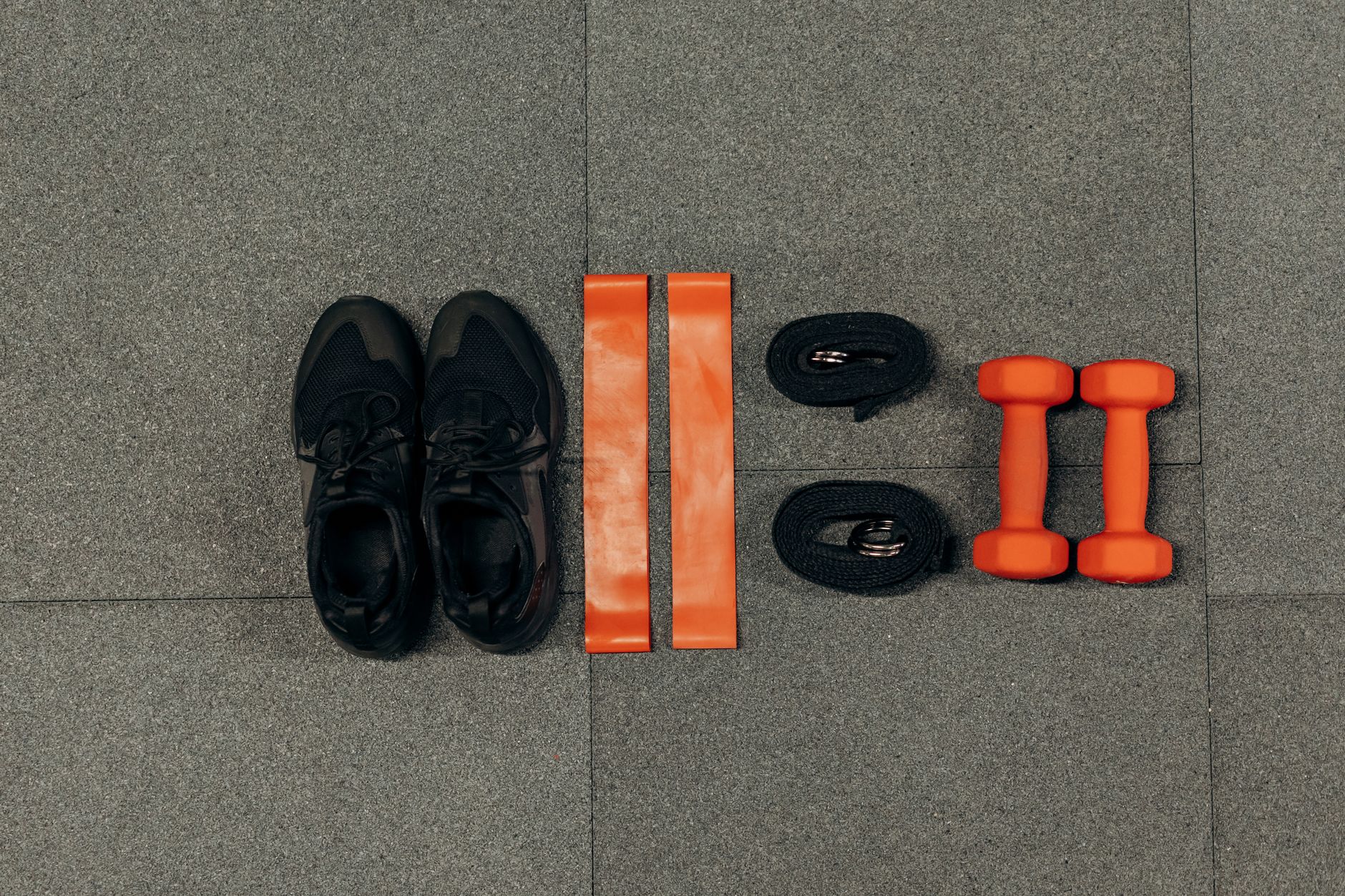
Why You Are Wasting Time With Traditional Workouts
You do a set. Rest three minutes. Do another set. Rest three minutes. An hour later, you have done 15 total sets and burned maybe 200 calories. Your heart rate barely climbed above resting.
There is a better way. Circuit training workouts with weights combine strength training and cardio into one brutal, efficient session. You build muscle. You burn fat. You finish in 35 minutes instead of 75.
No wonder every military training program, athletic facility, and results-driven gym uses circuits. They work.
What Is Circuit Training With Weights?
Circuit training means performing a series of exercises back-to-back with minimal rest between them. When you add weights, you get the muscle-building stimulus of resistance training with the cardiovascular demand of interval training.
A typical circuit includes 5-8 exercises. You do each exercise for a set number of reps or time, move immediately to the next one, and rest only after completing the entire circuit. Then you repeat the circuit 3-4 times.
The key difference from traditional weightlifting: you alternate muscle groups so one area recovers while another works. Your legs rest while your upper body pushes. Your arms recover while your core fires. Your heart never stops working.
Circuit Training Workouts With Weights: 3 Complete Routines
Circuit 1: Full Body Burner (Beginner-Intermediate)
Perform each exercise for the listed reps, moving to the next with no more than 15 seconds of transition time. Rest 90 seconds after completing all six exercises. Repeat 3 times.
- Goblet squats -- 12 reps
- Dumbbell push press -- 10 reps
- Dumbbell Romanian deadlifts -- 12 reps
- Bent-over dumbbell rows -- 10 reps each arm
- Dumbbell walking lunges -- 10 reps each leg
- Dumbbell floor press -- 12 reps
Use a weight that feels challenging by the last 2-3 reps of each exercise. If you can breeze through every movement, go heavier.
Circuit 2: Upper-Lower Superset Circuit (Intermediate)
This pairs upper and lower body exercises together. Perform each pair back-to-back, rest 30 seconds, then move to the next pair. After all four pairs, rest 2 minutes. Repeat 4 times.
Pair A:
- Barbell back squats -- 8 reps
- Barbell bent-over rows -- 8 reps
Pair B:
- Dumbbell step-ups -- 10 reps each leg
- Dumbbell overhead press -- 10 reps
Pair C:
- Kettlebell swings -- 15 reps
- Push-ups -- 15 reps
Pair D:
- Dumbbell reverse lunges -- 10 reps each leg
- Dumbbell bicep curls to press -- 10 reps
This circuit hits everything. Legs, back, shoulders, chest, and arms. Four rounds takes about 30 minutes.
Circuit 3: Metabolic Conditioning (Advanced)
This is not for beginners. Every exercise is compound. Every movement demands full-body coordination. Perform each exercise for 40 seconds of work followed by 20 seconds of rest. Complete all seven exercises, rest 2 minutes, and repeat 3 times.
- Barbell thrusters (front squat into overhead press)
- Renegade rows (push-up position, row each arm)
- Dumbbell snatch (alternating arms)
- Barbell sumo deadlift high pull
- Dumbbell burpee to press
- Kettlebell goblet squat to curl
- Barbell hang cleans
Expect to question your life choices during round two. That is normal.
How to Choose the Right Weight
The biggest mistake in circuit training workouts with weights is going too heavy. This is not a powerlifting session. You are not grinding out one-rep maxes.
Use 50-65% of your one-rep max for each exercise. The weight should feel moderate on the first round and challenging by the third. If your form breaks down, lighten the load immediately.
Form deterioration during circuits causes injuries. Period.
Programming Circuit Training Into Your Week
Circuit training is demanding. Do not do it five days a week. Here is a balanced schedule:
- Monday: Circuit training with weights
- Tuesday: Light cardio or walking
- Wednesday: Traditional strength training (heavy, low rep)
- Thursday: Rest
- Friday: Circuit training with weights
- Saturday: Active recovery or outdoor activity
- Sunday: Rest
This gives you two circuit days, one heavy lifting day, and adequate recovery. If you train at home, check our home workout guide for bodyweight circuit alternatives.
For tracking your circuit workouts and monitoring progress over time, use Gym Coach to log exercises, rest periods, and weights used.
Nutrition for Circuit Training
Circuit training burns serious calories. A 30-minute session with weights can burn 300-500 calories depending on intensity and body weight. You need to fuel accordingly.
Eat a meal with protein and carbs 2-3 hours before your workout. Have a protein shake or meal within 60 minutes after. If you are not sure how many calories you need, read our calorie calculator guide to dial in your numbers.
Common Circuit Training Mistakes
Resting too long between exercises. The point is to keep your heart rate elevated. If you are scrolling your phone between movements, you are doing traditional lifting with extra steps.
Skipping the warm-up. Five minutes of light cardio and dynamic stretching prevents injuries. Your muscles need blood flow before you ask them to perform under fatigue.
Using the same circuit forever. Your body adapts. Change exercises, order, or rep schemes every 4-6 weeks.
FAQ
How many times a week should I do circuit training with weights?
Two to three times per week with at least one rest day between sessions. Circuit training creates significant metabolic and muscular stress. More than three sessions weekly increases injury risk and hampers recovery.
Can circuit training workouts with weights replace cardio?
Yes, for most people. A well-designed weight circuit elevates your heart rate to 70-85% of your max, which falls squarely in the cardiovascular training zone. You get strength and cardio benefits simultaneously.
What weights should beginners use for circuit training?
Start with dumbbells at 50% of what you would normally use for traditional sets. Circuit training demands endurance across multiple exercises with minimal rest. Going too heavy on your first session is the fastest path to injury or burnout.
Is circuit training better than traditional weight training for fat loss?
Circuit training burns more calories per session due to the elevated heart rate and shorter rest periods. However, traditional weight training builds more raw strength. For pure fat loss, circuits have the edge. For maximum muscle and strength, traditional training wins.
-- Dolce
Comments
Comments powered by Giscus. Sign in with GitHub to comment.