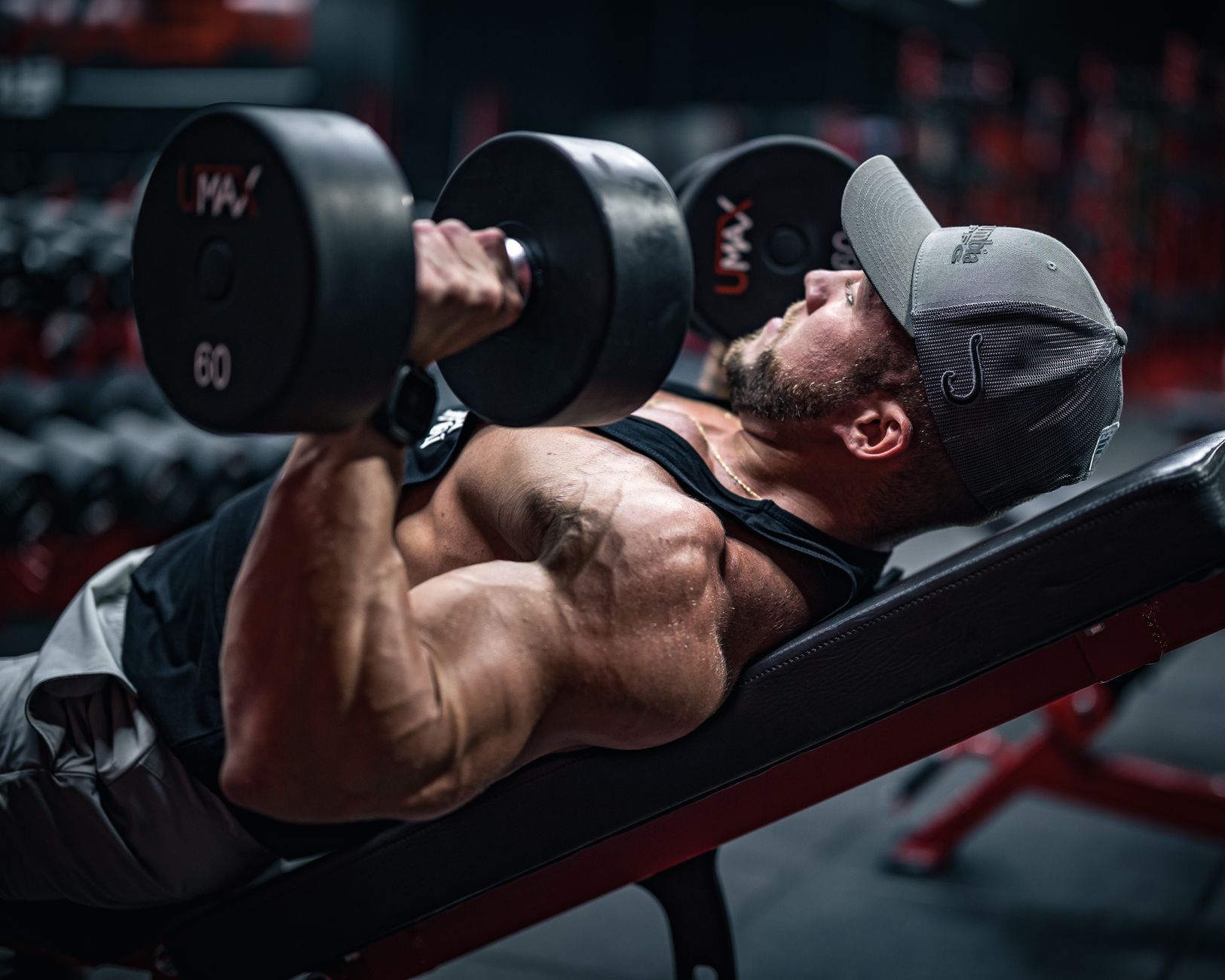
You Don't Need a Bench to Build a Chest
Here is a truth the fitness industry does not want you to hear: a bench is optional. You have been told you need a flat bench, an incline bench, a decline bench, a cable station, and a spotter just to build a decent chest. Wrong. This chest workout dumbbell no bench routine is going to prove that all you need is a pair of dumbbells and a floor.
I have trained in cramped apartments, hotel rooms, and garages with zero equipment besides dumbbells. My chest still grew. Yours will too. The floor is not a limitation. It is a tool. It gives you a consistent surface, a built-in range-of-motion check, and zero excuses.
Let me walk you through the exact routine.
The Full Chest Workout Dumbbell No Bench Routine
This workout takes about 35 minutes. You will hit upper chest, mid chest, and lower chest fibers. Rest 60-90 seconds between sets unless stated otherwise.
Block 1: Floor Press (Primary Strength)
Dumbbell Floor Press -- 4 sets of 8-10 reps
Lie on your back, knees bent, feet flat on the floor. Press the dumbbells straight up. Lower until your elbows touch the ground. Pause for one full second. Press back up.
That pause is everything. It eliminates momentum. It forces your chest to do the work from a dead stop. Most people are weaker on floor press than bench press. That tells you something -- your bench press has been relying on bounce and stretch reflex, not actual strength.
Single-Arm Floor Press -- 3 sets of 8 reps per side
Same position. One arm at a time. This fixes imbalances and forces your core to stabilize. Go slower than you think you need to.
Block 2: Flyes (Stretch and Squeeze)
Dumbbell Floor Flyes -- 3 sets of 12 reps
Arms slightly bent. Lower wide until your elbows kiss the floor. Squeeze back to the top like you are hugging a tree. The floor limits your range just enough to protect your shoulders while still loading the chest through a full stretch.
Squeeze Press -- 3 sets of 10 reps
Press the dumbbells together at the center of your chest. Keep them touching for the entire range of motion. Press up while pushing inward. This constant tension is brutal on the inner chest.
Block 3: Push-Up Variations (Volume Finisher)
Dumbbell Push-Ups (Wide Grip) -- 3 sets of 12-15 reps
Hands on the dumbbells, set wider than shoulder width. The elevated handles give you a deeper stretch at the bottom. Control every rep.
Decline Push-Ups (Feet Elevated) -- 3 sets of 10-12 reps
Put your feet on a couch, chair, or bed. Hands on the floor or dumbbells. This shifts the load to your upper chest. No incline bench required.
Diamond Push-Ups to Failure -- 2 sets
Hands close together. Pump out as many as you can. This is your finisher. Leave nothing in the tank.
Why This Routine Works
The chest responds to three things: heavy loading, stretch under tension, and volume. This chest workout dumbbell no bench routine delivers all three.
Block 1 handles heavy loading. The floor press is an underrated strength builder. Block 2 handles stretch and squeeze. Floor flyes and squeeze presses attack the chest fibers from angles that flat pressing misses. Block 3 piles on volume with bodyweight movements that exhaust every remaining fiber.
You are not missing out by skipping the bench. You are just training smarter.
Programming Tips
Run this workout twice per week with at least 48 hours between sessions. Progressive overload still matters -- add reps first, then weight.
Week 1-2: Focus on nailing the form. Pause reps on the floor press. Control the flyes.
Week 3-4: Add 1-2 reps per set across the board.
Week 5-6: Increase dumbbell weight by 5 pounds on pressing movements.
If you are building a full home workout program without a gym, pair this chest day with a pull day and a leg day. Three days a week, full body coverage, dumbbells only.
Common Mistakes to Avoid
Rushing the floor press. The pause at the bottom is not optional. Without it you are bouncing your elbows off the floor and using momentum. That is not training. That is ego.
Going too heavy on flyes. Flyes are a stretch movement. You do not need to max out. Pick a weight that lets you feel your chest working through the full range. If your shoulders hurt, go lighter.
Skipping the push-ups. People grab dumbbells and forget that push-ups exist. Push-ups are one of the best chest builders ever created. The dumbbell work pre-fatigues your chest. The push-ups finish it off. That combination is where growth happens.
Tracking Your Chest Workouts
Write down your weights, reps, and sets every session. If you are not tracking, you are guessing. Use a workout timer app to keep your rest periods honest. Most people rest too long and lose the intensity that makes this routine effective.
For a structured approach to all your training, check out our GymCoach app -- it handles programming so you can focus on execution.
The Bottom Line
A chest workout dumbbell no bench is not a compromise. It is a complete training solution. Floor presses build strength. Flyes build the stretch. Push-ups build the volume. You get everything you need without a single piece of bulky equipment.
Stop waiting for the perfect setup. Grab your dumbbells. Hit the floor. Build your chest.
-- Dolce
FAQ
Can you build a big chest without a bench press?
Absolutely. The bench press is one tool among many. Floor presses, flyes, and push-up variations provide all the stimulus your chest needs to grow. Many lifters see better results once they stop relying on the bench because they are forced to use stricter form and eliminate momentum.
How heavy should the dumbbells be for floor press?
Start with a weight you can press for 8 clean reps with a full pause at the bottom. For most people that is 60-70 percent of what they would use on a bench press. The dead-stop pause makes the movement harder than it looks.
How often should I do this chest workout?
Twice per week with at least 48 hours between sessions. This gives your chest enough stimulus to grow and enough recovery time to actually rebuild. More is not better when intensity is high.
Is the floor press easier or harder than the bench press?
It depends. The range of motion is shorter, so you can often handle similar or slightly heavier weight. But the dead-stop pause at the bottom removes the stretch reflex, making the concentric portion significantly harder. Most people find it humbling the first time they try it properly.
Comments
Comments powered by Giscus. Sign in with GitHub to comment.